
Faculty of Commerce & Economics
Faculty of Commerce & Economics | SU
Faculty of Commerce & Economics | SU
The Department offers distinguished academic programs in the disciplines of economics, finance, banking, and small enterprise financing.
Achieving excellence with a leading role in the field of economic sciences locally and regionally.
The program seeks to prepare distinguished and competent human resources equipped with theoretical knowledge, professional skills, and research capabilities in various economic fields. This will help in fulfilling development requirements and meeting the needs of local and regional markets through well-qualified and highly experienced academic staff, an appropriate educational environment, and a modern curriculum.
1. To academically prepare students by equipping them with foundational and advanced knowledge across the diverse facets of economic and financial activities.
2. To develop students' analytical competencies in economic and financial dimensions, thereby enhancing their proficiency in strategic and evidence-based decision-making.
3. To rigorously implement comprehensive quality assurance and accreditation standards across all academic, pedagogical, and operational dimensions of the department.
4. To advance scholarly research activities and direct them toward addressing contemporary economic and financial challenges within society by providing specialized consultancy services, conducting empirical studies, and hosting scientific conferences and symposia.
5. To continuously update and review the department's academic programs and curricula to align with global scientific advancements, thereby supporting economic development and fulfilling the demands of local and regional labor markets.
Economics is an indispensable discipline for all countries, whether developed or developing, due to its vital role in diagnosing economic and financial problems, formulating appropriate policies to address them, and supporting sustainable development. In response to the academic and research needs of institutions and the requirements of the labor market, the Department of Economics and Finance has established the Academic Master of Economics Program. The program aims to provide academic, research, financial, and economic institutions, as well as the labor market, with highly qualified graduates who possess specialized knowledge, advanced analytical skills, and professional competencies in the field of economics. The program is designed to provide students with advanced knowledge and research skills through a comprehensive curriculum consisting of ten courses covering topics closely related to the field of specialization. The program requires a total of 36 credit hours, including 30 credit hours of coursework delivered over 14 academic weeks, with each course consisting of three instructional hours per week, in addition to 6 credit hours allocated for the master’s thesis.
To prepare scientifically, professionally, and research-qualified graduates in the field of economics, in a manner that meets the needs of the local and regional job market, keeps pace with local, regional, and international developments and changes, and upholds Islamic principles and values in economic transactions.
1. Equip students with in-depth knowledge and requisite theories to qualify them scientifically and practically for conducting studies in various economic domains.
2. Develop students' skills, provide them with economic analysis tools, and raise their efficiency in appropriate decision-making.
3. Develop and advance students' capabilities in information technology and in employing such technology in addressing economic issues.
4. Enable students to study economic and financial crises and imbalances, and the methodologies for mitigating their impacts.
5. Develop scientific research and effective communication skills, and foster a spirit of participation, enabling graduates to engage in all leadership, academic, and professional roles.
1- The total number of credit hours required for graduation is 36 hours, of which 30 hours are for coursework and 6 hours are for the thesis.
2- The student must successfully pass the required coursework with a minimum grade of 'Good' (at least 75%). If the student achieves a lower grade, they will be granted a Higher Diploma, and their enrollment in the program will be terminated.
3- The student is not entitled to register for the Master's thesis before completing all courses specified for the program according to the approved study plan, totaling 30 credit hours, with a cumulative average of no less than 75%.
4- The student must obtain a minimum TOEFL score of 480 in English; graduation procedures will not be finalized until this certificate is obtained.
Financial economics (finance and banking sciences) is one of the most significant disciplines in a global environment dominated by financial markets and international stock exchanges, where recurring financial crises often lead to broader economic challenges. Recognizing the critical role of this field in diagnosing economic problems, assessing financial risks, and supporting effective financial decision-making, the Department of Economics and Finance has established the Academic Master of Finance and Banking Program. The program is designed to respond to the academic and professional needs of financial institutions and the labor market by preparing highly qualified graduates equipped with specialized knowledge, advanced analytical skills, and professional competencies in economic and financial analysis. It aims to provide academic and financial institutions with graduates capable of addressing contemporary financial challenges and contributing effectively to the development of the financial sector. The program consists of ten courses covering topics closely related to the field of finance and banking. It requires a total of 36 credit hours, including 30 credit hours of coursework delivered over 14 academic weeks, with each course consisting of three instructional hours per week, in addition to 6 credit hours allocated for the master’s thesis.
To prepare distinguished professionals equipped with theoretical and research capabilities and skills in the field of finance and banking to meet the needs of the local and regional markets, through a competent faculty, an appropriate educational environment, and an advanced, modern curriculum that keeps pace with local, regional, and international developments while preserving Islamic principles and values in economic, financial, and banking transactions.
1. Prepare specialized professional cadres in the financial and banking field and provide them with in-depth theories regarding various aspects of financial and banking activities.
2. Develop students' skills and provide them with financial and banking analysis tools that enhance their capacity for financial and banking analysis and planning and raise their efficiency in appropriate decision-making.
3. Utilize information technology, develop students' effective communication skills, and ensure adherence to public morals and professional ethics.
4. Keep pace with scientific developments regarding financial and banking issues while adhering to Islamic values and principles.
5. Develop students' scientific research skills and link them to the service of the community and the labor market.
1- The total number of credit hours required for graduation is 36 hours, of which 30 hours are for coursework and 6 hours are for the thesis.
2- The student must successfully pass the required coursework with a minimum grade of 'Good' (at least 75%). If the student achieves a lower grade, they will be granted a Higher Diploma, and their enrollment in the program will be terminated.
3- The student is not entitled to register for the Master's thesis before completing all courses specified for the program according to the approved study plan, totaling 30 credit hours, with a cumulative average of no less than 75%.
4- The student must obtain a minimum TOEFL score of 480 in English; graduation procedures will not be finalized until this certificate is obtained.
In response to rapid global advancements within the banking sector and financial institutions, and in alignment with the department's strategic educational outcomes and the imperative to fulfill the evolving demands of the labor market, the Department of Economics and Finance has inaugurated the Executive Master's Program in Finance and Banking. This strategic initiative aims to supply financial and banking institutions with highly qualified graduates who are equipped with specialized, high-caliber knowledge, robust competencies in economic and financial analysis, and applied, practical experience within the field. The program's structural plan comprises ten academic courses encompassing topics intrinsically linked to the core specialization. It requires the successful completion of 36 credit hours, which are distributed as 30 credit hours of intensive coursework (conducted over a 14-week academic semester at 3 contact hours per lecture) and 6 credit hours dedicated to an applied field research project conducted within a specialized institution.
To prepare distinguished professionals equipped with theoretical and research capabilities and skills in the field of finance and banking to meet the needs of the local and regional markets, through a competent faculty, an appropriate educational environment, and an advanced, modern curriculum that keeps pace with local, regional, and international developments while preserving Islamic principles and values in economic, financial, and banking transactions.
1. Prepare specialized professional competencies in the financial and banking field and provide them with in-depth theories regarding various aspects of financial and banking activities.
2. Develop students' skills and provide them with financial and banking analysis tools that enhance their capacity for financial and banking analysis and planning and raise their efficiency in appropriate decision-making.
3. Utilize information technology, develop students' effective communication skills, and ensure adherence to public morals and professional ethics.
4. Keep pace with scientific developments regarding financial and banking issues while adhering to Islamic values and principles.
5. Develop students' scientific research skills and link them to the service of the community and the labor market.
1- The total number of credit hours required for graduation is 36 hours, of which 30 hours are for coursework and 6 hours are for the thesis.
2- The student must successfully pass the required coursework with a minimum grade of 'Good' (at least 75%). If the student achieves a lower grade, they will be granted a Higher Diploma, and their enrollment in the program will be terminated.
3- The student is not entitled to register for the Master's thesis before completing all courses specified for the program according to the approved study plan, totaling 30 credit hours, with a cumulative GPA of no less than 75%.
4- The student must obtain a minimum TOEFL score of 480 in English; graduation procedures will not be finalized until this certificate is obtained.
The PhD. Program in Economics, Finance, and Banking is engineered to foster advanced academic research and cultivate scholarly competencies through an innovative, non-traditional paradigm. Moving away from standard coursework-heavy models, the program is exclusively research-driven, empowering doctoral researchers to focus on generating high-quality, peer-reviewed contributions that enrich contemporary literature and proffer innovative resolutions to systemic economic, financial, and banking challenges. To guarantee academic integrity and scientific rigor, the program establishes stringent institutional mechanisms and regulatory standards governing international scientific publication, ensuring dissemination in high-impact, globally indexed, peer-reviewed journals. The curriculum aligns with strategic workforce demands locally, regionally, and internationally, preparing elite scholars for professorial, research-driven, and strategic leadership roles. To achieve these benchmarks, the faculty leverages a distinguished cadre of academic staff characterized by exemplary scholarly records and ethical leadership, utilizing advanced educational and analytical frameworks. The program incorporates an extensive advisory and mentorship infrastructure designed to guide doctoral candidates toward deep epistemological mastery, active engagement in doctoral colloquia and research workshops, and systematic tracking of advanced macroeconomic and financial theories.
The program seeks to qualify competent cadres academically and professionally in the fields of economics, finance, and banking, equip them with advanced analytical and decision-making capabilities, actively contribute to the development of the public and private sectors, and promote scientific research and innovation to achieve sustainable development.
1. Provide those enrolled in the program with diverse knowledge and skills in Economics and Finance and enhance their abilities to handle complex practical situations and adapt to environmental changes.
2. Enhance analytical capabilities, creative thought, and quantitative tools to produce strategic sector studies.
3. Develop competence in employing state-of-the-art scientific methodologies applied to banking and finance.
4. Adopt high-quality, distinctive teaching methods that keep pace with the latest advancements.
5. Enable scholars to dissect structural financial crises and design mitigation frameworks.
6. Cultivate leadership, collaborative research capabilities, and professional ethics for high-level public/private appointments.
1- Total Years Required for Graduation: 2-4 years.
2- Publishing two research papers in peer-reviewed scientific journals, one in a Sana'a University journal and the other in an international peer-reviewed journal.
3- The minimum requirement for approving the PhD. Dissertation Defense is two years from the date of the Department Council's approval of the PhD. proposal.
4- Transfer students from other universities or centers, if any, can submit their cases to the department for consideration of potential reductions in the required duration. The department will form a committee to review the case and make a decision.
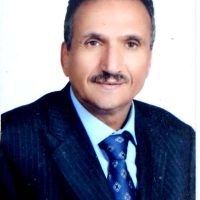
Industrial and Urban Economics
University of Oklahoma
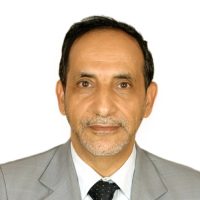
Industrial Economics and International Trade
University of East Anglia - UK

Money and Banking
Cairo University

Transport Economics
Alexandria University
Econometrics and Economic Theory
Cairo University
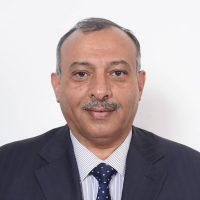
International and Monetary Mathematical Economics
University of Missouri
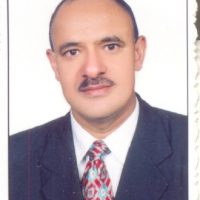
Industrial Economics and International Trade
Alexandria University
Economics
University of Colorado
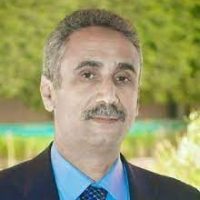
International Finance and Economics
Cairo University
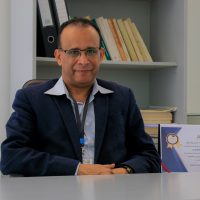
Economics
Sorbonne University

Economics of Education and Labor Market
Cairo University

Labor and Development Economics
Cairo University

Economic Theory
Al-Azhar University
Finance and Banking
Al-Mustansiriya University

Economics
Pune University