Master’s Degree Awarded to Ms. Fatima Abdullah Mutahhar in Qur’anic Exegesis
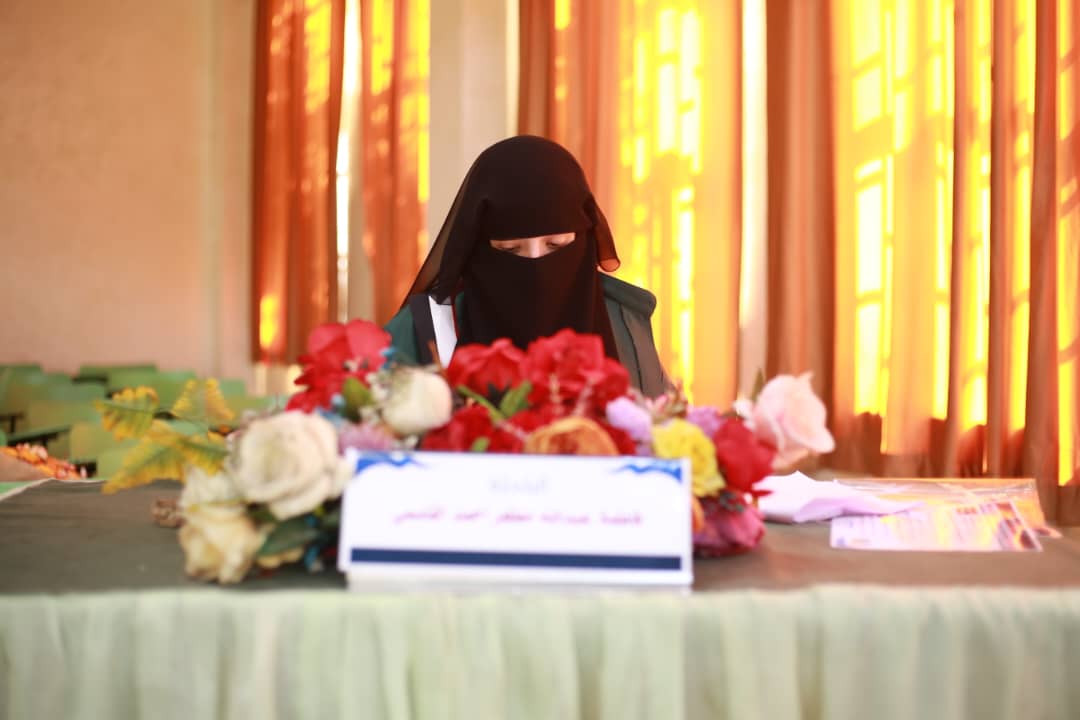
Ms. Fatima Abdullah Mutahhar Al-Qasemi was awarded a Master’s Degree in Qur’anic Exegesis with an average of Excellent and a grade of (95) for her thesis titled: Al-Jawhar Al-Shafaf Al-Multaqat min Maghasat Al-Kashaf, which was submitted to the Department of Islamic Studies, Faculty of Arts and Humanities – Sana’a University. The MA defense was held on Tuesday, December 23, 2025.
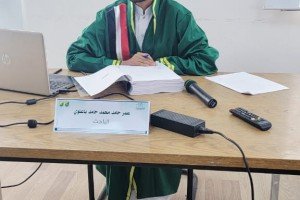
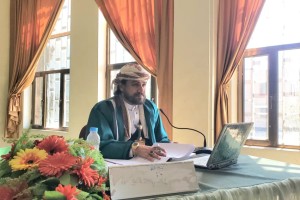
The MA Viva-voce Committee, which was formed based on a resolution issued by the Graduate Studies and Scientific Research Council, consisted of the following:
# |
Committee Members |
Designation |
Position |
1 |
Assoc. Prof. Ibrahim Abdullah Jaber |
External Examiner |
Chair |
2 |
Dr. Iman Abdullah Hussein Hajer |
Main Supervisor |
Member |
3 |
Dr. Hassan Ali Abduljabbar Al-Seruri |
Internal Examiner |
Member |
The study aimed to:
-
Introduce Imam Abdullah ibn Al-Hadi.
-
Bring to light the manuscript Al-Jawhar Al-Shafaf and enrich the Islamic library with this valuable exegetical work.
-
Highlight the scholarly, intellectual, and jurisprudential views contained in the work, drawing on the contributions of the Imams of Ahl Al-Bayt (peace be upon them) and the Imams of the four Sunni schools of jurisprudence.
The study yielded a number of key findings summarized as follows:
-
Imam Abdullah ibn Al-Hadi possessed vast knowledge, demonstrated deep mastery of multiple disciplines, and excelled in Qur’anic exegesis, marked by precision and depth of thought; his family’s scholarly legacy significantly influenced his devotion to learning.
-
The commonly cited date of death for Imam Abdullah ibn Al-Hadi required correction; the research established that he died after 850 AH, not in 793 AH as previously reported by biographers.
-
The era of Imam Abdullah ibn Al-Hadi represented a flourishing period in Yemen’s intellectual history, as the Imams and the Rasulids supported scientific and scholarly activity despite prevailing political instability.
-
The author of Al-Jawhar Al-Shafaf crafted his commentary as a concise encyclopedic work.
-
Al-Jawhar Al-Shafaf ranked among the finest works engaging with “Al-Kashaf” in terms of clarity, facilitation, and the valuable additions that enhanced its utility for scholars of Qur’anic exegesis.
In light of these findings, the researcher recommended:
-
Editing and verifying unedited valuable manuscripts that contain significant scholarly treasures.
-
Publishing verified manuscripts that remain unpublished, including Al-Jawhar Al-Shafaf Al-Multaqat min Maghasat Al-Kashshaf, after completing the study and verification of its remaining parts, given its status as one of the most important and accessible commentaries on Al-Kashaf.
-
Re-editing and republishing heritage works previously printed without rigorous scholarly verification, across various fields, following sound academic standards.
The defense session was attended by a number of academics, researchers, students, colleagues, and the researcher’s family.


A video from the Viva-Voce