Master’s Degree Awarded to Ms. Fatimah Abdulkarim in Sociology

Ms. Fatimah Abdulkarim Ali Humaidaddin was awarded a Master’s Degree in Social Issues and Problems with an average of excellent and a grade of (95%) for her thesis titled: Contribution of Yemeni Women to Improving Family Economic Status: A Sociological Study of a Sample of Women Working in Small Enterprises (2015–2022) in the Capital Secretariat, which was submitted to the Department of Sociology, Faculty of Arts and Humanities– Sana’a University. The MA defense was held on Sunday, May 17, 2026.
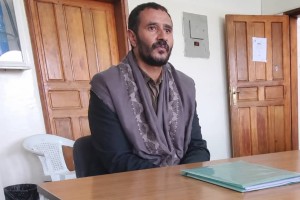
The MA Viva-voce Committee, which was formed based on a resolution issued by the Graduate Studies and Scientific Research Council, consisted of the following:
# |
Committee Members |
Designation |
Position |
1 |
Associate Prof. Omar Saeed Ishaq |
External Examiner |
Chair |
2 |
Associate Prof. Kamel Ali Al-Rashahi |
Main Supervisor |
Member |
3 |
Dr. Abduljabbar Radman Naji |
Internal Examiner |
Member |
The thesis aimed to:
-
Examine the contribution of Yemeni women to improving their families’ economic conditions and alleviating hardship amid fluctuating economic circumstances during the period 2015–2022.
-
Identify the major small enterprises in which Yemeni women participate to improve household income.
-
Explore the difficulties faced by women working in small enterprises.
-
Examine the economic and social impacts resulting from women’s involvement in these projects.
The study yielded several key findings summarized as follows:
-
4% of the women included in the study had no monthly income, followed by those earning 30,000 Yemeni riyals or less.
-
There was considerable diversity in the types of small enterprises operated by women in the Capital Secretariat.
-
6% of the participants relied on self-financing for their projects.
-
81% of the women reported that they had not worked in any small enterprises before the war.
-
5% of the sample earned returns ranging between 70,000 and 100,000 Yemeni riyals every three months, while 32.2% earned more than 100,000 Yemeni riyals.
-
Improving household income was the primary motivation for employment among 21.9% of the women workers.
-
Limited financial resources and marketing difficulties were among the major challenges facing women working in small enterprises.
-
Women’s work in small enterprises resulted in both positive and negative social and economic effects.
In light of these findings, the researcher recommended the following:
-
Expanding employment opportunities for female university graduates in both the public and private sectors.
-
Adopting effective mechanisms to develop women’s skills in small enterprises and help them overcome existing challenges.
-
Raising awareness about the importance of women’s economic empowerment and strengthening partnerships between the public and private sectors.
-
Providing soft loans, financial support, and training in management, marketing, and modern production methods.
-
Organizing specialized exhibitions and markets to promote products made by women-led small enterprises.
-
Developing policies aimed at empowering women affected by war and reducing foreign imports that compete with local products.
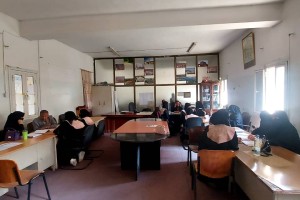
The defense session was attended by a number of academics, researchers, students, colleagues, and the researcher’s family.


A video from the Viva-Voce