Master’s Degree Awarded to Researcher Abdulraouf Hassan in Hematology
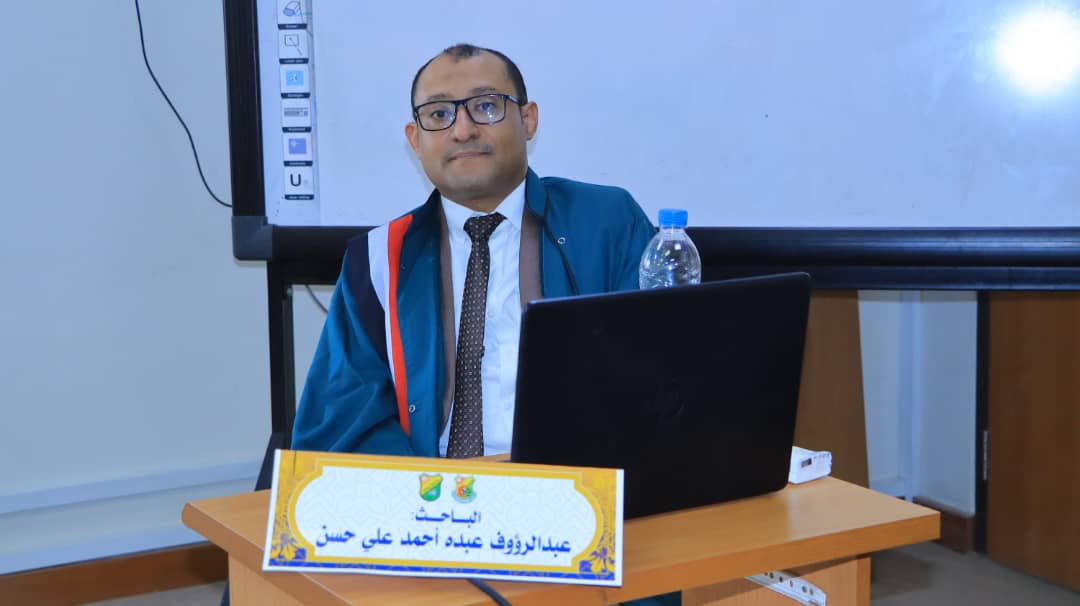
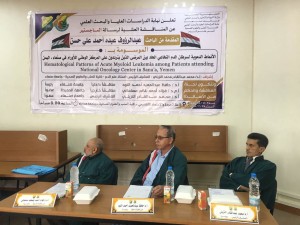
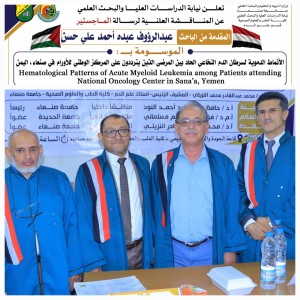
Researcher Abdulraouf Abdu Ahmed Ali Hassan was awarded a Master’s Degree in Hematology and Blood Transfusion with an average of Very Good and a grade of (89%) for his thesis titled: Hematological Patterns of Acute Myeloid Leukemia Among Patients Attending the National Oncology Center in Sana’a, Yemen, which was submitted to the Department of Hematology, Faculty of Medicine and Health Sciences – Sana’a University. The MA defense was held on Saturday, July 25, 2026.
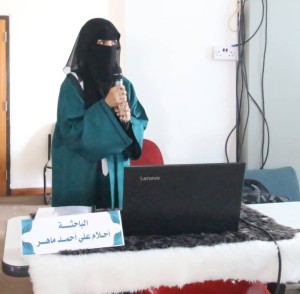
The MA Viva-voce Committee, which was formed based on a resolution issued by the Graduate Studies and Scientific Research Council, consisted of the following:
| # | Committee Members | Designation | Position |
| 1 | Prof. Hafez Abdulhamid Ahmed Al-Noud | Internal Examiner | Chair |
| 2 | Prof. Mohammed Abdulqader Al-Nuzaili | Main Supervisor | Member |
| 3 | Assoc. Prof. Fouad Ahmed Balkam Muslamani | External Examiner | Member |
The study aimed to investigate the hematological patterns of Acute Myeloid Leukemia (AML) among patients attending the National Oncology Center in Sana’a, with the objective of generating local scientific data to support improved diagnosis, guide therapeutic decision-making, and enhance healthcare services and scientific research in Yemen.
The findings revealed that non-Hodgkin lymphoma (NHL) was the most prevalent hematological malignancy included in the study, followed by leukemia cases. Acute Myeloid Leukemia (AML) accounted for 10.06% of all hematological malignancies and 27.07% of leukemia cases, with the AML-M2 subtype identified as the most common, representing 34.7% of AML cases. The study also found that the most prominent hematological abnormalities among patients were anemia (100%), thrombocytopenia (89.8%), and leukocytosis (63.3%).
The researcher recommended conducting comprehensive nationwide studies on the patterns of hematological malignancies, establishing specialized centers for cancer diagnosis and treatment across the country’s governorates, and strengthening central public health laboratories by equipping them with advanced diagnostic equipment and technologies, including genetic and molecular testing, to enhance diagnostic accuracy and improve the quality of patient care.
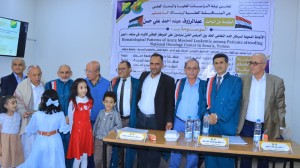
The thesis defense was attended by faculty members, researchers, students, and interested participants as well as the researcher’s colleagues and family members.