Master’s Degree Awarded to Ms. Iftikar Qasim in Educational Administration and Planning
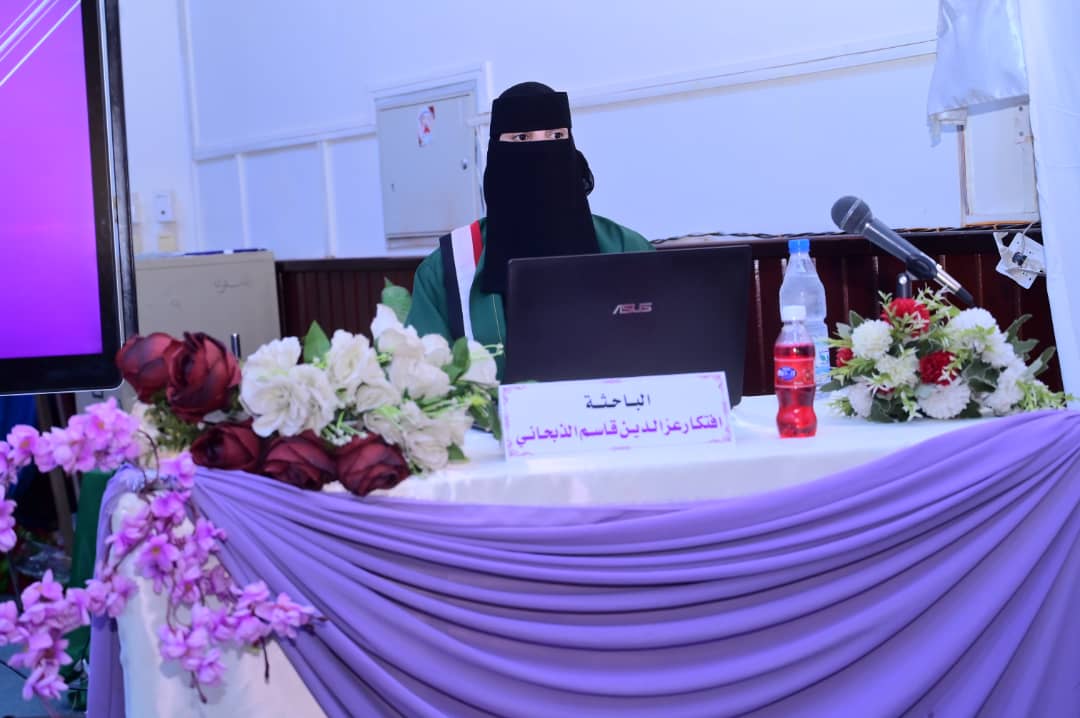
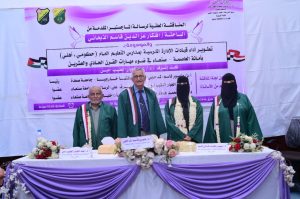
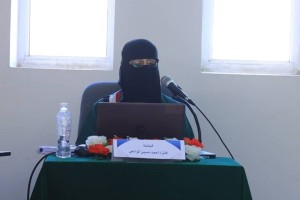
Ms. Iftikar Ezz Aldeen Qasim Al-Thabhani was awarded a Master’s degree in Educational Administration and Planning with an average of (Excellent) and a grade of (95%) for her thesis titled: Developing the Performance of Administration Leaders in Public and Private Schools in the Capital Secretariat–Sana’a in Light of 21st-Century Skills. The MA defense was held on Thursday, July 24, 2025).
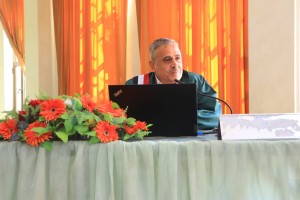
The MA Viva-voce Committee, which was formed based on a resolution issued by the Graduate Studies and Scientific Research Council, consisted of the following:
| # | Committee Members | Designation | University | Position |
| 1 | Prof. Mansour Qasim Al-Madhhaji | External Examiner | Sa’adah University | Chair |
| 2 | Prof. Abduljabbar Al-Tayeb Ameen | Main Supervisor | Sana’a University | Member |
| 3 | Dr. Suhair Mohammed Hadi Qasim | Internal Examiner | Sana’a University | Member |
The study aimed to explore strategies for developing the performance of administration leaders in public and private schools in the Capital Secretariat–Sana’a in accordance with 21st-century skill requirements.
The study yielded several key findings as follows:
- The Current Performance Reality of school administration leaders was rated high, with an average score of 3.62/5. Sub-dimensions ranked from highest to lowest as follows:
- Administrative Communication Skills – 3.91
- Time Management – 3.86
- Problem Solving – 3.81
- Administrative Creativity – 3.76
- Critical Thinking – 3.74
(All rated as high) - Artificial Intelligence – 2.63 (rated as moderate)
- The overall average for development requirements was 3.45/5, also rated high. Sub-dimensions ranked as follows:
- Organizational and Administrative Requirements – 3.69
- Human Requirements – 3.57 (both high)
- Financial Requirements – 3.34
- Technological and Material Requirements – 3.22 (both moderate)
The results of the ANOVA test (analysis of variance based on variables) revealed statistically significant differences at the level of significance in the participants’ views regarding the dimension of performance reality across the following variables:
- Years of experience, favoring respondents with five years or less in the dimensions of critical thinking, administrative creativity, AI, and overall skills.
- Job title, in favor of school principals, in all dimensions except AI.
- Educational district, in favor of respondents from Maeen Directorate, in all dimensions except AI.
Differences were also observed in the participant’s responses regarding Development Requirements based on the following variables:
- Type of school, favoring private schools.
- Job title, again favoring principals.
No statistically significant differences were found in relation to other variables.
The researcher recommended the following:
- Adopting the proposed framework based on the themes identified by the researcher.
- Integrating 21st-century skills into continuous qualification and training programs for school leaders, with a focus on AI, critical thinking, administrative creativity, problem solving, time management, and administrative communication skills to ensure the development of core competencies.
- Promoting the use of modern technologies and AI tools in school management to address gaps identified in the result section and improve administrative and leadership efficiency.
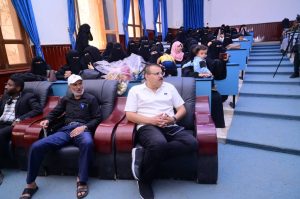
The defense session was attended by a number of academics, researchers, colleagues, and the researcher’s family members.
The Study yielded several key findings as follows:
- The adoption of digital forensic accounting in Yemen is currently at a moderate level, with significant potential for enhancement, particularly through improved funding, training, and regulatory structures.
- Strategic collaboration between institutions and government entities is a key success factor in fostering adoption.
The researcher proposed several recommendations, including:
- Implementing digital forensic accounting tools (e.g., FTK) and integrating them with financial accounting and auditing systems.
- Improving the technical infrastructure, with particular focus on network capacity and cybersecurity systems.
- Developing a specialized technical workforce with expertise in digital forensic accounting.
- Promoting a culture of digital evidence utilization through interactive training workshops and internal awareness campaigns.
- Updating the legal framework by enacting clear and enforceable legislation supporting digital forensic practices.
The thesis defense was attended by several academics, researchers, students, and interested professionals, along with the researcher’s colleagues and family members.