PhD Degree Awarded to Ms. Fathiya Noaman in Plant Tissue Culture
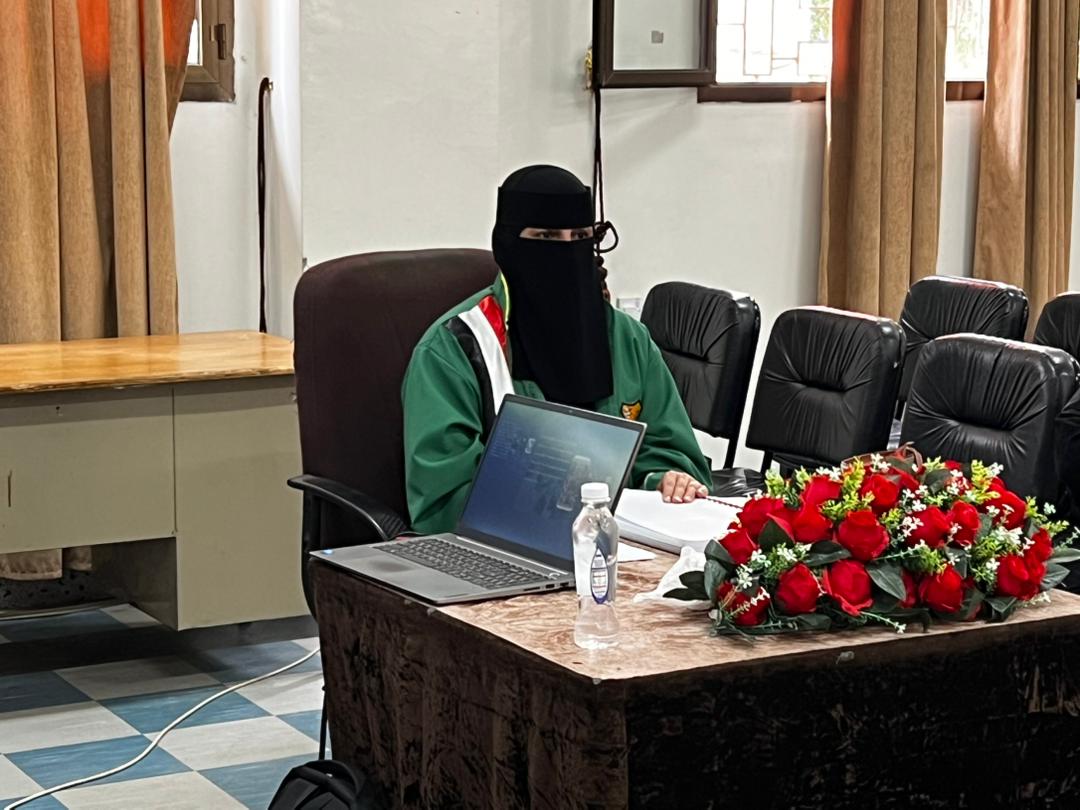
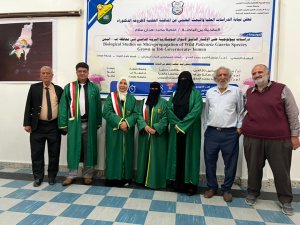
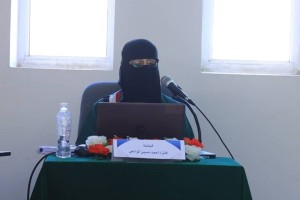
Ms. Fathiya Mohammed Noaman Salam was awarded a PhD degree in Plant Tissue Culture for her dissertation titled: Biological Studies on Micropropagation of Wild Pulicaria Gaertn Species Grown in Ibb Governorate- Yemen, which was submitted to the Department of Biological Sciences, Faculty of Science – Sana’a University. The dissertation defense was held on Monday, August 16, 2025.
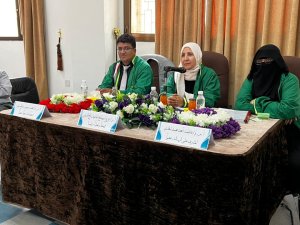
The PhD Viva-Voce Committee, which was formed based on a resolution issued by the Graduate Studies and Scientific Research Council, consisted of the following:
| # | Committee Members | Designation | Position |
| 1 | Prof. Aziza Musleh Taj Al-Deen, | Internal Examiner | Chair |
| 2 | Assoc. Prof. Fatima A. Mohammed Al-Haddi | Main Supervisor | Member |
| 3 | Assoc. Prof. Mohammed Mansour Saif | External Examiner | Member |
The study aimed to:
- Develop a micropropagation protocol for the Pulicaria plant using the MS medium with various concentrations and types of plant hormones and salts to induce shoot, root, and callus formation.
- Examine the phytochemical compounds present in the parent plant and in the callus using solvents of differing polarity.
- Compare the active compounds and their concentrations between the parent plant and the callus through GC-MS analysis.
The dissertation yielded the following findings:
- The seeds were the plant parts that responded best to proliferation in the MS medium and were the first to produce callus.
- Different concentrations of plant growth hormones, particularly high auxin and low cytokinin ratios, were used.
- Both the ethanolic and hexane extracts of the parent Pulicaria plant and its callus contained numerous biologically active metabolites.
- The callus extracts included certain compounds not found in the parent plant.
In light of these findings, the researcher recommended the following:
- Employing tissue culture and micropropagation techniques to preserve the genetic resources of native plant species.
- Conducting further experiments on induced callus cultures derived from tissue culture.
- Using solvents with different polarities on the mother plant and callus developed.
- Applying alternative analytical methods to identify bioactive compounds in both the parent plant and the callus.
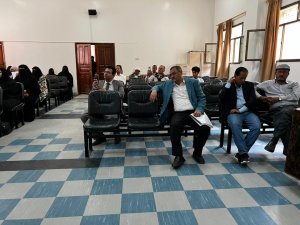
The dissertation defense was attended by a number of academics, researchers, specialists, students, colleagues, and the researcher’s family.