Master’s Degree Awarded to Ms. Rana Taha Mohammed Abdu in Biological Sciences
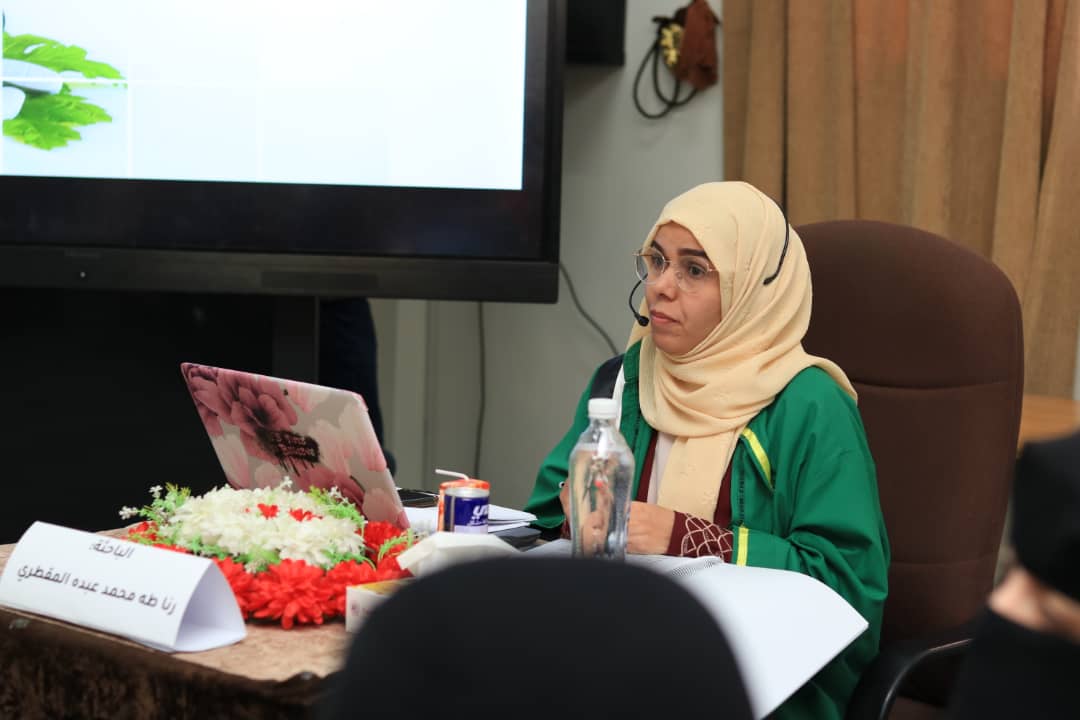
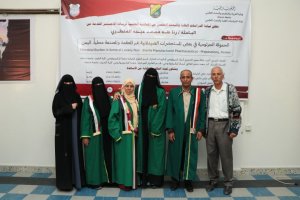
Ms. Rana Taha Mohammed Abdu Moqbel Al-Maqtari was awarded a Master’s degree in Biological Sciences (Microbiology) with an average of (Excellent) and a grade of (95%) for her thesis titled: Bacterial Load in Some Locally Manufactured Non-Sterile Pharmaceutical Preparations – Yemen, which was submitted to the Department of Life Sciences, Faculty of Science – Sana’a University. The MA defense was held on Wednesday, October 29, 2025.
The MA Viva-voce Committee, which was formed based on a resolution issued by the Graduate Studies and Scientific Research Council, consisted of the following:
| # | Committee Members | Designation | Position |
| 1 | Assoc. Prof. Suad Hameed Al-Khayyat | Internal Examiner | Chair |
| 2 | Assoc. Prof. Hala Jameel Al-Jabouri | Main Supervisor | Member |
| 3 | Assoc. Prof. Adel Qaed Al-Eryani | External Examiner | Member |
The thesis aimed to evaluate the bacterial load in locally manufactured non-sterile pharmaceutical preparations in Sana’a, Yemen, and to determine the antibiotic susceptibility of bacteria isolated from those pharmaceutical products.
The study yielded a number of key findings summarized as follows:
- The overall microbial contamination rate in pharmaceutical preparations was 15% (with 9% bacterial contamination and 6% fungal contamination).
- Contamination rates by product type were as follows: capsules (15%), ointments (10%), and creams, gels, tablets, and syrups (5%).
- No contamination was recorded in effervescent powders, suspensions, or oral drops.
Based on the findings, the researcher recommended:
- Enhancing Good Manufacturing Practices (GMP) in the pharmaceutical industry and conducting regular microbiological quality control tests.
- Investing in research and development to produce new antimicrobials and alternative preservatives.
- Implementing routine surveillance of antimicrobial resistance in pharmaceutical products.
- Regularly training personnel on hygiene principles, contamination risks, and resistance mechanisms.
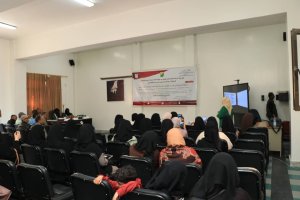
The defense session was attended by a number of academics, researchers, and interested participants, colleagues and the researcher’s family members.