Master’s Degree Awarded to Mr. Ibrahim Ahmed Al-Babli in Laboratory Hematology

Mr. Ibrahim Ahmed Ali Al-Babli was awarded a Master’s Degree in Laboratory Hematology and Blood Transfusion with an average of (Very Good) for his thesis titled: Prevalence of Cytopenia among HIV Patients Attending HIV Center in Sana’a City, which was submitted to the Department of Laboratory Hematology, Faculty of Medicine and Health Sciences – Sana’a University. The MA defense was held on Wednesday, December 10, 2025.

The MA Viva-voce Committee, which was formed based on a resolution issued by the Graduate Studies and Scientific Research Council, consisted of the following:
| # | Committee Members | Designation | Position |
| 1 | Prof. Hafez Abdulhameed Ahmed Al-Noud | Internal Examiner | Chair |
| 2 | Prof. Ahmed Qaed Salem | Main Supervisor | Member |
| 3 | Assoc. Prof. Mohammed Abdu Ali Muraish | External Examiner | Member |
The study aimed to determine the prevalence of anemia, leukopenia, and thrombocytopenia among HIV-positive patients, assess the severity of cytopenia, and identify risk factors associated with cytopenia in this patient population
The study yielded a number of key findings summarized as follows:
- Cytopenia is a common hematological complication among HIV-positive patients.
- Anemia was the most prevalent blood disorder among patients who had not yet initiated antiretroviral therapy (ART) in Sana’a City, affecting 52.1% of patients, with most cases classified as mild to moderate.
- Leukopenia was observed in 35.3% of patients, and most cases were mild.
- Thrombocytopenia was the least common, recorded in 10.5% of patients.
- Pancytopenia (simultaneous reduction of all three blood cell lines) was rare, occurring in only 4.2% of patients.
In light of these findings, the researcher recommended the following:
- Implementing routine and comprehensive hematological screening for all HIV-positive patients at Sana’a HIV treatment center, especially women, to facilitate early detection and management of anemia.
- Conducting further research to identify additional risk factors for cytopenia in this population, such as viral load, CD4 count, opportunistic infections, or co-infections.
- Developing and adopting clear clinical guidelines for the management of cytopenia among HIV patients within the Yemeni healthcare system.
- Raising awareness among healthcare providers about the prevalence of cytopenias—particularly leukopenia, anemia, and thrombocytopenia—to ensure prompt diagnosis and appropriate clinical care.
- Carrying out additional studies on other hematological abnormalities in HIV patients, such as iron-deficiency anemia and lymphoma.
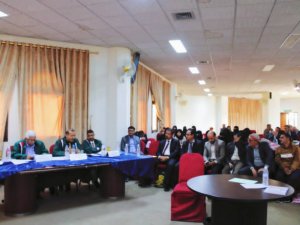
The defense session was attended by faculty members, researchers, students, colleagues, and the researcher’s family.