Master’s Degree Awarded to Ms. Elham Ali Mahyoub Al-Hammadi in Political Science
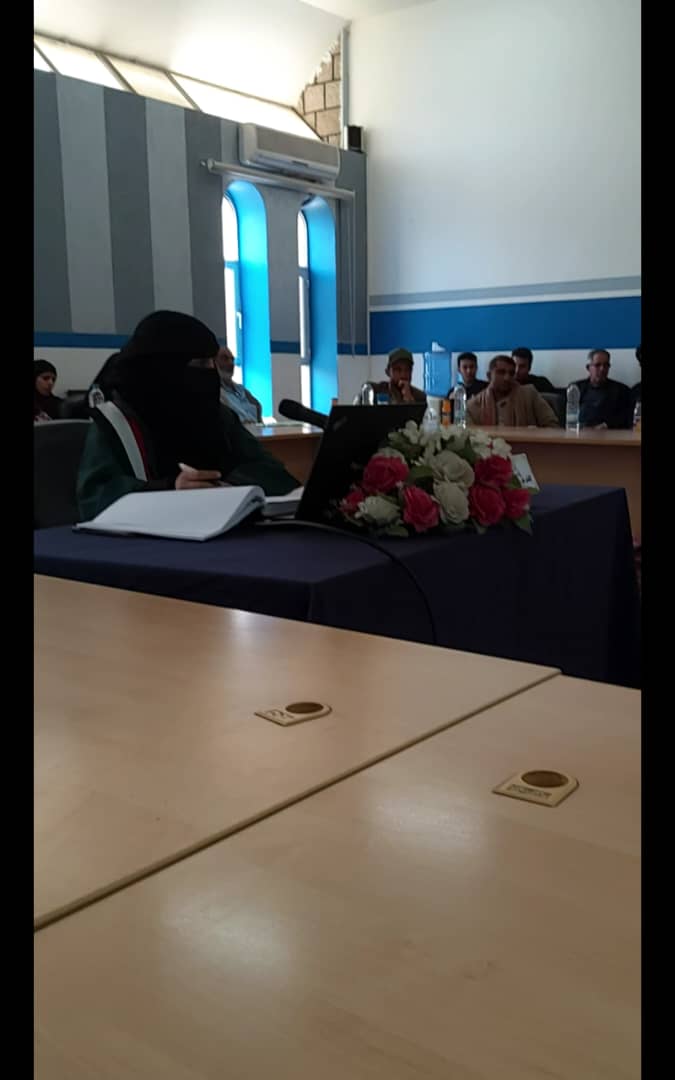
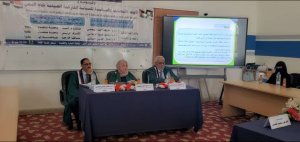
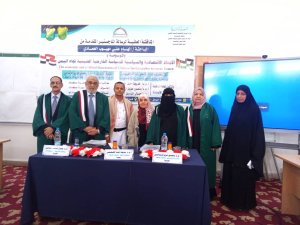
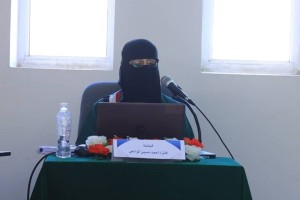
Ms. Elham Ali Mahyoub Al-Hammadi was awarded a Master’s Degree in Political Science for her thesis titled: The Economic and Political Dimensions of Chinese Foreign Policy toward Yemen, which was submitted to the Faculty of Commerce and Economics – Sana’a University. The MA defense was held on Thursday, December 25, 2025.
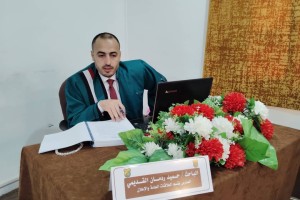
The MA Viva-voce Committee, which was formed based on a resolution issued by the Graduate Studies and Scientific Research Council, consisted of the following:
| # | Committee Members | Designation | Position |
| 1 | Assoc. Prof. Khadijah Ahmed Al-Haysami | Internal Examiner | Chair |
| 2 | Assoc. Prof. Mansour Aziz Al-Zandani | Main Supervisor | Member |
| 3 | Assoc. Prof. Jamal Al-Deen Al-Salmi | External Examiner | Member |
The study aimed to examine and analyze the nature and objectives of Chinese foreign policy toward Yemen, with a focus on its economic roles, positions toward major developments, and an assessment of its opportunities and challenges.
The study yielded a number of findings summarized as follows:
- China’s relations with Yemen, both historically and in the present as a case study, have been characterized predominantly by political, diplomatic, and economic dimensions.
- China’s economic diplomacy engages with all parties in Yemen, the regional environment, and the international community in an effort to de-escalate the conflict, promote peace in Yemen, ensure regional stability, and secure the flow of its economic and commercial interests.
- Yemen possesses significant natural resources and wealth that grant it a strategic position in global politics, thereby rendering it an arena of international competition.
- China pursues indirect economic dominance through the use of investment and loan mechanisms to influence developing countries, which constitutes a form of modern economic colonialism and contradicts its official discourse.
- The Belt and Road Initiative (BRI) represents a national strategic project for China and the most important route toward global influence, while Yemen occupies a central and strategic position within this initiative due to its geostrategic location, both historically and in contemporary contexts.
- China’s large-scale initiatives cannot achieve their intended success in Yemen unless they are designed to serve Yemen’s core national interests, fully respect national sovereignty and independent decision-making, and ensure fairness in the distribution of mutual economic benefits.
- China employs the BRI as a tool of soft diplomacy to enhance its political and economic influence, often prioritizing its own interests over those of partner countries through unsustainable projects and loan-based financing that may lead to the loss of strategic national assets.
In light of these findings, the researcher provided a number of recommendations as follows:
- To counter Western interventions and contribute to the formation of a multipolar world order, Yemen and China should maintain their strategic relations, grounded in mutual respect and genuine cooperation.
- Given China’s engagement with all Yemeni parties, it should work to unify their positions in order to end the aggression against Yemen and open the way for Chinese participation in rebuilding Yemen’s economy and infrastructure.
- For the success of the Belt and Road Initiative, equitable distribution of benefits between China and Yemen must be ensured.
- Yemen’s benefit from Chinese technology and expertise in the fields of sustainable development should be guaranteed.
- To avoid becoming a new form of economic colonial power, China should avoid repeating the mistakes of Western colonial powers.
- Yemeni elites should negotiate with China based on strategic awareness to secure national interests through fairer terms that protect Yemen’s economy and sovereignty.
The defense session was attended by a number of academics, researchers, students, colleagues, and the researcher’s family.