Master’s Degree Awarded to Ms. Somaya Abdo Al-Bahri in Information Technology
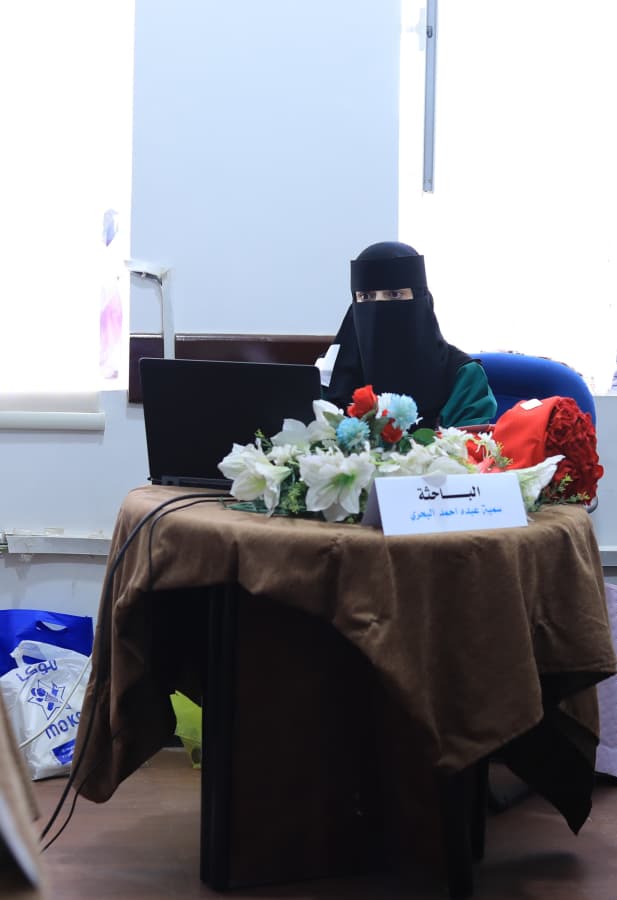
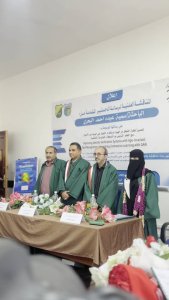
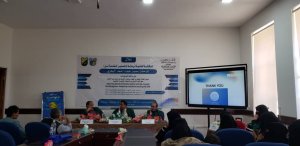
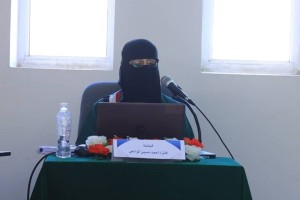
Ms. Somaya Abdo Ahmed Al-Bahri was awarded a Master’s Degree in Information Technology for her thesis titled: Improving Identity Verification Systems Using Cross-Generational Face Recognition: Integrating Contrastive Learning with Generative Adversarial Networks (GANs), which was submitted to the Department of Information Technology, Faculty of Computer Science and Information Technology – Sana’a University. The MA defense was held on Monday, December 1, 2025.
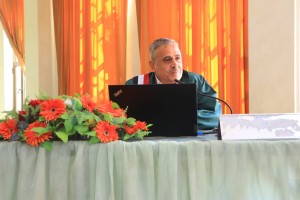
The MA Viva-voce Committee, which was formed based on a resolution issued by the Graduate Studies and Scientific Research Council, consisted of the following:
| # | Committee Members | Designation | Position |
| 1 | Prof. Ibrahim Ahmed Al-Baltah | Internal Examiner | Chair |
| 2 | Prof. Naji Ali Al-Shaibani | Main Supervisor | Member |
| 3 | Assoc. Prof. Khalil Saeed Al-Wajeeh | External Examiner | Member |
The study aimed to:
- Analyze the impact of aging by examining how facial aging affects facial features and the accuracy of face recognition systems.
- Develop intelligent techniques by designing models—such as Generative Adversarial Networks (GANs)—capable of extracting personal identity independently of age-related variations.
- Provide comprehensive datasets by compiling diverse databases (covering different ages, ethnicities, and lighting conditions) to ensure robust performance under real-world scenarios.
- Test and evaluate performance by measuring the efficiency of the proposed models using internationally recognized benchmarks to verify their superiority over existing systems.
The study findings demonstrated, through experimental evaluation using 5-fold cross-validation, that the proposed model outperformed existing approaches by a margin ranging from 2% to 5% in cross-database verification tests (FG ⇒ MO and MO ⇒ FG).
In light of the findings, the researcher recommended:
- Implementing pilot testing and scalability assessment by deploying the system in a limited real-world environment.
- Designing a flexible and scalable system architecture capable of efficiently handling millions of verification requests.
- Adopting high-performance computing (HPC) infrastructure to enhance processing speed and system reliability.
- Ensuring security, privacy, and ethical compliance through the activation of end-to-end data encryption.
The defense session was attended by a number of academics, researchers, students, colleagues, and the researcher’s family.