Master of Science Degree for Researcher Samira Al-Thari from the Water and Environment Centre, Sana’a University
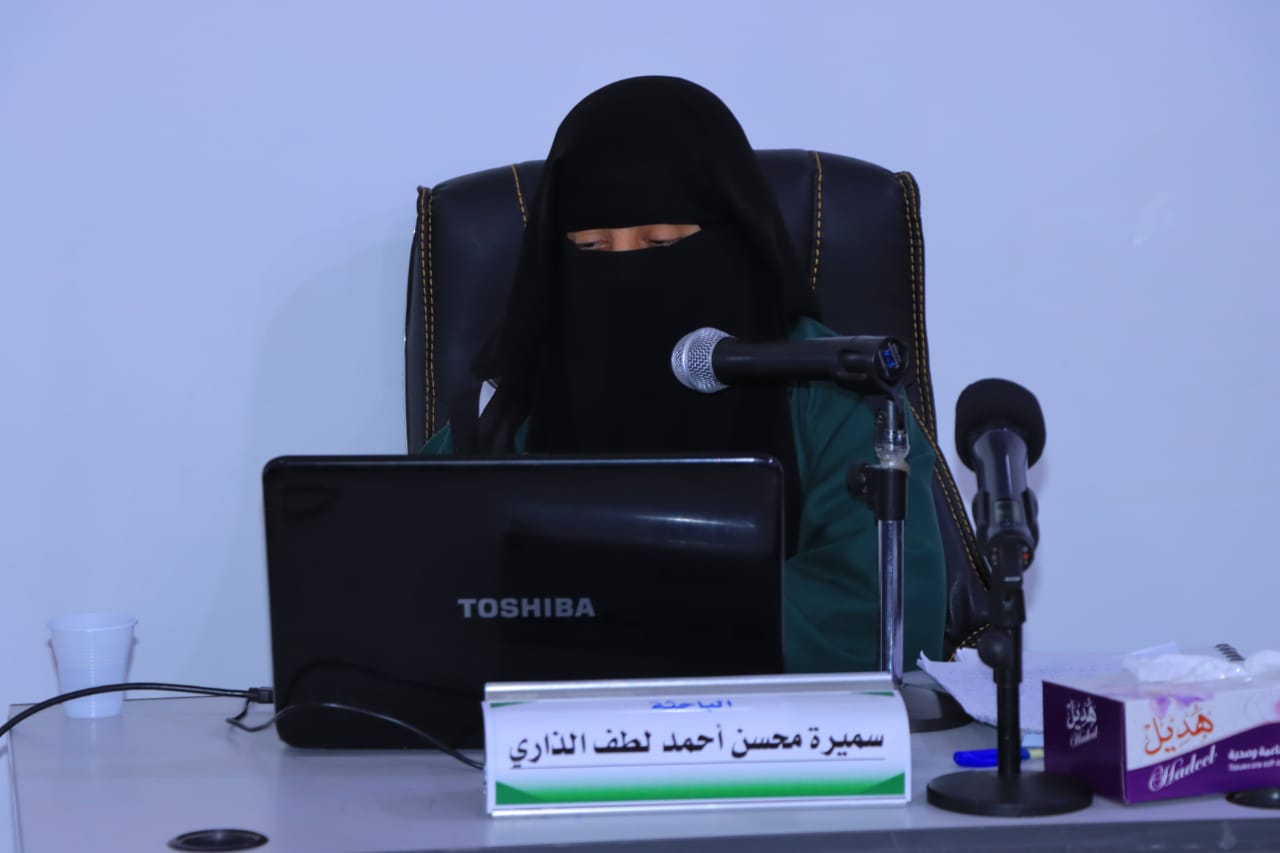
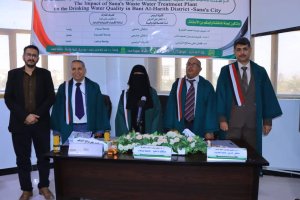
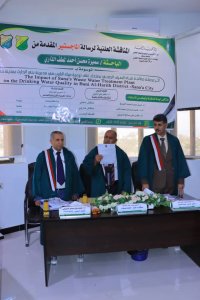
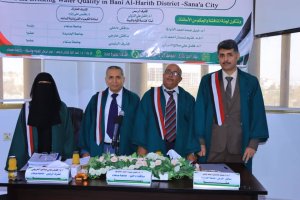
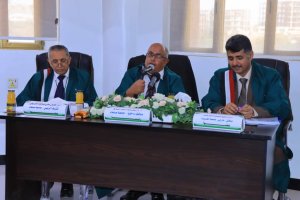
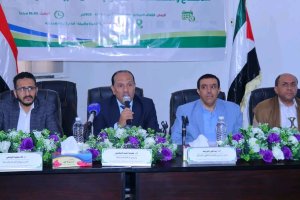
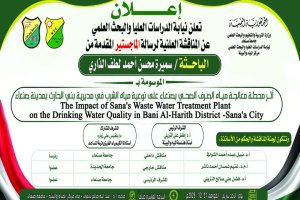
Researcher Samira Mohsen Ahmed Lutfi Al-Thari obtained a Master’s degree with distinction in Integrated Water Resources Management from the Water and Environment Center at Sana’a University, for her thesis titled ” The Impact of Sana’s Waste Water Treatment Plant on the Drinking Water Quality in Bani Al-Harith District -Sana’a City”, on Sunday, December 21, 2025, corresponding to 1 Rajab 1447 AH. The defense committee consisted of:
Prof. Dr. Nabil Abdu Al-Shawafi, internal examiner- committee chairman;
Prof. Dr. Fadhl Ali Al-Nozaily, main supervisor – committee member;
Assoc. Prof. Dr. Ghanim Shamsan, external examiner- committee member.
The study aimed to analyze the impact of Sana’a wastewater treatment plant on the quality of drinking water sources in the wells of Bani Al-Harith District within the framework of integrated water resources management, through evaluating the physical, chemical, and microbiological quality of water, along with the health, social, and economic effects associated with the use of polluted water. The thesis reached a number of results, including the following: Examination of trace elements indicated concentrations contamination of groundwater and soil, as well as some wells contained bacterial contamination, indicating the impact of wastewater discharged from the WWTP through irrigation.
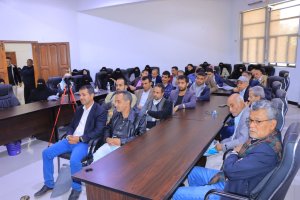
According to the survey results of those interviewed, the common diseases among the residents of Bani Al-Harith are diarrhea at 46%, skin diseases at 31%, malaria at 15%, and typhoid at 8%. By age, girls are the most affected by diarrhea (30%), followed by boys (27%), attributed to farmers’ practices in using wastewater for irrigation and the low efficiency of the wastewater treatment plant. The research concluded that there is a lack of clear regulations regarding the reuse of wastewater in the area, and that there are no laws or traditions followed by farmers in irrigating with wastewater. Additionally, farmers do not pay attention to their health or use the necessary preventive measures to handle wastewater during irrigation. The study recommended the necessity of improving the efficiency of the treatment plant to treat wastewater to a level acceptable for agriculture according to Yemeni standards, preventing the use of untreated wastewater for irrigation, and stopping the sale of crops irrigated with sewage until they are disinfected. It also recommended strengthening supervision on nearby wells, activating legal and awareness frameworks to protect groundwater and public health. The study further recommended that the National Water Resources Authority, based on its mandates, to regularly monitor the quality of water in wells near the treatment plant and take appropriate measures to preserve and protect the deep groundwater layer in the area from pollution and mitigate depletion. Additionally, it recommended that the Sana’a Water and Sanitation Local Corporation provide alternative water sources for the residents of Bani Al-Harith due to the contamination of wells, encourage investors to implement treatment plants for polluted wells, and activate regular meetings for water user associations to educate farmers (both men and women) about not using untreated wastewater for irrigation and to raise their awareness that it causes diseases when used. A number of academics, researchers, and graduate students attended the discussion, along with a select group of interested individuals, colleagues of the researcher, and her family members, in an academic atmosphere that reflected the importance of the study topic.