Master’s Degree Awarded to Mr. Mohammed Al-Joulhi in Integrated Water Resources Management

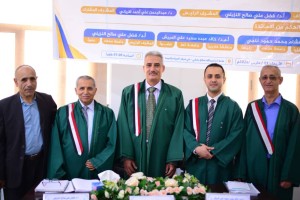
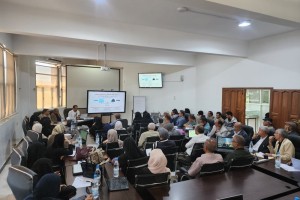
Mr. Mohammed Abdulsamad Haza’a Mohammed Al-Joulhi was awarded a Master’s Degree in Integrated Water Resources Management with Distinction for his thesis titled: Evaluation of Yemeni Environmental, Social, and Occupational Health and Safety Regulations Compared with the Environmental and Social Framework of the World Bank, which was submitted to Water and Environment Center – Sana’a University. The MA defense was held on Wednesday, 23 Ramadan 1447 Hijri, corresponding to March 11, 2026.
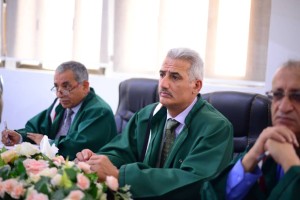
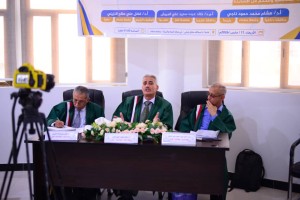
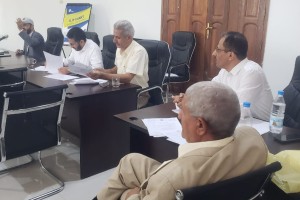
The MA Viva-voce Committee, which was formed based on a resolution issued by the Graduate Studies and Scientific Research Council, consisted of the following:
Committee Members Designation Position
1 Prof. Hisham Mohammed Hamoud Naji Internal Examiner Chair
2 Prof. Fadl Ali Saleh Al-Nuzaili Main Supervisor Member
3 Assoc. Prof. Khaled Abdo Saeed Al-Mareesh External Examiner Member
The thesis aimed to evaluate the Yemeni legal framework in the fields of environment, social safeguards, and occupational health and safety through a comparative analysis with the Environmental and Social Framework (ESF) of the World Bank, in order to measure the degree of alignment between national legislation and international standards and assess the effectiveness of their application within Yemen’s institutional and legislative context.
The study yielded several key findings summarized as follows:
– A preliminary level of compatibility was identified between Yemeni laws and international standards in the fields of environment, social safeguards, and occupational health and safety.
– Implementation gaps were found, stemming from several institutional and structural challenges.
– Technical capacities were limited within some entities responsible for enforcing environmental, social, and health regulations.
– Overlapping mandates were observed among institutions tasked with oversight and enforcement.
– Effective mechanisms for monitoring, follow‑up, and institutional accountability were absent.
In light of these findings, the researcher recommended the following:
– Updating the legislative framework and regulatory bylaws governing environmental, social, and occupational health and safety sectors in Yemen to align with international standards.
– Strengthening institutional coordination among the entities responsible for implementing these regulations.
– Developing enforcement and monitoring mechanisms to ensure effective implementation of relevant laws and regulations.
– Building technical and institutional capacities of competent authorities in the fields of environmental and social assessment and occupational health and safety.
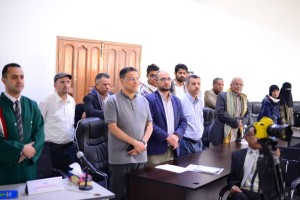
The defense session was attended by a number of academics, researchers, students, colleagues, and the researcher’s family.
Click here to download the summary
Click here to view the announcement of the thesis defense result