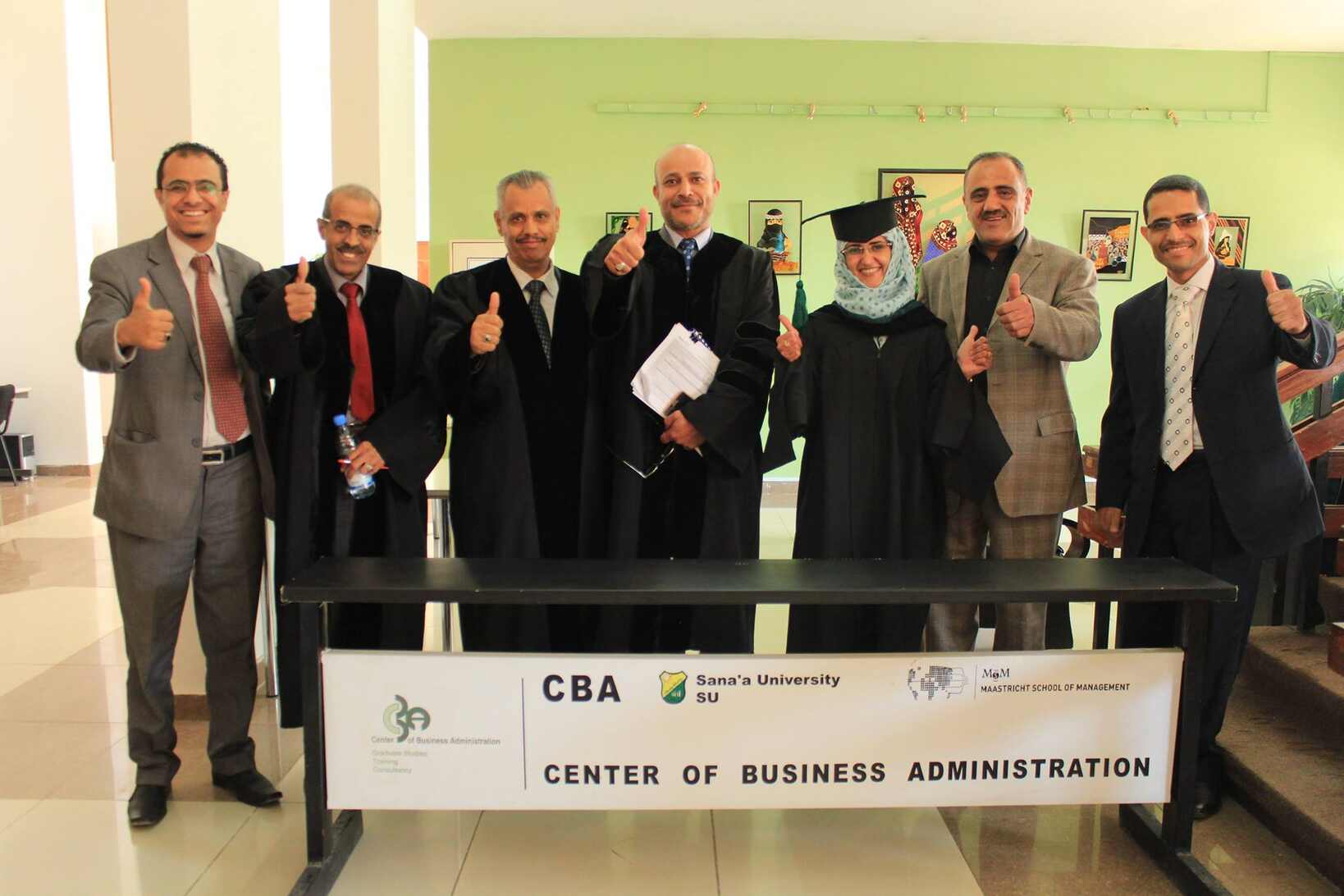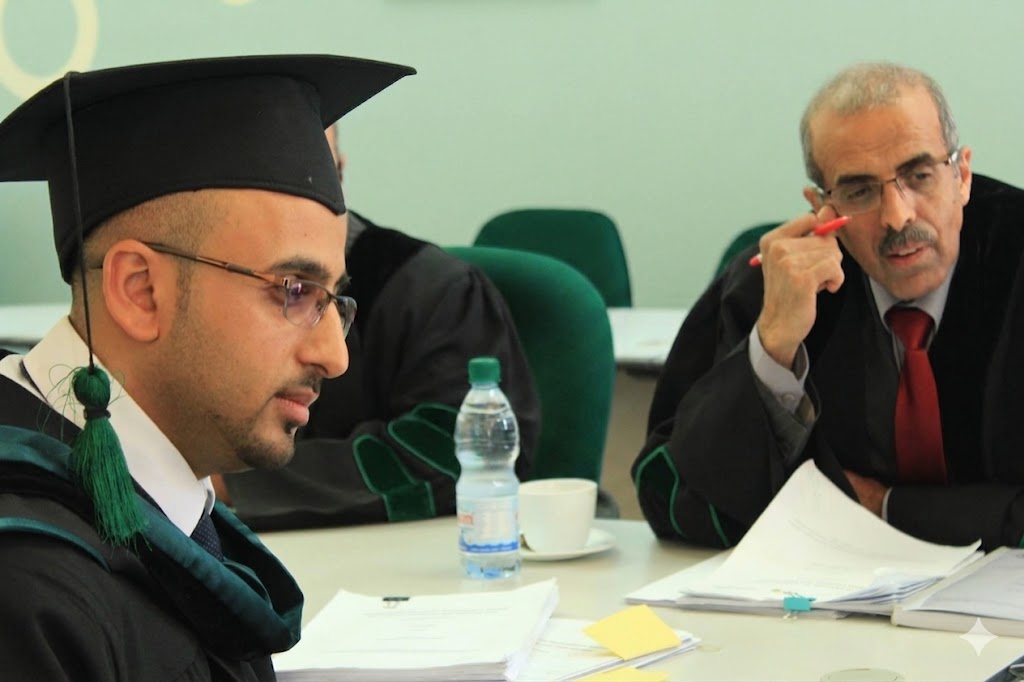
Researcher Majed Mohammed Saleh Al-Kumaim was awarded a PhD degree in Business Administration for his dissertation titled: The Role of Strategic Agility in Achieving Competitive Advantage through Entrepreneurial Orientation in Yemeni Banks: A Field Study, which was submitted to the Center of Business Administration –Sana’a University. The dissertation defense was held on Tuesday, August 11, 2026.
The PhD Viva-Voce Committee, which was formed based on a resolution issued by the Graduate Studies and Scientific Research Council, consisted of the following:
# | Committee Members | Designation | Position |
1 | Prof. Ahmed Mohammed Al-Shami | Internal Examiner | Chair |
2 | Prof. Sinan Ghaleb Al-Marhadi | Main Supervisor | Member |
3 | Assoc. Prof. Abdul Fattah Ali Al-Qurs | External Examiner | Member |
The study aimed to examine the role of strategic agility and its dimensions—vision and goal clarity, strategic sensitivity, core capabilities, shared responsibility, and appropriate decision-making—in achieving competitive advantage through entrepreneurial orientation in Yemeni banks.
It also sought to determine the extent to which the mediating variable of entrepreneurial orientation—with its dimensions of creativity and innovation orientation, proactiveness, competitive aggressiveness, autonomy, and risk-taking—mediates the relationship between strategic agility and competitive advantage in Yemeni banks.
The study adopted a descriptive-analytical approach. The study population comprised 700 senior, middle, and executive management leaders working in 16 Yemeni banks in the Capital Secretariat, Sana’a. The sample consisted of 350 participants, representing 50% of the population, in accordance with the statistical requirements for Structural Equation Modeling (SEM), which require a minimum of five observations for each of the 70 questionnaire items.
The researcher developed a questionnaire as the primary data collection instrument and used SmartPLS for statistical analysis and Structural Equation Modeling. The questionnaire was distributed in accordance with each bank’s policies through its human resources departments to a purposive, non-probability sample.
The findings showed that the direct effect of strategic agility on competitive advantage in Yemeni banks was 0.211. In the presence of the mediating variable of entrepreneurial orientation, the effect increased by approximately three and a half times, reaching a total effect coefficient of 73.1%, and this effect was statistically significant. The findings also showed that entrepreneurial orientation partially mediated the relationship between strategic agility and competitive advantage.
Regarding the sub-dimensions of strategic agility, the findings showed statistically significant effects. The effect of vision and goal clarity on competitive advantage was 0.164, increasing by approximately four times in the presence of entrepreneurial orientation, with a total effect coefficient of 64.9%. Entrepreneurial orientation partially mediated the relationship between vision and goal clarity and competitive advantage.
The effect of strategic sensitivity on competitive advantage was 0.151, increasing by more than four times in the presence of entrepreneurial orientation, reaching an effect coefficient of 62%. The mediation between strategic sensitivity and competitive advantage was partial.
The effect of core capabilities on competitive advantage was 0.153, increasing by approximately four and a quarter times in the presence of entrepreneurial orientation, reaching an effect coefficient of 64.6%. Entrepreneurial orientation partially mediated the relationship between core capabilities and competitive advantage.
The findings also demonstrated a statistically significant effect of shared responsibility on competitive advantage, with full mediation by entrepreneurial orientation in Yemeni banks and a total effect coefficient of 57.7%. Likewise, appropriate decision-making had a statistically significant effect on competitive advantage, with full mediation by entrepreneurial orientation and a total effect coefficient of 62.7%.
The study recommended that Yemeni banks organize training courses in strategic management, with particular emphasis on strategic agility as a contemporary management philosophy, as well as training employees at various management levels in entrepreneurship and entrepreneurial orientation. Such training would familiarize employees with their concepts, dimensions, components, and characteristics and develop their related skills, given their importance as sources of competitive advantage.
The study further recommended clarifying the complementary relationship between strategic agility and entrepreneurial orientation and their joint role in achieving competitive advantage, while training employees in sound practices related to entrepreneurial orientation and strategic agility.
It also emphasized the importance of Yemeni banks, amid continuous and accelerating environmental changes, focusing on responding rapidly to and adapting to such changes from an entrepreneurial perspective. This should include pursuing competitive advantage by improving the quality and delivery of banking services, leveraging technological developments and communication technologies to meet customers’ needs and preferences in ways compatible with their purchasing power, and providing diverse services that address the needs of different customer segments.
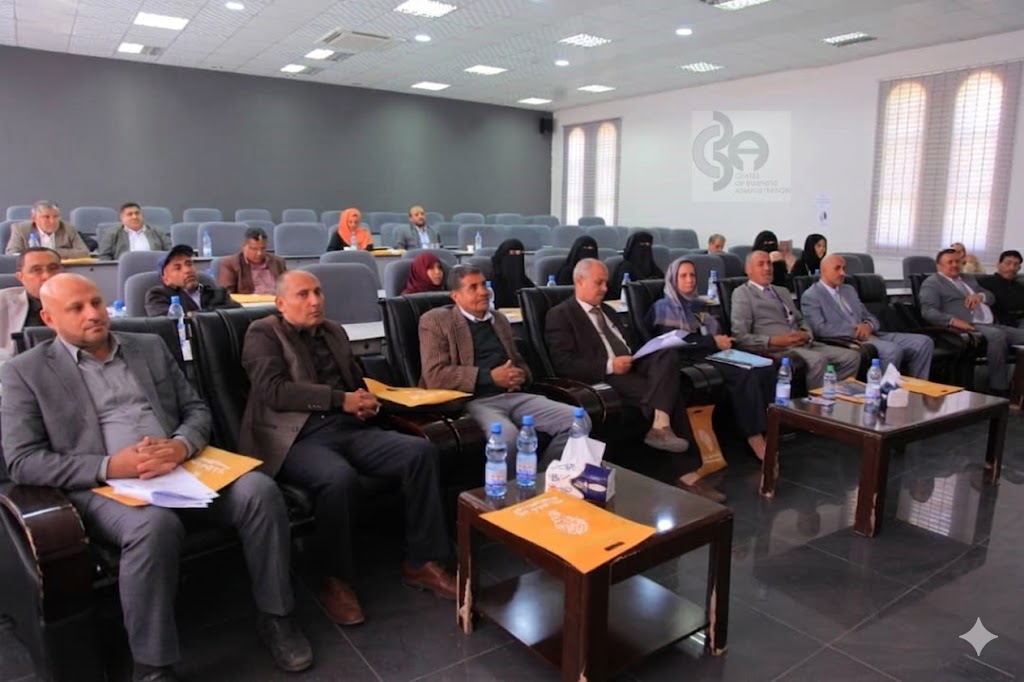
The dissertation defense was attended by a number of academics, postgraduate students, researchers, as well as the researcher’s colleagues and family members.
Researcher Ibrahim Mohammed Mohammed Al-Faqih was awarded a PhD degree in Business Administration for his dissertation titled: The Role of Social Responsibility in Achieving Sustainable Development in the Context of Knowledge Management: A Study of Hayel Saeed Anam & Co. Group of Companies in the Capital Secretariat – Sana’a, which was submitted to the Center of Business Administration –Sana’a University. The dissertation defense was held on Monday, August 10, 2026.
The PhD Viva-Voce Committee, which was formed based on a resolution issued by the Graduate Studies and Scientific Research Council, consisted of the following:
# Committee Members Designation Position
1 Assoc. Prof. Hamoud Abdullah Saleh Aqlan- Internal Examiner – Chair
2 Prof. Abdulrazzaq Mohammed Al-Marani – Main Supervisor – Member
3 Assoc. Prof. Zayed Shawsh – External Examiner – Member
The study aimed to analyze the role of social responsibility in achieving sustainable development in the context of knowledge management at Hayel Saeed Anam & Co. Group of Companies in the Capital Secretariat – Sana’a. It examined the level of social responsibility and knowledge management practices, the level of sustainable development achieved, and the nature of the roles and relationships among these variables.
The study adopted a quantitative descriptive-analytical approach. Data were collected through a questionnaire using a census of all managerial personnel working in the group’s companies. The study population comprised 207 individuals across 12 companies of Hayel Saeed Anam & Co. Group operating in the Capital Secretariat – Sana’a.
The findings showed that the group’s level of social responsibility practices was high, as was its level of knowledge management practices. The level of sustainable development achievement was also found to be high.
The findings further revealed a positive role of social responsibility in achieving sustainable development overall. Positive roles were also identified for the humanitarian, ethical, and legal dimensions of social responsibility, whereas the economic dimension showed no statistically significant role in achieving sustainable development.
The findings also demonstrated a positive overall role of social responsibility in knowledge management. Positive roles were identified for the humanitarian, ethical, and legal dimensions in knowledge management, while the economic dimension showed no role in this regard.
The study further found that knowledge management played an overall role in achieving sustainable development. Knowledge acquisition, knowledge dissemination, and knowledge application each had a moderately positive role in achieving sustainable development, whereas knowledge generation and knowledge storage showed no significant role.
Regarding the mediating role of knowledge management in the relationship between social responsibility and sustainable development, the findings demonstrated a positive overall mediating role of knowledge management in strengthening the contribution of social responsibility to sustainable development, at a moderate level. At the dimensional level, knowledge application, knowledge dissemination, and knowledge acquisition demonstrated strong positive mediating roles between social responsibility and sustainable development, whereas knowledge generation and knowledge storage showed no mediating role in this relationship.
The study recommended adopting a model for practicing social responsibility to achieve sustainable development and promoting its application among other Yemeni companies and business organizations. It also recommended strengthening knowledge management practices to support companies’ efforts to achieve sustainable development and enhance their contribution to society.
The dissertation defense was attended by a number of academics, postgraduate students, researchers, as well as the researcher’s colleagues and family members.
Researcher Shukri Ahmed Ali Abdulrab was awarded a PhD degree in Business Administration for his dissertation titled: The Impact of Human Resource Management on Improving Job Performance through Organizational Climate: A Field Study on Development Funds in the Republic of Yemen, which was submitted to the Business Administration Center for Graduate Studies –Sana’a University. The dissertation defense was held on Sunday, August 2, 2026.
The PhD Viva-Voce Committee, which was formed based on a resolution issued by the Graduate Studies and Scientific Research Council, consisted of the following:
# | Committee Members | Designation | Position |
1 | Assoc. Prof. Abdulaziz Al-Mekhlafi | Internal Examiner | Chair |
2 | Assist. Prof. Zayed Naji Nasser Shawsh | Main Supervisor | Member |
3 | Assoc. Prof. Ali Al-A’jam | External Examiner | Member |
The study examined the impact of human resource management (HRM), encompassing workforce planning, recruitment, training and development, incentives, and performance appraisal, on improving job performance through organizational climate as a mediating variable in development funds in the Republic of Yemen. It also assessed the level of implementation of HRM practices, organizational climate, and job performance, while analyzing the relationships among these variables to support enhanced institutional performance within development funds.
The findings revealed that the overall status of human resource management and organizational climate in the development funds was at a moderate level, whereas job performance was rated high. The results also demonstrated a statistically significant positive effect of both human resource management and organizational climate on improving job performance, as well as a positive impact of human resource management on organizational climate. In addition, the study confirmed an indirect positive effect of human resource management on job performance through organizational climate, indicating that organizational climate serves as a positive partial mediator in strengthening this relationship.
The study further identified statistically significant differences across several dimensions of the research attributable to workplace location, age groups, educational level, job title, and years of experience.
The researcher recommended strengthening the role of human resource management in development funds by attracting qualified human capital, fostering a positive organizational climate, improving administrative systems and procedures, ensuring advance planning of tasks and responsibilities, and adopting a continuous improvement approach to job performance. These measures, the study concluded, would enhance institutional efficiency and contribute to achieving the objectives of development funds.
The dissertation defense was attended by a number of academics, postgraduate students, researchers, as well as the researcher’s colleagues and family members.
Researcher Yahsob Mohammed Ali Al-Rabea was awarded a PhD degree in Business Administration for his dissertation titled: The Impact of Training on the Quality of Healthcare Services in Private Hospitals Through Knowledge Management: A Field Study on Private Hospitals in the Capital Secretariat–Sana’a, which was submitted to the Business Administration Center for Graduate Studies –Sana’a University. The dissertation defense was held on Tuesday, July 28, 2026.
The PhD Viva-Voce Committee, which was formed based on a resolution issued by the Graduate Studies and Scientific Research Council, consisted of the following:
# | Committee Members | Designation | Position |
1 | Prof. Abdulkhaleq Hadi Mohsen Tawaf | External Examiner | Chair |
2 | Prof. Sinan Ghaleb Radwan Al-Marhadi | Main Supervisor | Member |
3 | Assoc. Prof. Hamoud Abdullah Saleh Aqlan | Internal Examiner | Member |
The study aimed to examine the impact of training on improving the quality of healthcare services in private hospitals in the Capital Secretariat (Sana’a) through the mediating role of knowledge management. It also sought to assess the level of implementation of training and knowledge management practices and analyze the relationships among these variables in order to support institutional development and enhance the quality of healthcare services.
The findings revealed a statistically significant positive effect of training on improving the quality of healthcare services. The study further demonstrated that knowledge management plays a mediating role in strengthening this effect, highlighting its importance in maximizing the effectiveness of training initiatives and improving institutional performance.
The researcher recommended aligning training programs with the actual needs of healthcare personnel, strengthening knowledge management practices within private hospitals, and leveraging modern technologies to improve the quality of healthcare services and enhance institutional performance.
The dissertation defense was attended by a number of academics, postgraduate students, researchers, as well as the researcher’s colleagues and family members.
July 26, 2026
Sana’a University – Monday, July 13, 2026
Mr. Mohammed Nadhim Abdulmalek Saeed Al-Dubaie has successfully obtained his PhD degree in the Philosophy of Business Administration from the Center of Business Administration Studies, Sana’a University. His dissertation, titled: The Role of Digital Transformation in Improving the Quality of Yemeni Banking Services through Information Security Efficiency A Field Study on Banks Operating in the Capital Secretariat – Sana’a
– the supervision of Associate Professor Dr. Ahmed Ahmed Al-Rahoumi.
The Viva-Voce Committee, formed based on a resolution issued by the Post-Graduate Studies and Scientific Research Council, consisted of the following members:
Prof. Abdullah Abdullah Alsanafi – Internal Examiner, Sana’a University.
Prof. Saif Salam Al-Hakimi – External Examiner, Al-Hudaidah University.
Assoc. Ahmed Ahmed Al-Rahoumi – Supervisor, Sana’a University
The Viva-Voce was attended by a number of academics, researchers, and interested participants, as well as several colleagues and family members of the researcher.
This study aimed to examine the role of digital transformation, encompassing the dimensions of (Technology, Process digitization, Digital strategy, Human resources, and Data); in enhancing the quality of banking service through information security efficiency in Yemeni banks operating in the Capital Secretarial of Sana’a. Banking service quality was measured through the dimensions of (Reliability, Tangibility, Responsiveness, Assurance, and Empathy). While information security efficiency was assessed through (Information confidentiality, Information availability, Information integrity, and Information timeliness).
The study adopted a quantitative approach on a descriptive analytical and correlational research design. A questionnaire was used as the primary data collection instrument. The study sample consisted of 401 employees, selected from 450 distributed questionnaires, through proportional stratified random sampling from all banks operating in the Capital Secretarial, ensuring adequate representation of different organizational and job levels.
Data were analyzed using the (SPSS) version 28 for data, for descriptive statistics, validity, and reliability testing, and SmartPLS 4 for partial least Squares Structural Equation Modeling (PLS-SEM) to test the study hypotheses and examine direct and indirect (mediating) effects.
The findings revealed that the levels of digital transformation, banking service quality, and information security efficiency were relatively high. The results also demonstrated a statistically significant positive effect of digital transformation on banking service quality and information security efficiency. Furthermore, information security efficiency exerted a statically significant positive effect on banking service quality. The mediation analysis confirmed that information security efficiency partially mediates the relationship between digital transformation and banking service quality, indicating that strengthening information security enhances the positive impact of digital transformation on the quality of banking service.
Based on these findings, the study recommends increasing investment in digital infrastructure, developing human capabilities through specialized training programs, adopting more comprehensive digital strategies, and strengthening information security system in accordance with international standards. These measures are expected to improve banking service quality and enhance the competitiveness of Yemeni banks.
Sana’a University – Monday, July 20, 2026
Mr. Hussein Abdullah Ali Ahmed Bin Hafiz Al-Hashemi has successfully obtained his PhD degree in the Philosophy of Business Administration from the Center of Business Administration Studies, Sana’a University. His dissertation, titled: “The Role of Strategic Leadership in Achieving Competitive Advantage Through Strategic Vigilance in the Yemeni Telecommunications Sector“, was supervised by Associate Professor Dr. Mohammed Abdullah Al-Ashwal.
The Viva-Voce Committee, formed based on a resolution issued by the Post-Graduate Studies and Scientific Research Council, consisted of the following members:
- Prof. Amal Mohammed Al-Mujahid – External Examiner and Chair, Dhamar University.
- Assoc. Prof. Fadhl Mohammed Al-Mahmoudi – Internal Examiner, Sana’a University.
- Assoc. Prof. Mohammed Abdullah Al-Ashwal – Supervisor, Al-Bayda University.
The Viva-Voce was attended by a number of academics, researchers, students, and interested participants, as well as several colleagues and family members of the researcher.
This study aimed to investigate the role of strategic leadership in achieving competitive advantage through strategic vigilance in the Yemeni telecommunications sector. It also sought to assess the level of strategic leadership practices, strategic vigilance, and competitive advantage within the sector under study. The study adopted a quantitative approach using both descriptive and analytical methods and employed a questionnaire as the primary instrument for data collection.
The study population comprised all employees occupying leadership and supervisory positions in the Yemeni telecommunications sector, totaling 790 employees across five telecommunications organizations located in Sana’a, Yemen: the Public Telecommunications Corporation (PTC), Yemen Mobile, Sabafon, YOU, and TeleYemen. A stratified random sample of 316 respondents was selected, of which 286 valid questionnaires were returned and deemed suitable for analysis, yielding a response rate of 93.67%.
Covariance-Based Structural Equation Modeling (CB-SEM) was employed to analyze the proposed relationships among the study variables. Statistical analyses were conducted using the Statistical Package for the Social Sciences (SPSS) version 27 and AMOS version 25 to achieve the study objectives and test its hypotheses.
The findings revealed that strategic vigilance plays a statistically significant partial mediating role in the relationship between strategic leadership and competitive advantage. The results also indicated statistically significant positive direct effects among the study variables, whereby strategic leadership positively influences both strategic vigilance and competitive advantage, while strategic vigilance positively contributes to the achievement of competitive advantage. At the dimensional level, commercial vigilance was found to play a statistically significant partial mediating role in the relationship between strategic leadership and competitive advantage. In contrast, neither technological vigilance nor environmental vigilance demonstrated a statistically significant mediating effect.
The study concluded that achieving competitive advantage in the Yemeni telecommunications sector requires an integration of strategic leadership practices and strategic vigilance mechanisms. Moreover, commercial vigilance represents the most influential dimension of strategic vigilance in strengthening this relationship, enabling telecommunications companies to better sense and respond to market changes, thereby enhancing their ability to achieve and sustain competitive advantage
Sana’a University – Monday, July 13, 2026
Mr. Abdullah Mohsen Mohammed Saleh Al-Zandani has successfully obtained his PhD degree in the Philosophy of Business Administration from the Center of Business Administration Studies, Sana’a University. His dissertation, titled: The Impact of Ethical Leadership on Enhancing Organizational Citizenship Behavior Through Quality of Work Life: A Field Study on Yemeni Telecommunications Sector – the supervision of Associate Professor Dr. Abdulaziz Mohammed Al-Makhlafi.
The Viva-Voce Committee, formed based on a resolution issued by the Post-Graduate Studies and Scientific Research Council, consisted of the following members:
- Prof. Sinan Ghalib Radwan Al-Murahdi – Internal Examiner, Sana’a University.
- Assoc. Nabil Mohammed Ali Al-Alafi – External Examiner, Amran University.
- Assoc. Abdulaziz Mohammed Al-Makhlafi – Supervisor, Sana’a University
The Viva-Voce was attended by a number of academics, researchers, and interested participants, as well as several colleagues and family members of the researcher.
The study aimed to examine the impact of ethical leadership on enhancing organizational citizenship behavior through quality of work life in the Yemeni telecommunications sector. It also sought to identify the level of ethical leadership practices, employees’ perceptions of organizational citizenship behavior, and the level of quality of work life within the sector.
The study adopted the descriptive-analytical approach and employed a questionnaire as the primary data collection instrument. The study population comprised all employees working at the headquarters of the telecommunications companies operating in Sana’a City, including the Public Telecommunications Corporation, Yemen Mobile, the Yemeni Omani United Telecommunications Company (YOU), Sabafon, and TeleYemen, with a total population of 4,586 employees.
A stratified random sample of 400 participants was selected, of whom 356 valid questionnaires were retrieved and analyzed using SPSS and Smart PLS software.
The findings revealed that the level of ethical leadership practices in the Yemeni telecommunications sector was relatively high, while employees’ perceptions of organizational citizenship behavior were very high. In contrast, the level of quality of work life was found to be moderately high.
The study also demonstrated a statistically significant impact of ethical leadership on enhancing organizational citizenship behavior through quality of work life. Furthermore, ethical leadership was found to have an indirect effect on organizational citizenship behavior through several dimensions of quality of work life, namely participation in decision-making, job stability and security, and work–life balance, all of which exhibited positive and statistically significant effects. Conversely, the wages and rewards dimension showed a negative yet statistically significant effect on enhancing organizational citizenship behavior.
The study recommended strengthening the adoption and systematic development of ethical leadership practices in the Yemeni telecommunications sector, given their pivotal role in improving quality of work life and promoting organizational citizenship behavior. It also recommended reviewing wage and reward policies to ensure fairness and balance in accordance with employees’ actual efforts and performance, as well as establishing clear mechanisms for distributing tasks and responsibilities among employees to reduce disparities in workload.
Sana’a, Yemen – Wednesday, May 20, 2026
The Center of Business Administration at Sana’a University today hosted a seminar for PhD candidate Mr. Ali Yahya Mohammed Fadhail, who presented his dissertation proposal titled: “The Role of Strategic Agility in Achieving Entrepreneurial Performance through Sustainable Human Resource Management: A Field Study in Industrial Companies of the Hail Saeed Anam Group & Partners.” The dissertation is being supervised by Assoc. Prof. Zayed Al-Maznooa (Supervisor).
The PhD dissertation proposal viva-voce committee consisted of the following:
• Prof. Sinan Ghalib Al-Marhadi, Professor of Business Administration – Chair and Examiner.
• Assoc. Prof. Zayed Al-Maznooa, Associate Professor of Business Administration – Supervisor and Member.
• Assoc. Prof. Fadhl Al-Mahmoudi, Associate Professor of Business Administration – Member.
• Assoc. Prof. Ali Al-Hamdi, Associate Professor of Business Administration – Member.
During the session, the researcher outlined his proposed study, detailing its objectives, significance, methodology, and the theoretical and conceptual framework it will build upon. He also presented his proposed hypotheses and analytical tools.
Following a comprehensive discussion, the committee approved the PhD dissertation proposal, commending the researcher’s efforts and acknowledging the importance of the study in enhancing entrepreneurial performance in the industrial sector.
Sana’a, Yemen – Wednesday, May 20, 2026
The Center of Business Administration at Sana’a University today hosted a seminar for PhD candidate Mr. Abdulkarim Dahan Saleh Al-Houshali, who presented his dissertation proposal titled: “The Role of Digital Leadership in Institutional Performance through Digital Transformation: A Field Study on Food Industry Companies of the Hail Saeed Anam Group.” The dissertation is being supervised by Prof. Sinan Ghalib Al-Marhadi (Supervisor).
The PhD dissertation proposal viva-voce committee consisted of the following:
• Assoc. Prof. Abdulaziz Al-Makhlaafi – Chair and Examiner.
• Assoc. Prof. Hamoud Aqlan – Member.
• Assoc. Prof. Foad Al-Makhlaafi – Member.
• Prof. Sinan Ghalib Al-Marhadi – Supervisor and Member.
During the session, the researcher outlined his proposed study, detailing its objectives, significance, methodology, and the theoretical and conceptual framework it will build upon. He also presented his proposed hypotheses and analytical tools.
Following a comprehensive discussion, the committee approved the PhD dissertation proposal, commending the researcher’s efforts and acknowledging the importance of the study in contributing to both academic and practical development in the food industry sector.
Sana’a, Yemen – Wednesday, May 20, 2026
The Center of Business Administration at Sana’a University today hosted a seminar for PhD candidate Mr. Fouad Abdullah Abdullah Aburas, who presented his dissertation proposal titled: “The Impact of Strategic Foresight on Institutional Performance through Strategic Agility: A Field Study on Industrial Sector Companies in Yemen.” The dissertation is being supervised by Assoc. Prof. Ahmed Al-Sanbani (Supervisor).
The PhD dissertation proposal viva-voce committee consisted of the following:
• Assoc. Prof. Hamoud Aqlan – Chair and Examiner.
• Assoc. Prof. Abdulrazzaq Al-Marani – Member.
• Assoc. Prof. Ahmed Huraira – Member.
• Assoc. Prof. Tawfiq Al-Sanbani – Supervisor and Member.
During the session, the researcher outlined his proposed study, detailing its objectives, significance, methodology, and the theoretical and conceptual framework upon which it is based. He also presented his proposed hypotheses and analytical tools.
Following a comprehensive discussion, the committee approved the PhD dissertation proposal, commending the researcher’s efforts and acknowledging the importance of the study in contributing to both academic and practical aspects.