Dr. Mohammed Sharafuddin Highlights Poetry’s Role in Translating International and Humanistic Events at Translation Festival
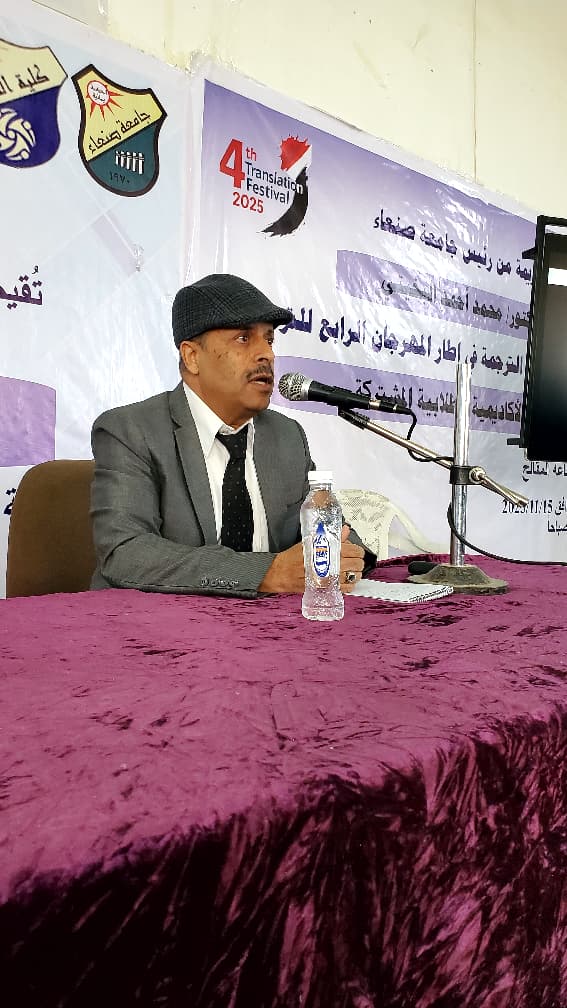
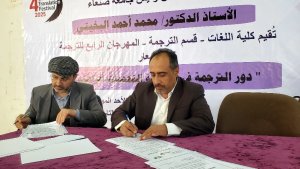
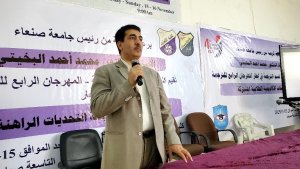
A series of academic contributions in the field of translation were presented during the recent event held as part of the Fourth Translation Festival, titled “The Role of Translation in Facing Current Challenges.”
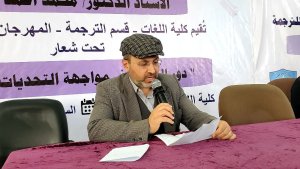
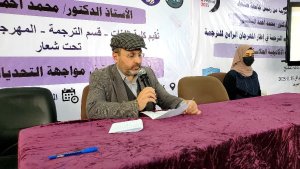
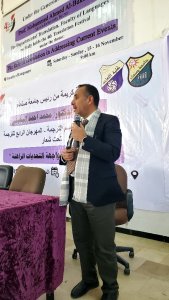
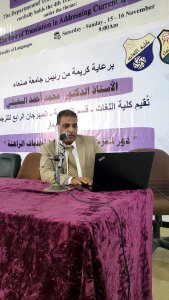
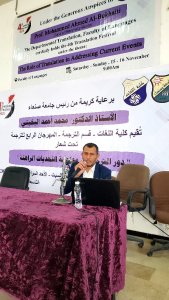
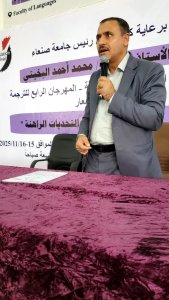
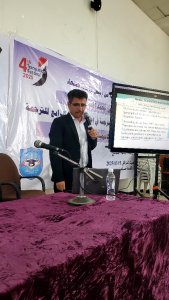
Dr. Mohammed Sharafuddin delivered a notable presentation titled “The Role of Poetry in Translating International and Humanistic Events,” in which he discussed the significant position poetry can hold in representing international and human events and transferring them to other cultures.
Dr. Sharafuddin explained that despite the difficulties encountered in translating poetry into another language, many translators have proven that the Target Language poem can reveal most if not all the hidden messages included in the original. This can be seen from such examples as the famous Rubaiyat Translation of Omar Khayyam by Edward FitzGerald in 1859. The Translation proved a great success throughout the West not because of its unique philosophy of life but also because it introduced a universally humanistic element that attracted many intellectuals during this time.
In the last two years or so this has become apparent from the response made so far by readers in various countries to poetry written and translated from Arabic or written by Palestinian authors in particular due to the intensity and clarity of feelings and because of their representation of the horrific massacres suffered by the Palestinians. Such poems prove that translation is of great importance as it succeeds in transcending censorship, prejudices and borders. One important example of these poems is “If I must Die,” a poem written by the Palestinian poet Refaat Alireer in which the poet is predicting his own death in the hands of the Israeli Zionists. His death in an Israeli bombardment of his home in Ghazzah sparked rallies of student protests and condemnations all over the world. The poem itself was turned into a song which students sang in commemoration of his death. The poem is simple and straightforward. When I translated it back into Arabic, the words came smooth and emotional. Its inspiration facilitated the translation process and made it feel like writing one’s own poem.