Master’s Degree Awarded to Researcher Ahmed Al-Siyaghi with Distinction in Diplomacy and International Relations
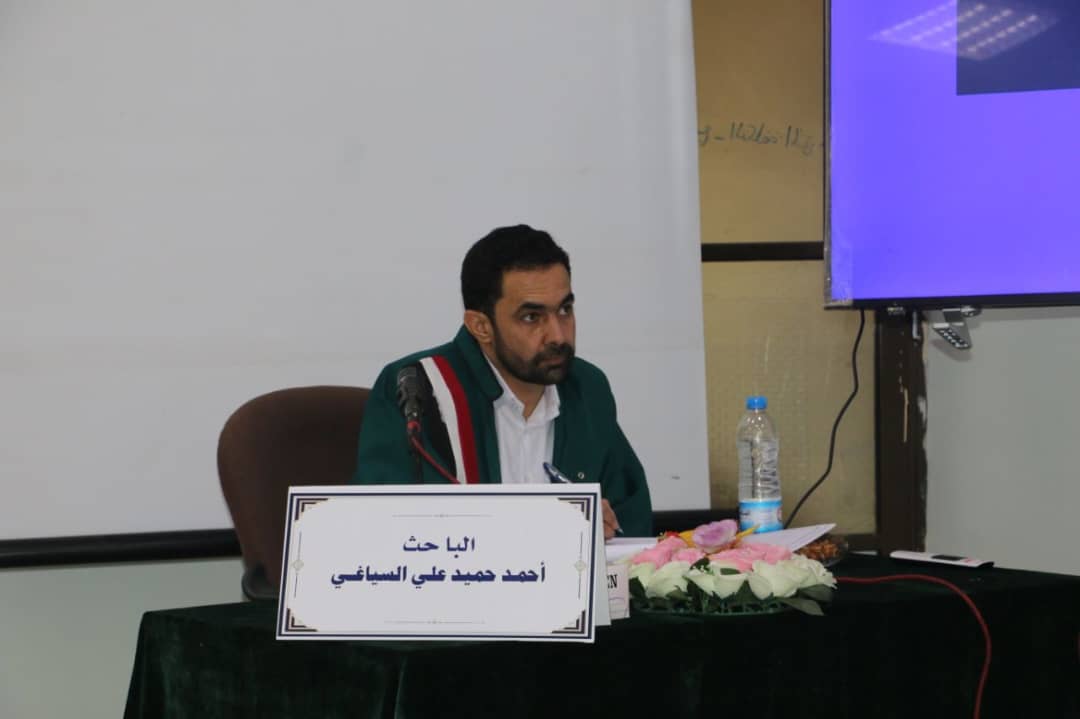
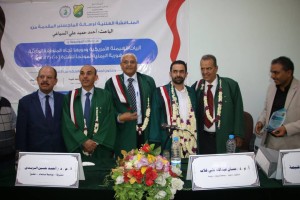
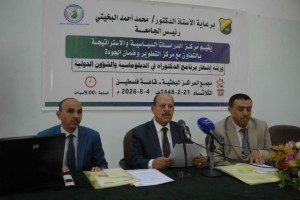
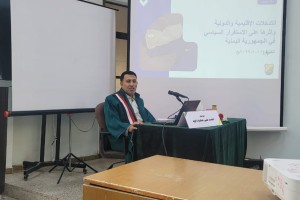
Researcher Ahmed Hameed Ali Al-Siyaghi was awarded a Master’s Degree in Diplomacy and International Relations for his thesis titled: U.S. Hegemonic Mechanisms and Their Role toward the Arab Region: The Republic of Yemen as a Case Study (2010–2023), which was submitted to the Political and Strategic Studies Center (PSSC)– Sana’a University. The MA defense was held on Sunday, August 16, 2026.
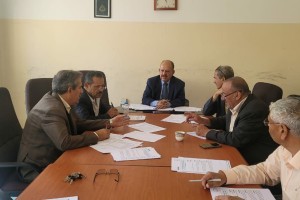
The MA Viva-voce Committee, which was formed based on a resolution issued by the Graduate Studies and Scientific Research Council, consisted of the following:
Assoc. Prof. Hassan Abdullah Ali Ghallab – Sana’a University – Internal Examiner and Committee Chair.
Dr. Adel Abdulhamid Mohammed Ghanemah – Amran University – External Examiner and Committee Member.
Assoc. Prof. Ahmed Hussein Al-Raidi – Sana’a University – Principal Supervisor and Committee Member.
The study aimed to identify the mechanisms of U.S. hegemony in general, particularly those employed toward Arab countries, examine the stages through which they evolved, and identify the factors and causes that facilitated the process of hegemony and its effects on the situation of Arab countries.
It also sought to examine the mechanisms of U.S. hegemony employed toward the Republic of Yemen, the motivations behind U.S. efforts to expand its influence in Yemen, the role of such policies in weakening the state, and appropriate means of confronting hegemony and mitigating its effects.
The study found that U.S. efforts to expand its influence and political impact worldwide benefited from its economic, military, and political capabilities, as well as from the outcomes of the First and Second World Wars, the collapse of the Soviet Union, and the emergence of a unipolar international order. These developments enabled the United States to expand its influence in various countries, control energy resources, and strengthen its economic and military superiority.
The study concluded that the United States employed a range of mechanisms to influence the policies of governments seeking to deviate from the course it sought to impose, including political and economic pressure, economic warfare, support for certain political transformations, indirect interventions, and the erosion and internal weakening of states, ultimately extending to direct and indirect military mechanisms, including military intervention, proxy wars, and the formation of military alliances.
The study recommended strengthening Arab unity, rebuilding institutions of joint Arab action based on sovereignty-related priorities, involving civil society in sovereign decision-making, developing strategic plans free from external interference, and establishing an Arab Observatory for monitoring and documenting external interventions.
It also recommended seeking to develop comprehensive national power to enhance Arab countries’ capacity to confront various forms of pressure; activating the role of Arab parliaments in overseeing international agreements concluded with foreign states in a manner that safeguards sovereignty and independence; reviewing security and military agreements to ensure national interests; and leveraging the geostrategic position of Arab countries to strengthen their negotiating positions.
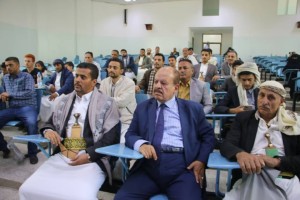
The defense session was attended by a number of academics, researchers, students, and interested participants, as well as the researcher’s colleagues and family members.