PhD Degree Awarded to Researcher Bilal Al-Hanaq in Islamic Jurisprudence and Its Principles

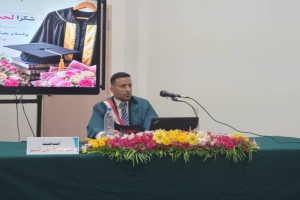
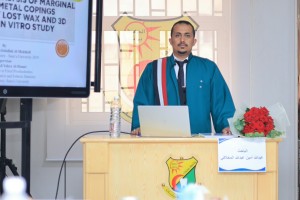
Researcher Bilal Mohammed Aziz Al-Hanaq was awarded a PhD degree in Islamic Jurisprudence and Its Principles for his dissertation titled: Imam Yahya bin Hamza’s Jurisprudential Choices: An Applied Study on Purification and Prayer as a Model, which was submitted to the Department of Islamic Studies, Faculty of Arts and Humanities– Sana’a University. The MA defense was held on Tuesday, August 18, 2026.
The PhD Viva-Voce Committee, which was formed based on a resolution issued by the Graduate Studies and Scientific Research Council, consisted of the following:

• Prof. Ali Ahmed Yahya Al-Qaedi – Amran University – External Examiner and Committee Chair.
• Dr. Mutea Mohammed Abdu Ahmed – Internal Examiner and Committee Member.
• Dr. Ali Mohammed Maqbool Al-Ahdal – Principal Supervisor and Committee Member.
The dissertation aimed to examine Imam Yahya bin Hamza’s jurisprudential choices concerning a number of issues related to purification and prayer, and to identify his preferred positions within the Zaidi School and those of other Islamic schools of jurisprudence. It also sought to present the views of jurists and scholars, examine their evidence, and identify the basis for his choices and preferred rulings within a comparative jurisprudential framework.
The study found that Imam Yahya bin Hamza was one of the prominent Zaidi scholars among the descendants of the Prophet in the seventh century AH. His work, “Al-Intisar ‘ala Ulama’ al-Amsar,” represents an extensive comparative jurisprudential encyclopedia that reflects the breadth of his knowledge, scholarly erudition, and the diversity and depth of his jurisprudential discussions and branches.
The study highlighted the importance of this work for the study of comparative jurisprudence and Zaidi jurisprudential heritage, particularly its extensive range of issues and discussions that can benefit students of Islamic knowledge, researchers, and jurists.
The dissertation recommended conducting further academic studies and research on Imam Yahya bin Hamza’s jurisprudential choices and preferred rulings across different areas of Islamic jurisprudence, including zakat, fasting, pilgrimage, and financial transactions, and making greater use of his works in comparative jurisprudential studies.
The defense session was attended by a number of academics, researchers, and postgraduate students, as well as the researcher’s colleagues and family members.