Master’s Degree Awarded to Researcher Balqis Al-Nahari in Biochemistry

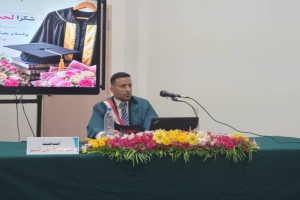
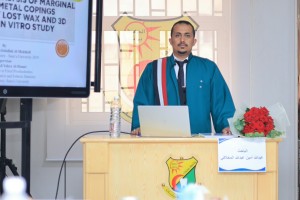
Researcher Balqis Talib Abdu Al-Nahari was awarded a Master’s Degree in Biochemistry with distinction for her thesis titled: Utility of C-Reactive Protein, HbA1c, and Vitamin D Testing in Patients with Diabetic Foot, which was submitted to the Department of Biochemistry, Faculty of Medicine and Health Sciences– Sana’a University. The MA defense was held on Sunday, August 16, 2026.

The MA Viva-voce Committee, which was formed based on a resolution issued by the Graduate Studies and Scientific Research Council, consisted of the following:
- Prof. Dhaifullah Saleh Ali – Thamar University – External Examiner and Committee Chair.
- Prof. Abdulkarim Mohammed Al-Obeidi – Sana’a University – Principal Supervisor and Committee Member.
- Fayrouz Mohammed Atroosh – Sana’a University – Internal Examiner and Committee Member.
The thesis aimed to analyze the levels of C-reactive protein, glycated hemoglobin (HbA1c), and vitamin D in patients with type 2 diabetes, with and without diabetic foot.
The study produced several findings, most notably that vitamin D levels were lower among patients with diabetic foot compared with diabetic patients without diabetic foot and healthy individuals.
The study also showed higher levels of HbA1c and C-reactive protein among diabetic patients with diabetic foot compared with diabetic patients without diabetic foot and healthy individuals. In addition, a significant statistical association was found between vitamin D levels and HbA1c, C-reactive protein, and triglycerides.
The researcher recommended conducting large-scale randomized controlled trials to confirm the causal relationship more accurately and investigating other factors, such as genetic polymorphisms of vitamin D receptors (VDR) and their role in the development of diabetic foot (DF).
She also recommended incorporating periodic assessment of serum vitamin D levels into routine examinations for diabetic patients to facilitate monitoring and early management of vitamin D deficiency. In addition, she recommended raising awareness among healthcare providers and diabetic patients of the clinical importance of vitamin D and its potential role in reducing complications and promoting wound healing.
The thesis defense was attended by faculty members, researchers, students, and interested participants as well as the researcher’s colleagues and family members.