Master’s Degree Awarded to Ms. Amani Jolah in Horticulture and Its Technologies

Ms. Amani Abdulwasea Mutahhar Jolah was awarded a Master’s Degree in Horticulture and Its Technologies for her thesis titled: The Effect of Irrigation with Treated Wastewater on the Growth and Characteristics of (Cordie africane Lam) Seedlings, which was submitted to the Faculty of Agriculture, Food and Environment – Sana’a University. The MA defense was held on Thursday, May 21, 2026.
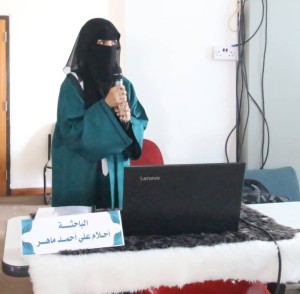
The MA Viva-voce Committee, which was formed based on a resolution issued by the Graduate Studies and Scientific Research Council, consisted of the following:
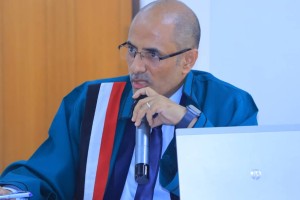
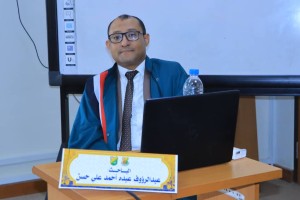
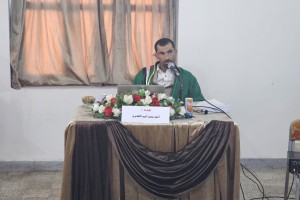
| # | Committee Members | Designation | Position |
| 1 | Assoc. Prof. Fathi Ahmed Mohammed | External Examiner | Chair |
| 2 | Assoc. Prof. Abdullah Hussein Abdullah Tahesh | Main Supervisor | Member |
| 3 | Dr. Ahmed Khaled Yahya Al-Hadwani | Internal Examiner | Member |
The thesis aimed to:
- Examine the response of the Cordie africane Lam Seedlings to irrigation using different levels of treated wastewater.
- Determine the optimum irrigation level for seedling growth under conditions of water scarcity.
- Provide reliable scientific data that can support afforestation, forestry, and water resource management programs in Yemen, while addressing the research gap concerning the Cordie africane Lam Seedlings.
The study yielded several key findings summarized as follows:
- The Cordie africane Lam Seedlings grows rapidly in the Capital Secretariat and has strong potential for wider cultivation, particularly because it responded positively to irrigation with treated wastewater without any significant adverse effects on either the soil or the plant.
- There is a noticeable shortage of information, studies, and research related to local plant species, especially economically and environmentally important trees.
- The findings reinforce the importance of considering treated wastewater as a valuable source for irrigating forest trees, despite the limited resources available for conducting the research.
In light of these findings, the researcher recommended the following:
- Expanding the use of treated wastewater as an alternative source for irrigating forest trees in the Capital Secretariat, given its role in conserving freshwater resources and improving water management under conditions of water scarcity.
- Adopting this approach as a sustainable environmental option that contributes to reducing pollution and protecting natural resources, while establishing clear technical and health regulations to ensure the safe use of treated wastewater in the agricultural sector.
The defense session was attended by a number of academics, researchers, students, colleagues, and the researcher’s family.