Master’s Degree Awarded to Researcher Fath Al-Nadeesh in Laboratory Hematology

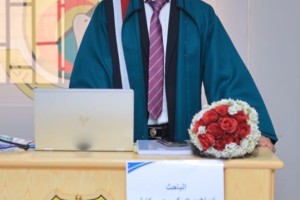
Researcher Fath Mejalli Saleh Al-Nadeesh was awarded a Master’s Degree in Laboratory Hematology and Blood Transfusion with an average of Very Good and a grade of (89%) for his thesis titled: Prevalence and Risk Factors of Iron Deficiency Anemia Among School Adolescents in Sana’a City, Yemen, which was submitted to the Department of Hematology, Faculty of Medicine and Health Sciences– Sana’a University. The MA defense was held on Saturday, July 25, 2026.

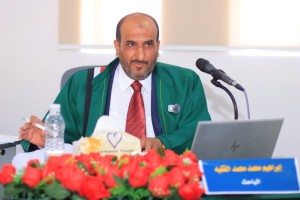
The MA Viva-voce Committee, which was formed based on a resolution issued by the Graduate Studies and Scientific Research Council, consisted of the following:
| # | Committee Members | Designation | Position |
| 1 | Assoc. Prof. Fouad Ahmed Balkam Muslimani | External Examiner | Chair |
| 2 | Prof. Jameel Abdulmalik Abdulaziz Al-Ghazali | Main Supervisor | Member |
| 3 | Assoc. Prof. Mohammed Ahmed Abdullah Hajar | Internal Examiner | Member |
The thesis aimed to estimate the prevalence of iron deficiency anemia and identify the associated risk factors among school adolescents in Sana’a City.
The study produced several significant findings. It revealed a high prevalence of iron deficiency anemia among adolescents in Sana’a City, with higher rates observed among females than males. The findings also demonstrated a strong association between iron deficiency anemia and several factors, including female sex, low household income, low parental educational attainment, and household overcrowding. Furthermore, the study identified several dietary practices as major risk factors, including excessive consumption of tea or coffee with meals, skipping breakfast, and low intake of iron-rich foods such as red meat, fish, and vegetables.
The researcher recommended annual screening for girls after puberty and for boys during adolescence to facilitate the early detection of iron deficiency anemia and prevent its complications. He also called for coordinated efforts among schools, healthcare providers, and community volunteers to strengthen health awareness and implement preventive programs targeting adolescents. In addition, the study recommended expanding nutrition education programs for families, promoting greater consumption of iron-rich foods together with vitamin C to enhance iron absorption, and reducing the intake of beverages that inhibit iron absorption, such as tea and coffee.
The thesis defense was attended by faculty members, researchers, students, and interested participants as well as the researcher’s colleagues and family members.