Master’s Degree Awarded to Researcher Ahmed Dawood in Diplomacy and International Relations
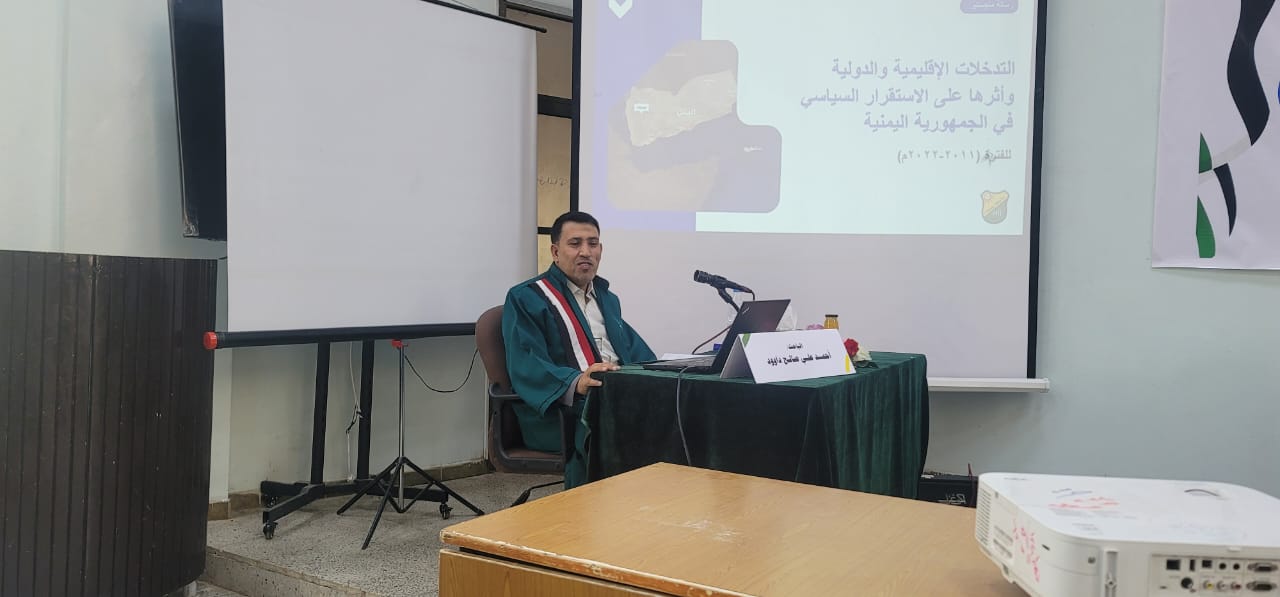
Researcher Ahmed Ali Saleh Dawood was awarded a Master’s Degree in Diplomacy and International Relations for his thesis titled: Regional Interventions and Their Impact on Political Stability in the Republic of Yemen (2011–2022), which was submitted to the Center for Political and Strategic Studies – Sana’a University. The MA defense was held on Thursday, July 30, 2026.
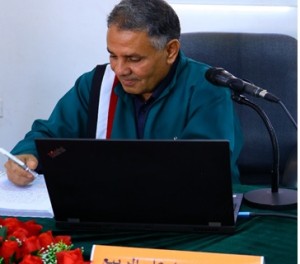
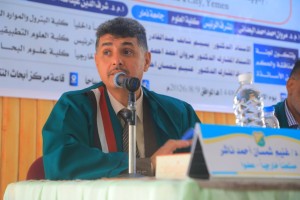
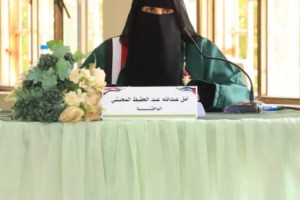
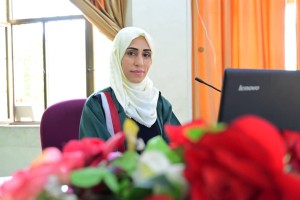
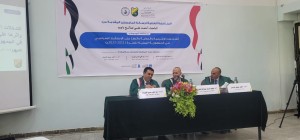
The MA Viva-voce Committee, which was formed based on a resolution issued by the Graduate Studies and Scientific Research Council, consisted of the following:
| # | Committee Members | Designation | Position |
| 1 | Prof. Mohammed Sharaf Abdullah Al-Sharafi | External Examiner | Chair |
| 2 | Assoc. Prof. Ahmed Hussein Al-Raidi | Main Supervisor | Member |
| 3 | Assoc. Prof. Zaid Ali Hassan Al-Warith | Internal Examiner | Member |
The study aimed to establish the theoretical foundations of concepts related to regional and international interventions and political stability, analyze the internal factors influencing political stability, and examine the major external interventions in order to explain their direct impact on Yemen’s political landscape.
The findings confirmed that Yemen’s geostrategic location and its oversight of the Bab al-Mandab Strait and the Red Sea and Arabian Sea have made the country a focal point of regional and international interest, contributing to the escalation of external interventions.
The study also found that the fragility of Yemen’s political and institutional structures, coupled with internal factors, created a favorable environment for the expansion of external interventions, thereby deepening and prolonging the crisis.
Furthermore, the research highlighted the differing roles of regional powers, with Saudi Arabia and the United Arab Emirates emerging as the most influential actors in shaping the course of the crisis. It also noted that the involvement of the United States and the United Kingdom contributed to further complicating the conflict, while Russia, China, and the European Union adopted a more cautious approach, focusing primarily on economic and humanitarian issues.
The thesis further concluded that the United Nations played both positive and negative roles in managing the political process and facilitating efforts toward a political settlement.
The study recommended launching a comprehensive Yemeni-Yemeni national dialogue free from external interference to rebuild the state and strengthen the independence of its sovereign decision-making. It also called for the reconstruction of the military and security institutions on national and professional foundations, the adoption of a national reconciliation, reconstruction, and sustainable development agenda, and the establishment of balanced relations with regional countries based on mutual respect.
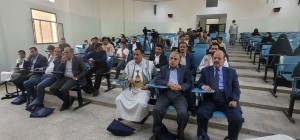
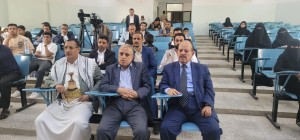
The thesis defense was attended by faculty members, researchers, students, and interested participants as well as the researcher’s colleagues and family members.
https://youtu.be/elg0OLRirQ0?si=d_w4w5he9IBCOiRi