Master’s Degree Awarded to Researcher Mohammed Abdulwahab Al-Mahfadi with Distinction in Translation

Researcher Mohammed Abdulwahab Ali Al-Mahfadi was awarded a Master’s Degree in Translation with an average of excellent and a grade of (95%) for his thesis titled: Enhancing the Quality of Machine-Translated Speech Acts from English into Arabic through Post-
Editing and Revising: A Case Study of The Forty Rules of Love, which was submitted to the Community Center for Translation and Language Teaching (CCTLT) – Sana’a University. The MA defense was held on Monday, August 17, 2026.
The MA Viva-voce Committee, which was formed based on a resolution issued by the Graduate Studies and Scientific Research Council, consisted of the following:
- Prof. Abdulwahab Taher Al-Maqaleh – Sana’a University – Internal Examiner and Committee Chair.
- Prof. Mohammed Abdullah Mohammed Al-Hibah – Albaydha University – External Examiner and Committee Member.
- Prof. Abdulwadood Ahmed Annuzaili – Sana’a University – Principal Supervisor and Committee Member.
The study examined the effectiveness of post-editing and revision in improving the quality of direct speech acts machine-translated in literary discourse, focusing on the translation of directive, suggestive, and request speech acts extracted from Elif Shafak’s novel The Forty Rules of Love.
The study aimed to identify the main pragmatic, cultural, and linguistic problems associated with these speech acts and investigate the extent to which post-editing contributes to enhancing the communicative effectiveness, fluency, cultural appropriateness, and grammatical and lexical accuracy of the translated text.

The study adopted a qualitative descriptive-analytical approach, drawing on Nord’s functional model for translation-oriented text analysis, supported by pragmatic and functional approaches in translation studies.
The study sample consisted of direct speech acts extracted from the novel and machine-translated using Google Translate. The machine-translated output was then subjected to post-editing and revision by 12 professional translators working at the Community Center for Translation and Language Teaching at Sana’a University.

The analysis was conducted comparatively across four analytical dimensions: adherence to the function of the speech act, fluency in Arabic, cultural appropriateness, and grammatical and lexical accuracy.
The findings showed that machine translation using Google Translate frequently relies on literal translation and surface-level equivalence, resulting in distortion of illocutionary force, reduced fluency, inaccurate rendering of figurative expressions, and the use of culturally inappropriate expressions.
The findings also demonstrated that post-editing and revision significantly improve translation quality by restoring the communicative function, enhancing pragmatic appropriateness, preserving figurative and cultural meaning, and producing Arabic translations that are more fluent and stylistically appropriate.

The study concluded that machine translation systems remain limited in handling pragmatically and culturally sensitive literary discourse, and that human post-editing continues to play a crucial role in producing translations that are communicatively effective and functionally adequate.
The study further highlighted the importance of adopting pragmatic and functional approaches to ensuring translation quality, particularly in translating speech acts and literary texts.

In conclusion, the study presented a set of recommendations for translators, translation training programs, researchers, and machine translation developers concerning the integration of post-editing practices to improve the quality of machine translation from English into Arabic.
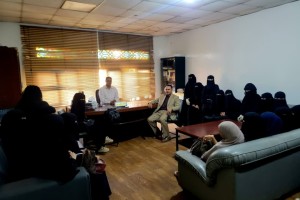
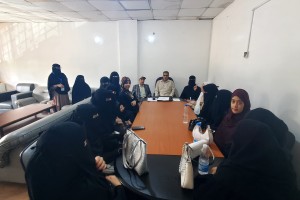
The defense session was attended by a number of academics, researchers, students, colleagues, and the researcher’s family.