Master’s Degree Awarded to Mr. Ibrahim Mohammed Haisam in Orthodontics
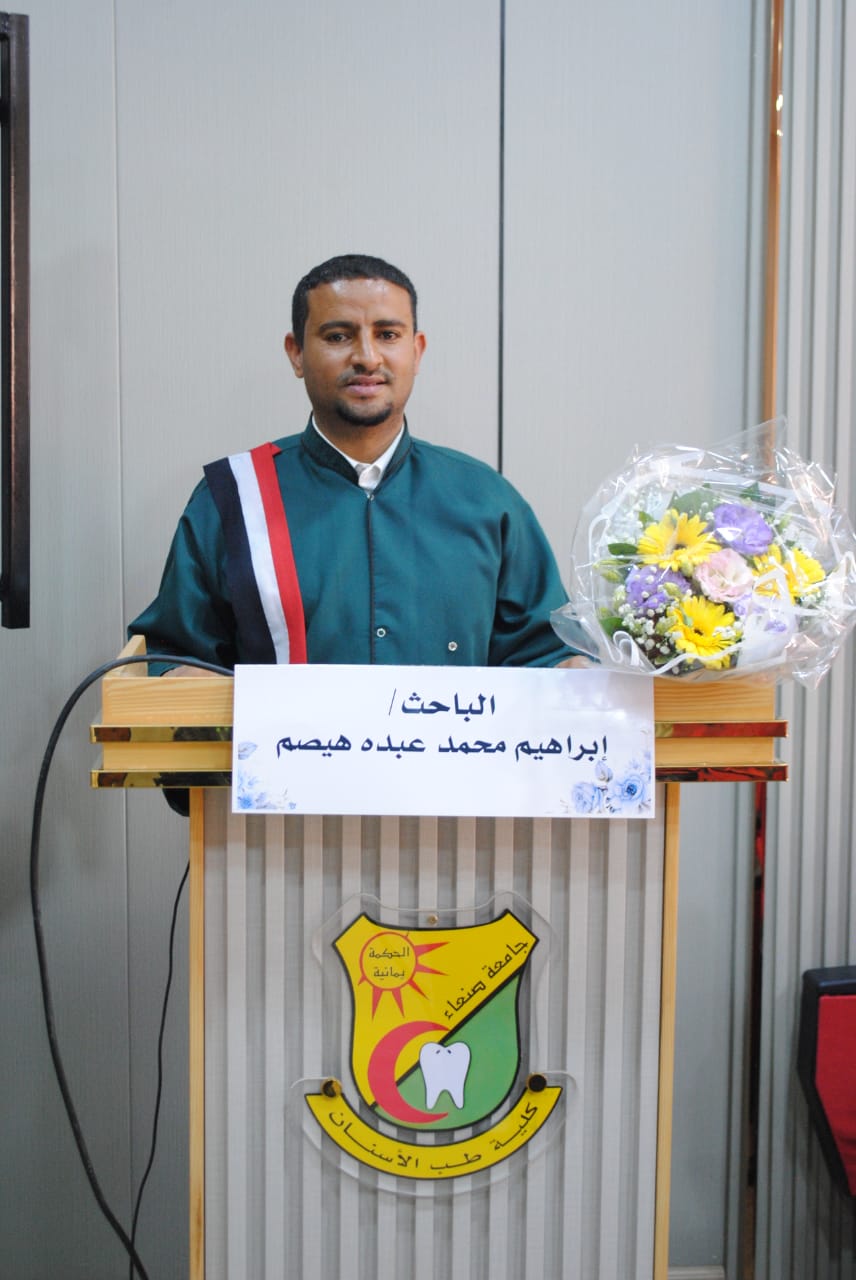
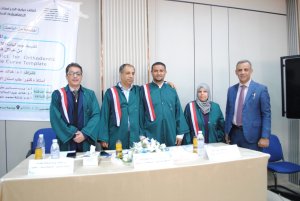
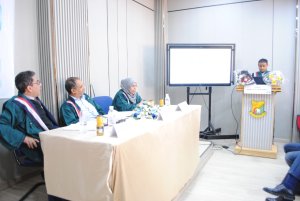
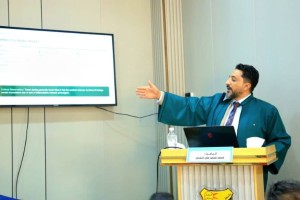
Mr. Ibrahim Mohammed Abdu Haisam was awarded a Master’s Degree in Orthodontics for his thesis titled: Evaluation of Smile Aesthetics in Orthodontic Patients Using Smile Curve Template, which was submitted to the Department of Orthodontics, Faculty of Dentistry – Sana’a University. The MA defense was held on Thursday, January 22, 2026.
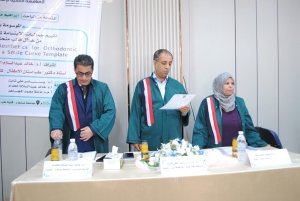
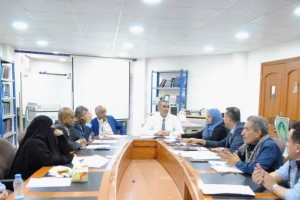
The MA Viva-voce Committee, which was formed based on a resolution issued by the Graduate Studies and Scientific Research Council, consisted of the following:
| # | Committee Members | Designation | Position |
| 1 | Prof. Yasser Ali Thabet | External Examiner | Chair |
| 2 | Prof. Khaled Abdulsalam Al-Haddad | Main Supervisor | Member |
| 3 | Assoc. Prof. Naela Mohammed Al-Mujahid | Internal Examiner | Member |
The study aimed to:
- Assess the impact of orthodontic treatment on smile aesthetics using objective indicators (the Smile Curve Model).
- Compare professional clinical evaluations with patients’ personal perceptions.
- Investigate the influence of variables such as age and gender, as well as key factors contributing to aesthetic improvement.
The study yielded several key findings summarized as follows:
- Overall improvement in smile aesthetics was found, with the Smile Esthetic Index (SEI) increasing from 1.36 to 6.30 after treatment.
- Tooth positioning recorded the highest improvement rate at 80%.
- Gingival papillae showed the lowest improvement rate at 40%.
- Patients’ satisfaction level (7.3) was higher than orthodontists’ evaluation (6.6).
Based on these findings, the researcher recommended the following:
- Conducting future studies on larger and more diverse samples to enhance the accuracy and generalizability of the findings.
- Adopting dynamic imaging techniques (video) instead of static photographs to achieve more precise assessments of smile aesthetics.
- Considering individual anatomical differences when developing aesthetically oriented treatment plans.
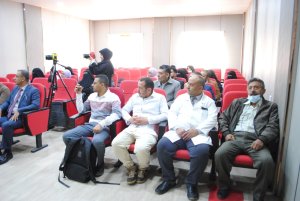
The defense session was attended by a number of academics, researchers, students, colleagues, and the researcher’s family.