Master’s Degree Awarded to Researcher Mohammed Abdulmalek Al-Ma’akhidhi in Orthodontics

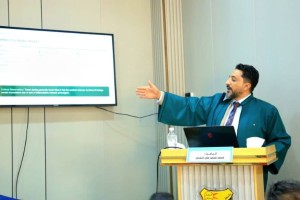
Researcher Mohammed Abdulmalek Mohammed Al-Ma’akhidhi was awarded a Master’s Degree in Orthodontics for his thesis titled: Position of Hyoid Bone in Defferent Classes of Skeletal Malocclusion Using Three-Dimensional Cone-Beam Computed Tomography, which was submitted to the Faculty of Dentistry – Sana’a University. The MA defense was held on Thursday, August 27, 2026.
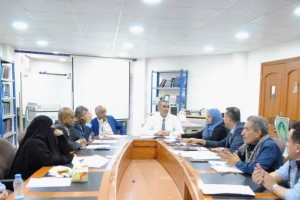
The MA Viva-voce Committee, which was formed based on a resolution issued by the Graduate Studies and Scientific Research Council, consisted of the following:
- Ahmed Ali Obayyah – Sana’a University – Principal Supervisor and Committee Member.
- Prof. Fouad Lotf Al-Murattab – Sana’a University – Co-Supervisor.
- Ghamdan Abdullah Al-Harazi – Sana’a University – Internal Examiner and Committee Chair.
- Khaled Ahmed Ali Al-Dhara’i – Thamar University – External Examiner and Committee Member.
The study aimed to assess and compare the position of the hyoid bone (HB) across different skeletal malocclusion classes using cone-beam computed tomography (CBCT), as well as to examine gender differences across the study groups.
The study included 120 CBCT images, distributed equally between males and females and equally among the three skeletal malocclusion classes. The participants were aged 18 years and above.
Multiplanar reconstructions were generated in the axial, sagittal, and coronal planes, in addition to three-dimensional reconstruction, using Ez3D-i software. Several parameters and measurements were assessed, including SNA, SNB, ANB, HB-Me, HB-EB, C3-Me, HB-C3-Me, HB-PNS, HB-H, and HB-V, based on standardized and uniform definitions. The data were entered and analyzed using SPSS, with statistical significance set at P < 0.05.
The findings showed statistically significant gender differences in hyoid bone position. Males exhibited greater HB-C3 and C3-Me distances than females, with statistically significant differences (P < 0.001). The HB-PNS, HB-H, and HB-V measurements also showed statistically significant differences between males and females, whereas no statistically significant gender differences were found in HB-Me, HB-EB, and HB-C3-Me.
The findings also revealed statistically significant differences among the skeletal malocclusion classes in HB-Me, HB-EB, C3-Me, HB-C3-Me, HB-PNS, HB-H, and HB-V (P < 0.05). The Class III group recorded the highest HB-Me value, whereas the Class II group recorded the lowest value.
The study concluded that statistically significant differences exist in hyoid bone position between males and females and across different skeletal malocclusion classes. Males demonstrated greater statistically significant distances and positional differences, including those involving the relationship between the C3 vertebra, the Me point, and the hyoid bone, compared with females.
The findings also demonstrated variation in hyoid bone position across the different skeletal classes. The Class III group exhibited a more inferior and anterior position of the hyoid bone, whereas the Class II group showed the lowest values.
The study further indicated that the anterior and inferior displacement observed in Class III individuals may reflect a neuromuscular adaptive response aimed at maintaining craniofacial and respiratory balance. This should be taken into consideration when developing orthodontic and orthognathic surgical treatment plans.
The thesis defense was attended by faculty members, researchers, students, and interested participants as well as the researcher’s colleagues and family members.