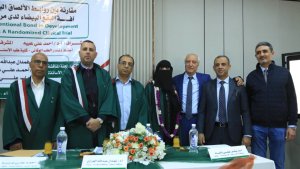
Master’s Degree Awarded to Ms. Samia Hassan Qaed Damaj in Orthodontics
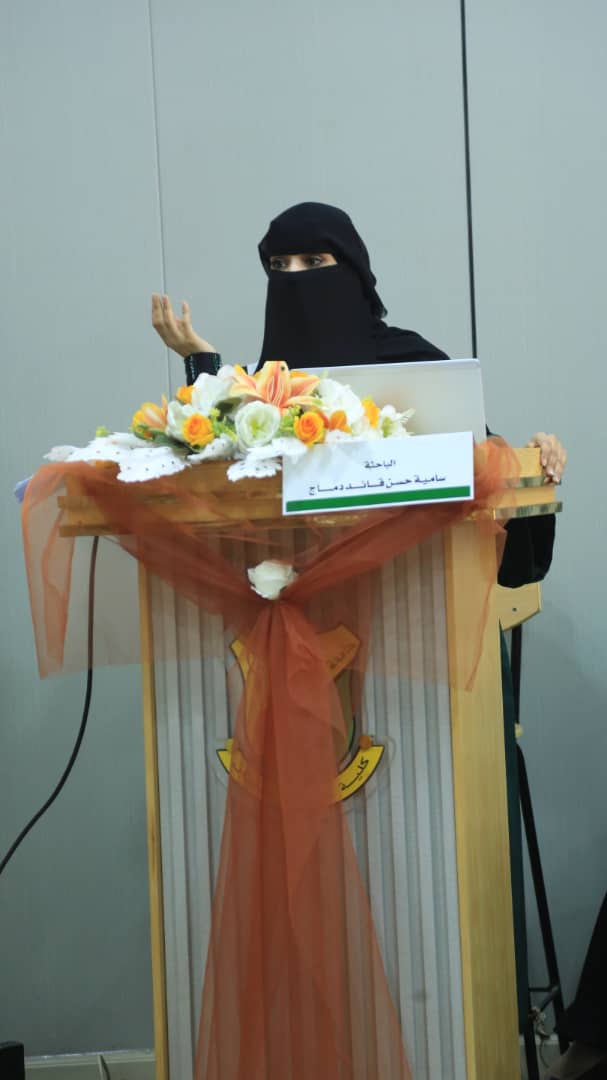
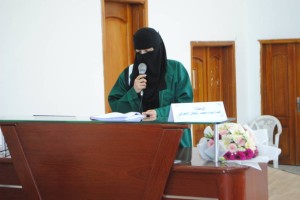
Ms. Samia Hassan Qaed Damaj was awarded a Master’s Degree in Orthodontics for her thesis titled: Comparison of Fluoride- Releasing Versus Conventional Bond in Development of White Spot Lesion in Orthodontic Patient: A Randomized Clinical Trial, which was submitted to the Faculty of Dentistry– Sana’a University. The MA defense was held on Thursday, December 11, 2025.
The MA Viva-voce Committee, which was formed based on a resolution issued by the Graduate Studies and Scientific Research Council, consisted of the following:
| # | Committee Members | Designation | Position |
| 1 | Prof. Ghamdan Abdullah Al-Harazi | Internal Examiner | Chair |
| 2 | Prof. Ahmed Ali Obiah | Main Supervisor | Member |
| 3 | Prof. Yasser Ali Thabet | External Examiner | Member |
The study aimed to evaluate and compare the effectiveness of two orthodontic bonding agents, conventional adhesives and fluoride-releasing adhesives, in reducing the development of white spot lesions around orthodontic brackets during orthodontic treatment.
The study yielded a number of key findings summarized as follows:
- Fluoride-releasing adhesives were found to significantly reduce the incidence and progression of white spot lesions compared with conventional adhesives.
- Statistically significant differences were demonstrated in favor of fluoride-releasing adhesives.
- The preventive role of fluoride in enamel remineralization and in limiting pre-cavity calcification was confirmed.
In light of these findings, the researcher recommended the following:
- Adopting fluoride-releasing adhesives as a first-choice option in orthodontic clinics and centers, particularly for patients at high risk of developing white spot lesions.
- Disseminating the study findings to dental colleges and professional training centers in Yemen.
- Enhancing dentists’ training on the clinical use of modern preventive materials in orthodontic practice.
The defense session was attended by faculty members, researchers, students, colleagues, and the researcher’s family.