Sana’a University Concludes Strategic Workshops to Modernize Graduate Medical Programs

SANA’A, YEMEN | March 4, 2026
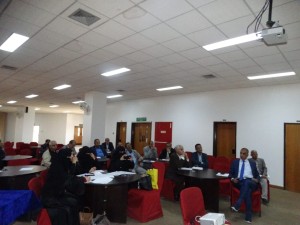
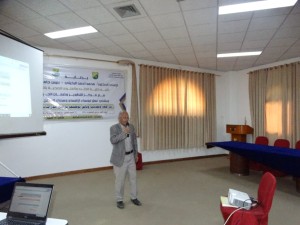
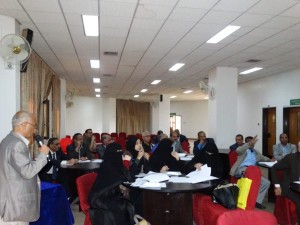
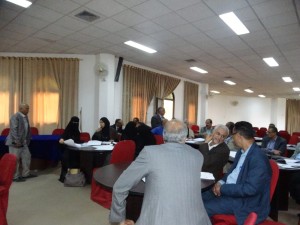
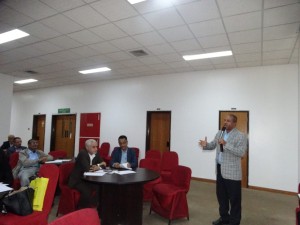
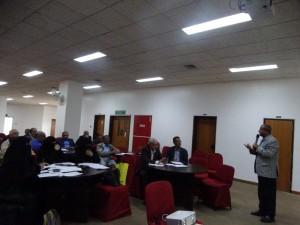
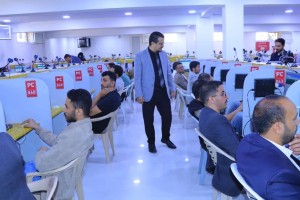
The Faculty of Medicine and Health Sciences at Sana’a University concluded a two-day intensive workshop series yesterday, Wednesday, focused on the comprehensive review and modernization of its Postgraduate Program Specifications.
Held under the auspices of University Rector Prof. Mohammed Al-Bukhaiti and in coordination with the Academic Development Center & Quality Assurance, the event was attended by Prof. Mohammed Al-Shehari, the Faculty Dean; Assoc. Prof. Adel Al-Ghaili, Vice Dean for Academic Affairs and Graduate Studies; and Prof. Ahmed Mujahed, Vice Dean for Quality Assurance, alongside department chairs and program directors.
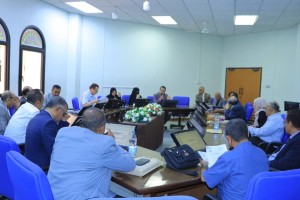
The workshops aimed to align graduate curricula with international academic standards. The first day focused on Doctor of Medicine (MD) clinical programs, where committees conducted a rigorous analysis of program specifications, learning outcomes analysis, alignment matrices and assessment mechanisms.
On the second day, scientific committees shifted focus to Master’s and Ph.D. academic programs. Discussions centered on restructuring Competency Matrices and refining course descriptions to ensure a seamless integration of theoretical knowledge and advanced research methodologies.
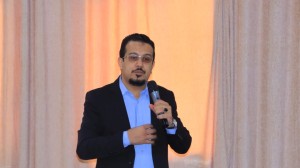
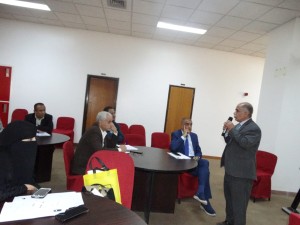
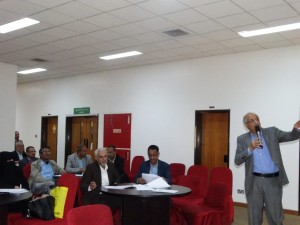
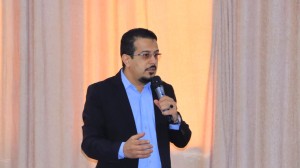
In his opening remarks, Dean Prof. Mohammed Al-Shehari emphasized that curriculum modernization is a top institutional priority. “Our faculty is working toward a clear vision: developing specialized programs that keep pace with global scientific advancements while directly serving the regional health sector,” Al-Shehari stated. He noted that these workshops ensure learning outcomes are meticulously aligned with community health needs and labor market demands.
Assoc. Prof. Adel Al-Ghaili, Vice Dean for Academic Affairs and Graduate Studies, delivered a speech outlining the methodological framework adopted for the document review. He explained that the process is grounded in gap analysis, measuring curriculum alignment with intended learning outcomes (ILOs), and enhancing the integration between theoretical, clinical, and research components.
Dr. Al-Ghaili confirmed that the next phase involves finalizing these updates and submitting recommendations for formal academic approval. The workshops concluded with a call for sustainable periodic reviews, embedding a culture of quality assurance that solidifies the Faculty’s standing as a premier institution for medical expertise.