Sana’a University Faculty of Medicine Hosts Thyroid Cancer Scientific Day as Part of Ongoing Continuing Medical Education Strategy

SANA’A, May 7, 2026
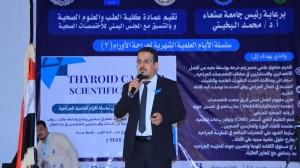
Under the auspices of Sana’a University Rector, Prof. Moahmmed Al-Bukhaiti, the Faculty of Medicine and Health Sciences, in coordination with the Yemen Council for Health Specializations, hosted the “Thyroid Cancer Scientific Day” today. This event is a key component of the university’s monthly surgical oncology seminar series, aimed at advancing professional development and clinical excellence.
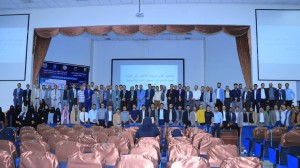
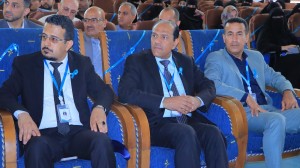
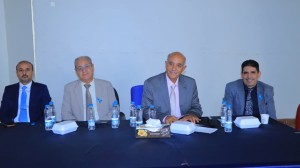
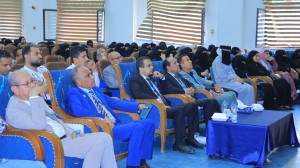
The symposium, held at the Sheikh Jaber Auditorium, drew a distinguished gathering of consultants, academics, and researchers. Attendees included University Rector Prof. Mohammed Al-Bukhaiti, Dr. Abdulhafidh Thawabah, Rector Assistant for Medical Affairs, and Prof. Mohammed Al-Shehari, Dean of the Faculty of Medicine. The high turnout of MD and Arab Board candidates underscores the faculty’s growing status as a premier hub for specialized medical discourse and a sustainable platform for exchanging cutting-edge diagnostic and therapeutic insights.
In his keynote address, Prof. Al-Bukhaiti emphasized that hosting specialized scientific forums is a cornerstone of the university’s mission to elevate medical education. “We are committed to bridging the gap between academic theory and modern clinical practice,” Al-Bukhaiti stated. He noted that the Faculty of Medicine has become a model for high-caliber scientific activity, reflecting its national role in qualifying medical professionals according to international standards. He further urged clinicians to translate the day’s rigorous debates into practical outcomes that directly enhance patient care in Yemen.
Prof. Mohammed Al-Shehari, Dean of the Faculty of Medicine, welcomed the participants and reiterated the faculty’s strategic vision of hosting a “Major Conference or Scientific Day Every Month.”
“Our goal is to keep pace with the rapid evolution of medical and surgical sciences,” said Prof. Al-shehari. “The selection of Thyroid Cancer for today’s sessions reflects the significant advancements in multi-modal treatment, ranging from advanced imaging and histopathology to complex surgical interventions and post-operative management.”
The program featured three specialized sessions covering the full spectrum of thyroid oncology:
• Imaging & Pathology: Dr. Mansour Al-Hamli (Diagnostic Radiology) discussed hormonal imaging essentials, while Dr. Iman Al-Salami (Histopathology) presented a comprehensive review of thyroid tumor pathology.
• Surgical & Clinical Management: Prof. Mohammed Al-Shehari outlined a comprehensive clinical approach to thyroid nodules. Dr. Mohammed Bamashmous (Endocrinology) detailed perioperative medical management.
• Integrated Care & Advanced Therapies: The synergy between surgery and anesthesia was presented by Dr. Baha’ Bahaowsh, followed by Prof. Yasser Abdo-Rabo’s insights into surgical endocrine management. Dr. Fares Al-Hajmi addressed the critical role of lymph node dissection.
• Interventional & Systemic Oncology: Dr. Abdulqader Al-Falahi (Interventional Radiology) explored non-surgical options for benign nodules. Dr. Ahmed Al-Bardah focused on Radioactive Iodine (RAI) therapy, and Prof. Ahmed Shamlan concluded with a review of systemic treatments for advanced thyroid cancer.
The sessions sparked extensive technical discussions on early diagnosis, the efficacy of fine-needle aspiration (FNA), and international recommendations for adjuvant therapies.
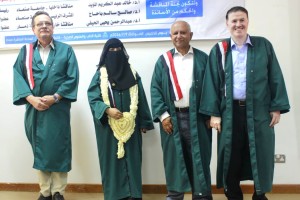
In closing, the Dean’s office announced that all participants would receive accredited certificates from the Medical Council, furthering the university’s commitment to encouraging active engagement in lifelong learning and professional accreditation.