Master’s Degree Awarded to Ms. Lamia Abdullah Abdulmughni in General Surgery
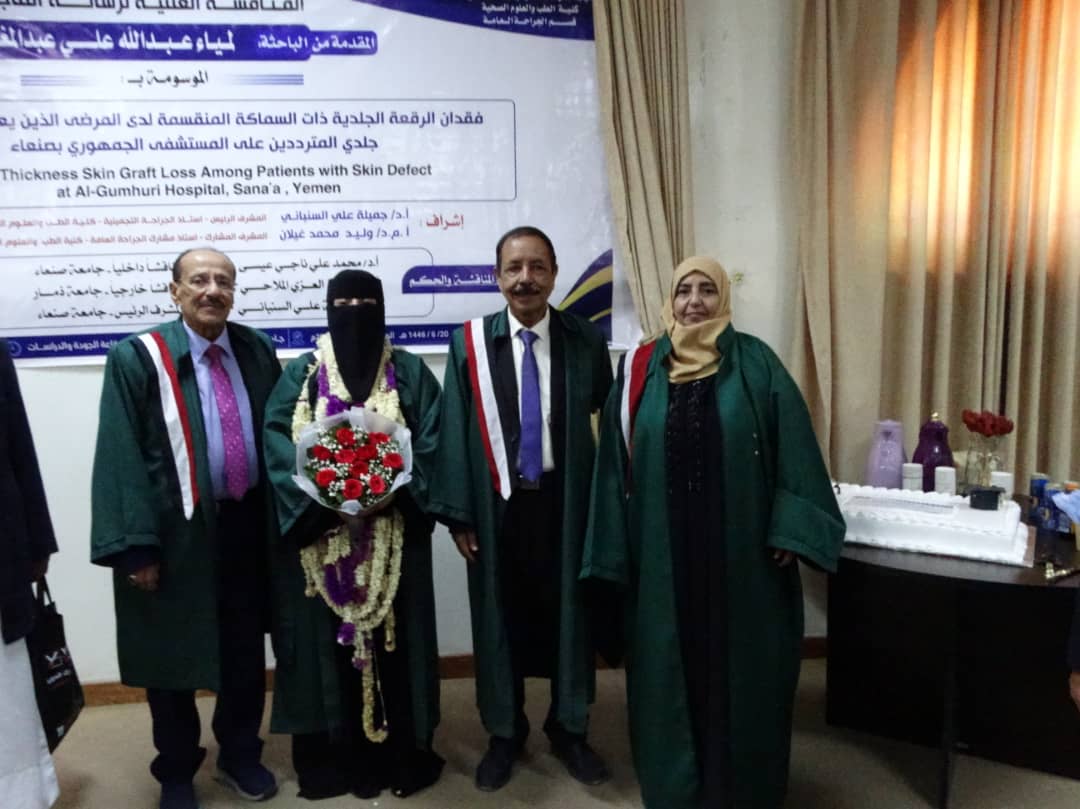
Ms. Lamia Abdullah Ali Abdulmughni was awarded a Master’s Degree in General Surgery for her thesis titled: Split – Thickness Skin Graft Loss among Patients with Skin Defect at Al-Gumhuri Hospital, Sana’a, Yemen, which was submitted to the Department of Plastic Surgery, the Faculty of Medicine and Health Sciences – Sana’a University. The MA defense was held on Thursday, December 11, 2025.
The MA Viva-voce Committee, which was formed based on a resolution issued by the Graduate Studies and Scientific Research Council, consisted of the following:
# |
Committee Members |
Designation |
Position |
1 |
Prof. Mohammed Ali Naji Issa |
Internal Examiner |
Chair |
2 |
Prof. Jameela Ali Al-Sanbani |
Main Supervisor |
Member |
3 |
Prof. Ahmed Al-Ezzi Al-Mallahi |
External Examiner |
Member |
The study aimed to assess the rate of split-thickness skin graft loss among patients with skin defects and to examine the association between bacterial infection and other factors, including smoking, diabetes mellitus, and body mass index, on surgical success.
The study yielded a number of key findings summarized as follows:
-
Bacterial infection was identified as the primary cause of skin graft loss, accounting for 88.39% of cases.
-
Klebsiella spp. and Pseudomonas aeruginosa were found to be the most common bacterial pathogens associated with graft failure.
-
Smoking, low hemoglobin levels, elevated body mass index, and diabetes mellitus were shown to negatively affect the outcomes of skin grafting procedures.
In light of these findings, the researcher recommended the following:
-
Strengthening infection control measures in medical centers through standardized treatment protocols and regular screening procedures.
-
Addressing preoperative risk factors, such as smoking cessation and optimal glycemic control, prior to surgical intervention.
-
Conducting larger, multicenter studies with long-term follow-up to further evaluate graft success rates.
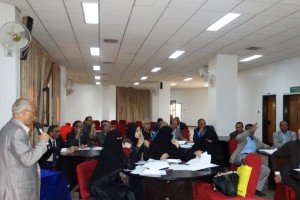
The defense session was attended by faculty members, researchers, students, colleagues, and the researcher’s family.