Sana’a University President Chairs Expanded Meeting on International Academic Accreditation at Faculty of Medicine
Tuesday, December 23, 2025, corresponding to 3 Rajab 1447 AH
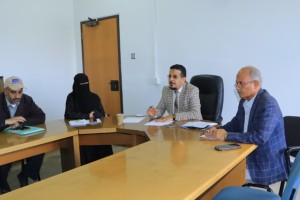
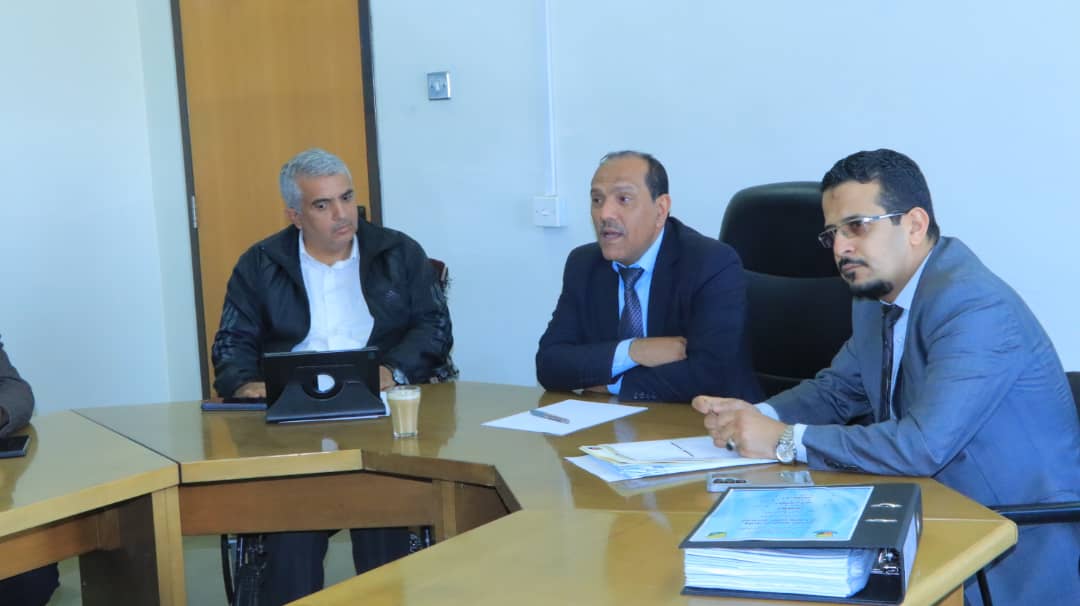
Sana’a University Rector, Prof. Mohammed Al-Bukhaiti, chaired an expanded meeting to review the latest developments related to international academic accreditation at the Faculty of Medicine and Health Sciences. The meeting also addressed academic and administrative performance, as well as progress in ongoing maintenance and renovation works at the Faculty.
The meeting was attended by the Vice Rector for Medical Faculties and University Hospitals, Dr. Abdulhafidh Thawaba; the Dean of the Faculty of Medicine and Health Sciences, Prof. Mohammed Al-Shahari; the Vice Dean for Clinical Affairs, Prof. Anwar Al-Moghalles; the Vice Dean for Quality Affairs, Prof. Ahmed Al-Mujahid; and members of the Steering Committee. Participants listened to a detailed presentation by the national expert in international academic accreditation, Dr. Saleh Bahajaj, who outlined the technical aspects and core requirements of accreditation, highlighted key observations related to the application of international standards, and discussed ways to enhance the Faculty’s readiness in line with best academic practices.
In his remarks, the University Rector emphasized that international academic accreditation represents a strategic and irreversible choice, given its pivotal role in improving the quality of medical education and enhancing learning outcomes. He stressed the importance of expediting the completion of accreditation requirements, adhering to clear timelines, and implementing the technical recommendations provided by specialized experts.
Prof. Al-Bukhaiti directed the Faculty leadership and relevant committees to intensify efforts, strengthen institutional coordination, comply with approved academic standards, and promote a culture of quality among faculty members and administrative staff. He reaffirmed the University Presidency’s full support for the success of the international accreditation process.
The University Rector also underscored the need to accelerate maintenance and renovation works and to complete them in accordance with required technical specifications, noting their direct impact on creating an appropriate educational and training environment. He called for continuous follow-up and the submission of periodic progress reports.
In turn, Dr. Abdulhafidh Thawaba affirmed that medical faculties constitute a cornerstone of the University, and that developing them in accordance with international academic accreditation standards is a strategic priority. He noted that such meetings aim to assess performance, address gaps, and enhance integration between academic and technical aspects to ensure the quality of medical education and training.
Meanwhile, the Dean of the Faculty of Medicine and Health Sciences, Prof. Mohammed Al-Shahari, reviewed the achievements made in preparation for international academic accreditation, as well as the current level of academic and administrative performance. He emphasized that achieving accreditation requires integration among academic programs, teaching staff, infrastructure, and technical resources, along with the prompt resolution of any existing observations.
Prof. Al-Shahari noted that the Faculty is proceeding in a systematic and well-planned manner toward achieving international academic accreditation, driven by its commitment to comprehensive quality standards and the advancement of educational and training processes. Over the past period, the Faculty has worked to review and develop academic programs and curricula in line with international standards, strengthen the capacities of faculty members and academic and administrative staff, and consolidate a culture of quality and institutional accreditation.
The meeting concluded with the participation of the University Secretary-General, Iskandar Al-Maqaleh; the University’s General Manager of Projects, Abdulhakim Shamssan; and the Faculty Secretary, Marwan Al-Mekhlafi. Participants emphasized a set of recommendations aimed at enhancing institutional performance, accelerating the completion of international academic accreditation requirements, and improving the educational environment, thereby reinforcing the Faculty of Medicine’s academic standing and leadership in medical education.