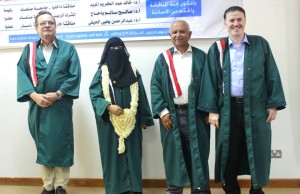
Master’s Degree Awarded to Researcher Hadeel Al-Hammadi with Distinction in Medical Microbiology

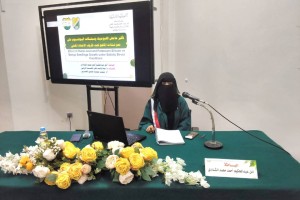
Researcher Hadeel Abdulghani Abdu Al-Hammadi was awarded a Master’s Degree in Medical Microbiology with an average of excellent and a grade of (92) for her thesis titled: Vancomycin Resistance among Methicillin-Resistant Staphylococcus aureus in Clinical Samples from Patients at Major Hospitals in Sana’a City, Yemen, which was submitted to the Department of Microbiology, Faculty of Medicine and Health Sciences– Sana’a University. The MA defense was held on Thursday, July 9, 2026.
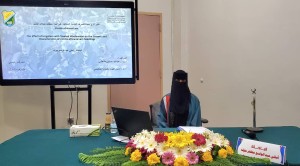
The MA Viva-voce Committee, which was formed based on a resolution issued by the Graduate Studies and Scientific Research Council, consisted of the following:
| # | Committee Members | Designation | Position |
| 1 | Prof. Khaled Abdulkarim Al-Muayyad | Internal Examiner | Chair |
| 2 | Prof. Saleh Salem Bahaj | Main Supervisor | Member |
| 3 | Prof. Abdulrahman Yahya Al-Haifi | External Examiner | Member |
The thesis aimed to:
- Determine the prevalence of vancomycin-resistant methicillin-resistant Staphylococcus aureus (VRSA-MRSA) among clinical samples collected from patients at major hospitals in Sana’a City.
- Identify the factors associated with the emergence of these resistant strains.
The findings revealed that, among 250 methicillin-resistant Staphylococcus aureus samples that were initially classified as non-vancomycin-resistant (Non-VRSA MRSA), 8 samples (3.2%) were confirmed as vancomycin-resistant Staphylococcus aureus (VRSA-MRSA). The results also showed that the highest proportion of Non-VRSA MRSA samples (58.6%) was recovered from pus specimens, while the highest prevalence of VRSA-MRSA (62.5%) was recorded among male patients, with a mean age of 45 years.
The study further identified statistically significant associations between VRSA-MRSA infection and the use of invasive medical devices (62.5%), central venous catheters (25%), and previous surgical procedures (50%), underscoring the importance of strengthening infection prevention and control measures in healthcare settings.
The researcher recommended implementing Antimicrobial Stewardship Programs (ASPs) to promote the rational use of antibiotics, strengthening surveillance over the use of linezolid to preserve its effectiveness, and developing local treatment guidelines based on antimicrobial susceptibility testing results.
She also recommended reinforcing compliance with hand hygiene protocols, implementing contact precautions for patients infected or colonized with VRSA-MRSA and Non-VRSA MRSA, ensuring proper sterilization of invasive medical devices, establishing rigorous isolation protocols, and performing Antimicrobial Susceptibility Testing (AST) for all Staphylococcus aureus samples, including determination of the Minimum Inhibitory Concentration (MIC) for vancomycin, with prompt reporting of results to support appropriate therapeutic decision-making.
The defense session was attended by a number of academics, researchers, graduate students, interested participants, colleagues, and the researcher’s family.