Date September 14, 2026
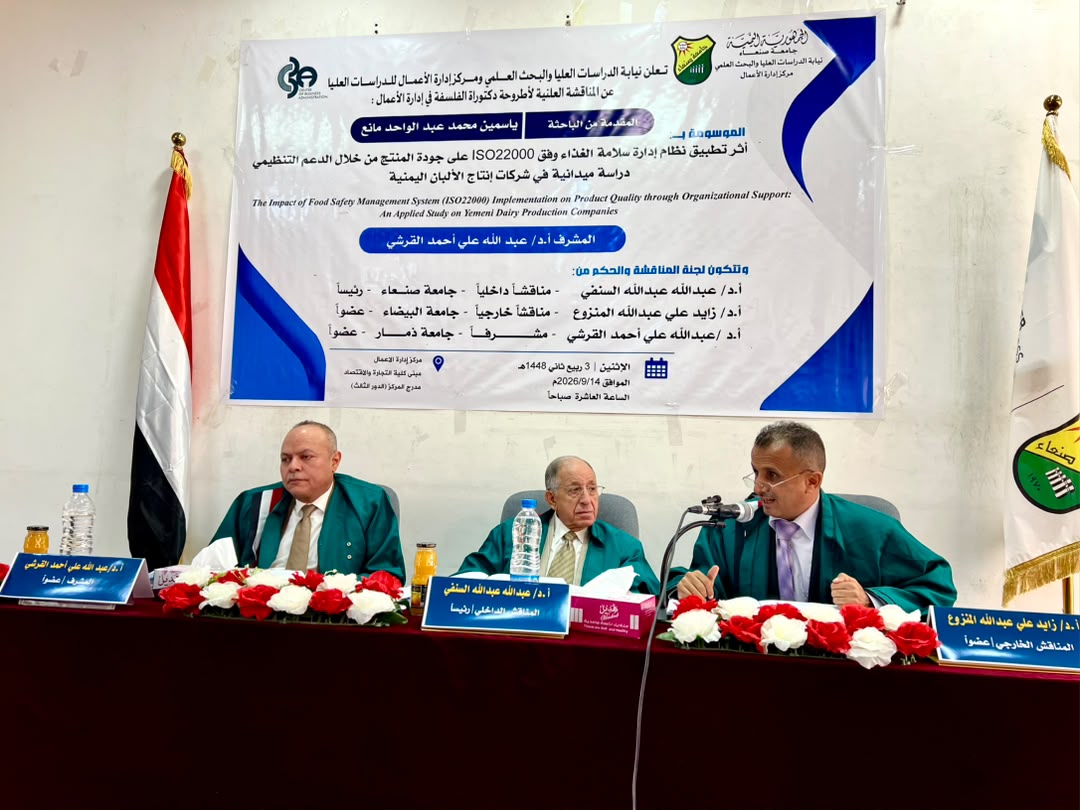
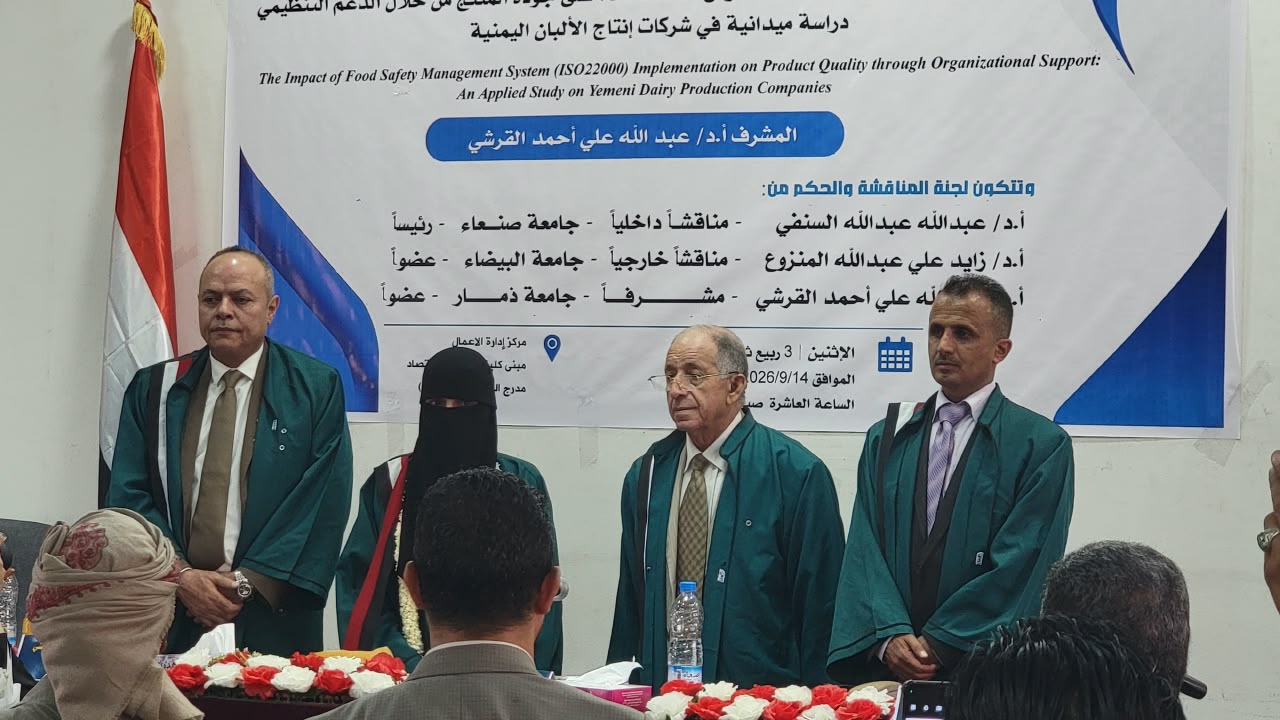
Researcher Yasmin Mohammed Abdul Wahid Maneh was awarded a PhD degree in Business Administration for her dissertation titled: The Effect of Applying the Food Safety Management System According to ISO 22000 on Product Quality through Organizational Support: A Field Study in Yemeni Dairy-Production Organizations, which was submitted to the Business Administration Center for Graduate Studies – Sana’a University. The dissertation defense was held on Monday, September 14, 2026.
The PhD Viva-Voce Committee consisted of the following:
- Dr. Abdullah Abdullah Al-Senfi – Sana’a University – Internal Examiner and Committee Chair
- Dr. Zaid Ali Abdullah Al-Manzou – Al-Bayda University – External Examiner and Committee Member
- Dr. Abdullah Ali Ahmed Al-Qurashi – Thamar University – Supervisor and Committee Member
The study aimed to analyse the effect of applying the Food Safety Management System (FSMS) in accordance with the international standard ISO 22000:2018 on product quality in Yemeni dairy-production organizations that have implemented the system, by examining the mediating role of organizational support through its dimensions: employee self-affirmation support, organizational justice, participation in decision-making, and employee retention policy.
The study adopted a descriptive-analytical approach. The study population consisted of employees working in the Yemeni dairy-production organizations under study, totalling 1,896 individuals, while the study sample comprised 168 individuals, representing 10.71% of the study population. The sample was selected using a simple random sampling method.
The study used a questionnaire as the primary instrument for data collection. The collected data were statistically analysed and processed using the Statistical Package for the Social Sciences (SPSS v28) and SmartPLS v4.
The findings showed a positive and statistically significant effect of applying the Food Safety Management System on product quality. The results also demonstrated a positive and statistically significant effect of applying the Food Safety Management System on organizational support.
In contrast, the results indicated a negative and statistically significant effect of organizational support on product quality. Furthermore, the mediation analysis revealed a negative and statistically significant indirect effect of applying the Food Safety Management System on product quality through organizational support, confirming a negative mediating role of organizational support in the relationship between the two variables.
The results also revealed statistically significant differences in some study variables attributable to the age and size of the organization, while no statistically significant differences were found in product quality attributable to organizational age and size. The descriptive analysis further revealed variations in the levels of application of the dimensions of the study variables.
The study concluded that the effective implementation of the Food Safety Management System represents an important approach to improving product quality in Yemeni dairy-production organizations. However, the effectiveness of this impact is influenced by the nature of the organizational support available and the extent to which it is aligned with actual operational needs and the requirements of the system.
The study further concluded that limited human and technical resources, inadequate training and qualification, shortcomings in some organizational and administrative practices, and weak links between senior management and operational processes constitute factors that constrain organizations’ ability to translate the requirements of the Food Safety Management System into effective operational practices.
The study recommended redesigning and developing organizational support systems in a manner consistent with food safety management requirements and operational needs. It also recommended strengthening senior management commitment, providing the necessary human and technical resources, and implementing specialised, high-quality, and continuous training programmes.
In addition, the study recommended strengthening official oversight, developing inspection, evaluation, and improvement mechanisms, and enhancing the overall effectiveness of Food Safety Management System implementation in order to improve product quality in Yemeni dairy-production organizations.
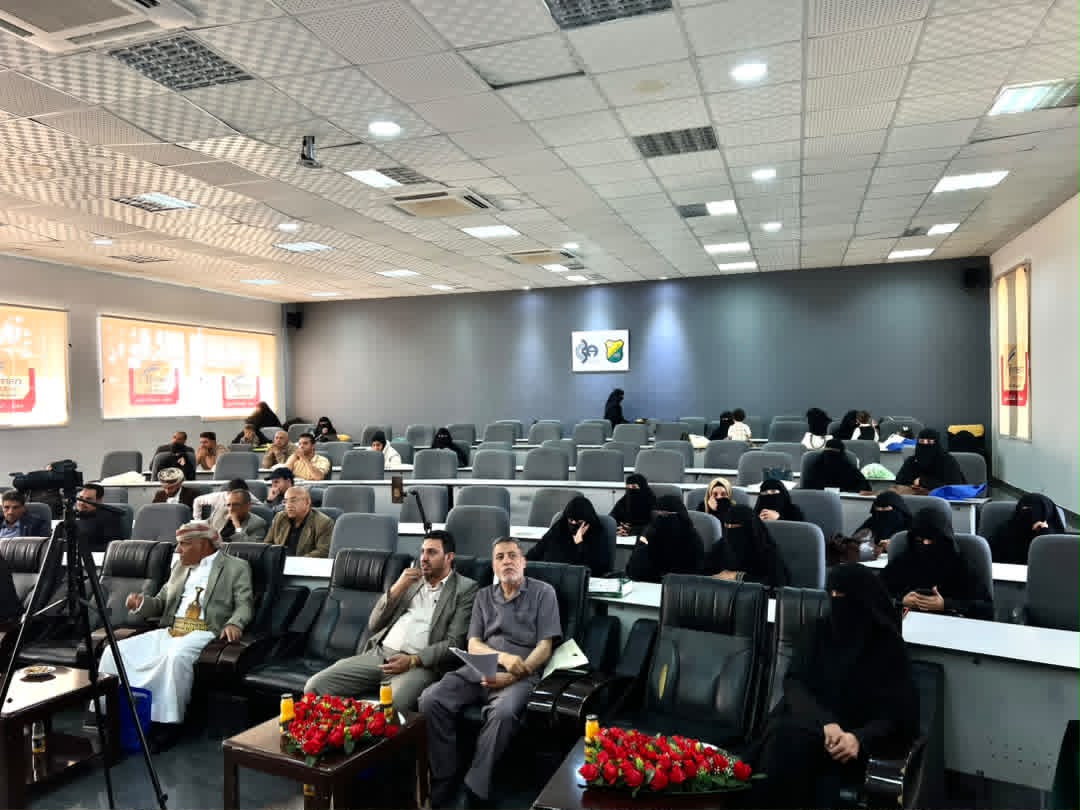
The dissertation defense was attended by a number of academics, researchers, and interested participants, as well as the researcher’s colleagues and family members.