Sana’a – Saturday, May 9, 2026
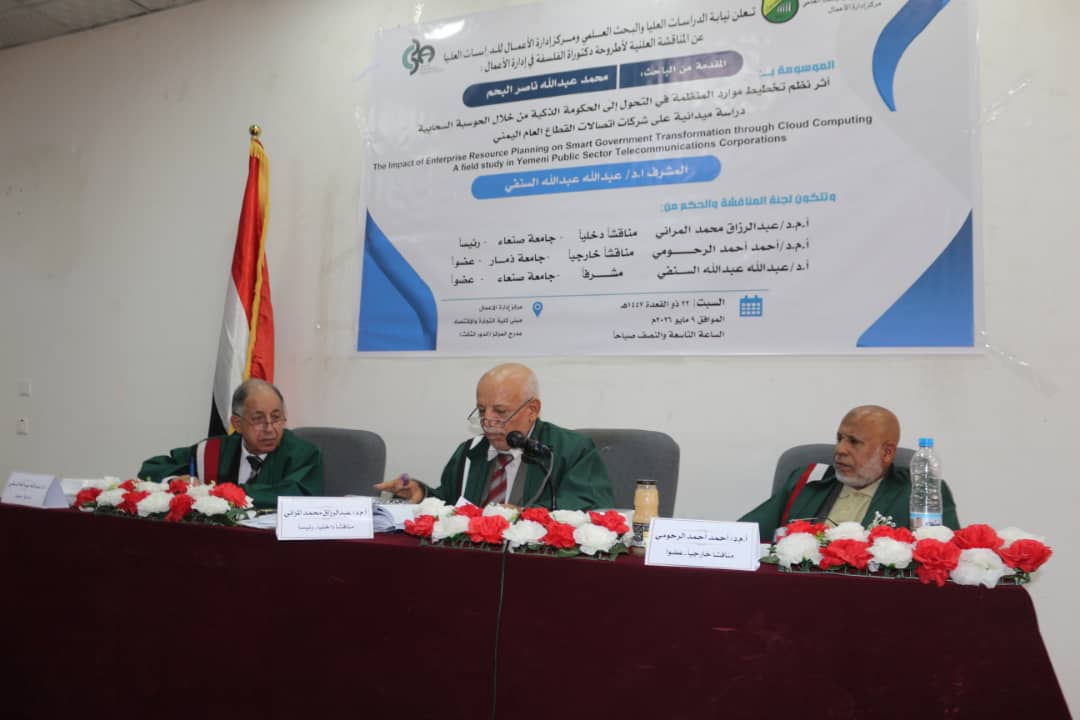
Researcher Mohammed Abdullah Nasser Al-Bahm was awarded a PhD degree in Business Administration by the Center of Business Administration for Graduate Studies at Sana’a University for his dissertation titled: “The Impact of Enterprise Resource Planning Systems on the Transition to Smart Government Through Cloud Computing: A Field Study of Yemeni Public-Sector Telecommunications Companies.”
The PhD Viva-Voce Committee consisted of Assoc. Prof. Dr. Abdulrazzaq Al-Marani, Sana’a University, as Internal Examiner and Chair; Assoc. Prof. Dr. Ahmed Al-Rahoumi, Dhamar University, as External Examiner and Member; and Prof. Dr. Abdullah Abdullah Al-Sanfi, Sana’a University, as Supervisor’s Representative and Member.
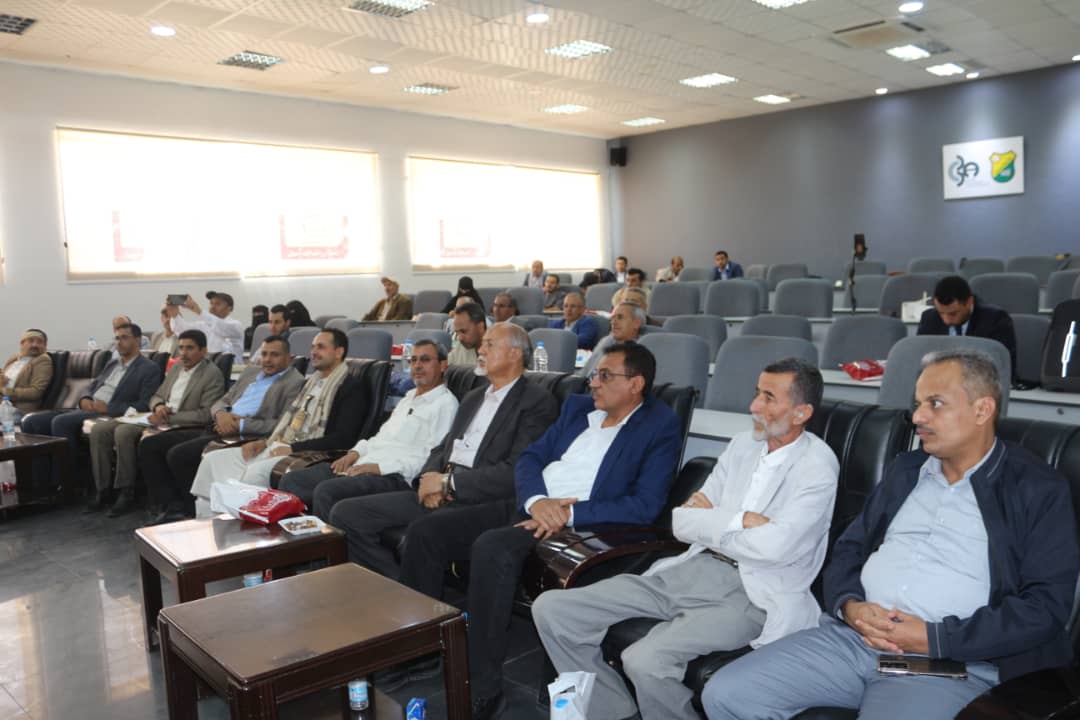
The dissertation defense was attended by a number of academics, researchers, postgraduate students, and other interested individuals, in addition to the researcher’s colleagues and family members.
The study aimed to measure the impact of Enterprise Resource Planning (ERP) systems on the transition to smart government through cloud computing, as well as to determine the levels of ERP system implementation, cloud computing adoption, and smart government implementation in Yemeni public-sector telecommunications companies.
The study adopted a descriptive-analytical approach and used a questionnaire as the primary data collection instrument. The study population consisted of 177 employees who use ERP systems, software and applications, as well as cloud computing service providers and technical and technological support personnel in the companies under study. Given the relatively small population and the availability of comprehensive data on all its members, a census approach was adopted. A total of 177 questionnaires were distributed, of which 157 valid questionnaires were retrieved, representing a response rate of 89.0%.
The study data were analyzed using Partial Least Squares Structural Equation Modeling (PLS-SEM) through SmartPLS, in order to test the study’s hierarchical model at two levels by evaluating both the measurement model and the structural model.
The study reached several findings, most notably that ERP systems have a significant effect on the transition to smart government through cloud computing. The findings also demonstrated significant effects of ERP systems on the transition to smart government and on the adoption of cloud computing, as well as a significant effect of cloud computing on the transition to smart government in Yemeni public-sector telecommunications companies.
The findings further indicated that the levels of implementation of the study variables—ERP systems, cloud computing, and smart government—in Yemeni public-sector telecommunications companies were at the lower end of the high level.
The study presented several recommendations, most notably that Yemeni public-sector telecommunications companies should focus on adopting new generations of ERP systems or developing the capabilities of their existing systems to incorporate supplier relationship management, customer relationship management, business intelligence, and mobile commerce. The systems should also support operations through smartphones, tablets, and social media, automate business processes, organizational information and services, make these systems accessible to all employees, and provide employees with appropriate training on their components.
The study also recommended that Yemeni public-sector telecommunications companies provide financial, technological, and human-resource support to the national cloud computing operator, Sahbcom, enabling it to provide various cloud computing services—including infrastructure, platforms, software, and information—to individuals and organizations for appropriate fees. It further recommended encouraging developers and programmers to build digital platforms and smart applications and deploy them in the cloud environment.
Finally, the study recommended that Yemeni public-sector telecommunications companies develop a strategic plan for transitioning to smart government, allocate the necessary financial, technological, and human resources, and complete the required legal, regulatory, and administrative arrangements. It also recommended leveraging the widespread use of applications, smartphones, and digital technologies by broad segments of society to provide services and information and facilitate transactions.