*CCTLT Administrative Council Reviews Achievement Reports and Reconsiders Graduate Program Fees*

Sana’a – Sunday, May 10, 2026
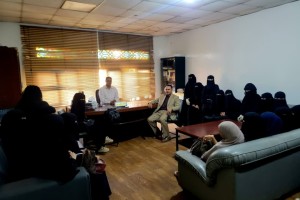
The Administrative Council of the Community Center for Translation and Language Teaching (CCTLT) at Sana’a University held its second regular meeting for the 1447 AH / 2026 academic year today, chaired by the Center Director, Prof. Ibraheem Tagaddeen, and attended by the Deputy Director, Dr. Yahya Obeid, the Center’s advisors, heads of departments, directors of administrative units, and heads of academic and administrative divisions.
The meeting began with a review and approval of the previous session minutes, followed by extensive discussions of the periodic achievement reports submitted by the various departments and units. Discussions focused on performance indicators and assessing the actual implementation levels of the plans and programs approved for the 2026–2027 academic year.
The Council also discussed several student-related issues, reviewing the progress of the educational process and addressing matters related to services provided to students.
In addition, the meeting addressed issues related to administrative development and ways to overcome obstacles facing departments in carrying out their responsibilities.
As part of efforts to support scientific research, ease financial burdens on researchers, and encourage enrollment in the Center’s graduate programs, the Council members discussed a proposal to reduce graduate tuition fees, as well as a marketing plan to promote the Center’s programs and activities. The Council approved a package of recommendations and decisions in this regard to be forwarded to the Center’s Board of Directors and the University Presidency for appropriate action in line with available resources.
At the end of the meeting, Prof. Ibraheem Tagaddeen stressed the importance of strengthening the values of institutional work, emphasizing that advancing the Center and achieving its academic and community objectives fundamentally depends on reinforcing integration and harmony among all departments and administrative units in carrying out their tasks, thereby ensuring the provision of high-quality education and translation services.