CCTLT Seminar Discusses MA Research Proposal on AI Translation Accuracy and Ethical Risks

Sana’a – Monday, May 4, 2026
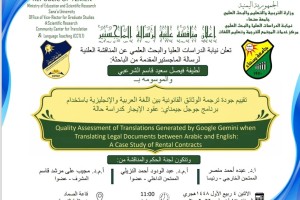
The Department of Translation and Applications at the Community Center for Translation & Language Teaching (CCTLT) convened an academic seminar on Monday to discuss the Master’s research proposal submitted by researcher Safaa Hassan Ali Al-Tayyar, entitled:
“Investigating the Semantic Fidelity and Ethical Risks of AI-Generated Translations of Sana’ani Dialectal Terms in Legal Deeds into English.”
The seminar committee consisted of:
• Prof. Ibraheem Tagaddeen
• Prof. Abbas Mutahar
• Prof. Mujeeb Qasim
• Prof. Abdulwadood Annuzaili


During the seminar, the researcher delivered a detailed presentation of her proposal, outlining the research problem, objectives, and questions. She highlighted the growing importance of both human translation and artificial intelligence technologies, particularly in the context of legal texts containing Sana’ani dialectal expressions with precise legal and social implications.
The researcher emphasized the importance of ensuring semantic accuracy and acceptability for target readership, while analyzing stylistic and semantic differences between human translation and AI-generated translation. She also addressed the ethical risks associated with the use of AI technologies in translating legal documents and examined the ability of AI language models to preserve semantic fidelity when handling culturally specific dialectal expressions.


The presentation further addressed the importance of evaluating the impact of such translations from the perspective of native English speakers in order to identify semantic gaps and potential legal or ethical risks. The researcher also stressed the continued need for human involvement in the translation process and called for the development of protocols and guidelines to regulate the use of artificial intelligence in this sensitive domain.
At the end of the seminar, the academic committee discussed the proposal, commended the researcher’s efforts and her choice of a specialized topic of academic and practical significance, and recommended approving the registration of the topic and proceeding with the research process after incorporating the committee’s scholarly observations.