Faculty of Medicine at Sana’a University Launches Its Fourth Scientific Event: “Colorectal Cancer” Under the Microscope in a Knowledge-Rich Medical Forum

Thursday, July 9, 2026
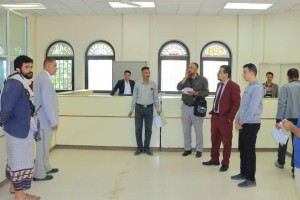
SANA’A— Under the patronage of the University Rector, Prof. Mohammed Ahmed Al-Bukhaiti, and in coordination with the Yemen Council for Medical Specializations, the Faculty of Medicine and Health Sciences held the 4th Oncology Surgery Scientific Day, focusing on a highly prevalent and high-risk disease: colorectal cancer, under the title “Colorectal Cancer Scientific Day.”
The scientific event addressed the latest advancements in modern science regarding the diagnosis, monitoring, and treatment of the disease. A carefully selected group of professors, consultants, and specialists from various medical and surgical fields presented rich and intensive lectures. These presentations covered precise details related to colorectal cancer, ranging from early screening mechanisms and accurate staging to the latest therapeutic protocols and advanced surgical techniques recommended by international medical guidelines. The event reflected the advanced ambitions of the Yemeni academic medical cadre, who continue their educational and clinical mission despite prevailing challenges.
Prof. Mohammed Ahmed Al-Bukhaiti, Sana’a University Rector, emphasized that organizing these scientific days represents a pivotal pillar and a genuine turning point in the academic and professional development path led by the university. He noted that these continuous scientific milestones have provided an exceptional qualitative addition that benefits diverse segments of the medical and academic community, including internship students, Master’s and Ph.D. students, medical board residents, and Medical Doctor (MD) candidates.
Dr. Al-Bukhaiti described these scientific days as a core driver in the continuing medical education (CME) framework adopted by Sana’a University through the Faculty of Medicine and Health Sciences. He stressed that they have significantly contributed to refining the skills of physicians and researchers, equipping them with the latest knowledge, tools, and advanced surgical and medical techniques, which tangibly elevates the quality of medical practice and the level of healthcare provided to Yemeni citizens.
The University Rector called for strengthening the scientific ties established during these events with similar regional and international scientific platforms. He emphasized the necessity of opening effective and sustainable channels of communication with leading research centers, prestigious universities, and specialized global institutes, allowing Yemeni medical cadres to benefit from accumulated international expertise and reinforcing their academic presence regionally and internationally.
Furthermore, the Rector added that the Faculty is approaching major institutional milestones in the near future. He expressed his confidence that these profound efforts would culminate in successes that enhance the Faculty’s record, asserting that these cumulative steps pave the way for a prosperous future for the Faculty of Medicine and Health Sciences at Sana’a University, fitting its long history and pioneering status.
For his part, the Dean of the Faculty of Medicine and Health Sciences, Prof. Mohammed Al-Shehari, announced that the Faculty intends to increase the frequency of this scientific series from a monthly event to a bi-weekly scientific day during the next phase. This expansion represents a qualitative leap in developing continuing medical education programs and raising the academic and research performance ceilings of the Faculty’s cadres.
The Dean praised the contributions of all professors and consultants who delivered scientific lectures during the event. He also commended the active participation of the attending students, the exceptional efforts of the organizing committee, and expressed his deep appreciation to the active partners who supported the development of this scientific series, emphasizing that this collective effort embodies academic cooperation and belonging.
The 4th Scientific Day featured thirteen scientific sessions covering various clinical, diagnostic, and therapeutic dimensions of colorectal cancer:
• Prof. Naji Haumash Ghaleb delivered a comprehensive lecture on the management of colorectal cancer metastasis to the liver, highlighting the latest treatment protocols for advanced cases.
• Dr. Mansour Al-Hameli detailed the role of radiological imaging in staging, pre-surgical planning, and post-treatment follow-up.
• Dr. Iman Al-Salmi presented an in-depth review of the pathology of colorectal cancer.
• Dr. Wael Al-Absi discussed the principles of molecular pathology, highlighting how it serves as a cornerstone in understanding the biological nature of the disease and mapping precise target therapies.
• Dr. Mohammed Al-Humaidi lectured on the importance of endoscopic screening and surveillance as an effective tool for early detection.
• Dr. Aqeel Motahar Al-Shami reviewed the role of endoscopy in both diagnosis and therapeutic interventions, showcasing technological advancements over recent decades.
• Dr. Loay Mohammed Al-Qubati guided attendees through the clinical timeline of the disease, from initial warning signs to definitive diagnosis.
• Dr. Al-Amin Abdullah Al-Noor discussed organ preservation strategies in rectal cancer, balancing oncological safety with quality of life.
• Dr. Waheeb Radman Al-Qubati reviewed advanced surgical standards for rectal cancer operations.
• Dr. Fadhl Al-Najri provided a unified vision on systemic therapy for rectal cancer.
• Dr. Dhi Yazan Al-Muraysh concluded the core sessions by addressing emergencies related to colorectal cancer, a topic vital to daily practices in emergency departments and operating rooms.
• Dr. Bashir Al-Salawi presented a lecture titled “The Evolving Role of Radiotherapy in the Treatment of Locally Advanced Rectal Cancer.”
• Dr. Mujahed Nahshal delivered a comprehensive scientific lecture titled “Screening, Early Detection of Colorectal Cancer, and Patient Follow-up from a Surgical Perspective.”
The event also functioned as a platform for open scientific dialogue and live discussions, featuring contributions from the audience. Consultants, specialists, and professors interacted dynamically, raising clinical queries and sharing professional experiences that added practical dimensions to the presented scientific content.
This 4th Scientific Day stands as part of a progressive journey led by Sana’a University’s Faculty of Medicine and Health Sciences to enhance scientific research and continuing medical education in Yemen under challenging circumstances. This makes such initiatives a necessity and an investment in medical cadres capable of addressing escalating health challenges and ensuring healthcare that aligns with global standards.
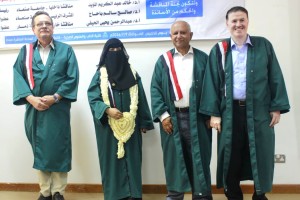
At the conclusion of the forum, the Faculty Deanship held an honoring ceremony for all participating professors and consultants, presenting them with certificates of appreciation in recognition of their scientific and research contributions.