Faculty of Medicine and Health Sciences Hosts Special Workshop on Course Reporting and Continuous Academic Improvement

Monday, July 13, 2026
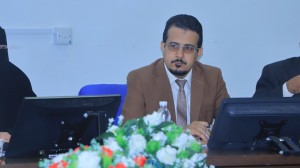
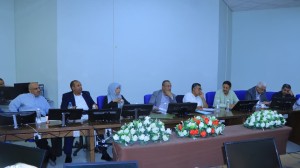
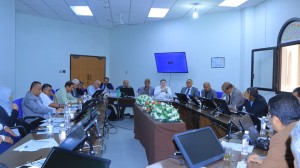
In line with its dedication to institutional quality assurance and continuous improvement, the Faculty of Medicine and Health Sciences at Sana’a University held a specialized academic workshop. The session focused on reviewing course and academic program reports, along with their associated improvement plans, with active participation from academic department heads.
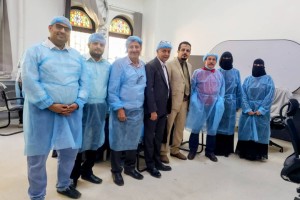
The workshop was attended by the Assistant Rector for Medical Faculties and Hospitals, Dr. Abdulhafed Thawabeh, Faculty Dean Prof. Mohammed Al-Shehari, Vice Dean for Academic Affairs and Graduate Studies Assoc. Prof. Adel Al-Ghaili, Vice Dean for Quality Assurance Prof. Ahmed Mujahed, and various department chairs.
National Expert Prof. Saleh Bahaj delivered a presentation detailing contemporary methodologies for compiling academic course and program reports. He highlighted effective techniques for analyzing evaluation data, aligning outcomes with performance indicators, and building evidence-based, quantitative improvement plans.
Prof. Bahaj also discussed best practices in documenting assessments and measuring the impact of corrective measures. He noted that continuous improvement is the core of modern quality systems, operating on a closed loop of planning, execution, evaluation, and feedback.
Dr. Abdulhafed Thawabeh stated that Sana’a University views quality assurance as a strategic priority. He pointed out that course and program reports serve as essential tools to measure student learning outcomes and identify areas for development.
Dean Prof. Mohammed Al-Shehari added that the Faculty adopts a structured institutional approach to periodic reviews. He highlighted the pivotal role department heads play in self-evaluation, analyzing performance metrics, and spearheading local improvements within their respective units.
The workshop concluded with interactive discussions among department chairs regarding performance metrics, curriculum delivery challenges, and suggested improvements. Participants agreed on the importance of institutionalizing periodic academic reviews, standardizing reporting templates, and utilizing measurable key performance indicators (KPIs) to drive future decision-making.