Sana’a University Faculty of Medicine Hosts Unprecedented Week of Scientific Excellence

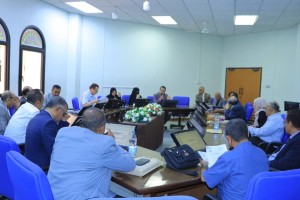
SANA’A, YEMEN –Faculty of Medicine and Health Sciences at Sana’a University is currently witnessing a period of historic academic momentum, marked by the hosting of two major specialized medical conferences within a single week. This surge in activity underscores the university’s strategic commitment to establishing itself as a premier regional hub for medical education and advanced clinical research.
The week’s agenda begins with the 2nd Scientific Conference of the Ophthalmology Department (April 23–24, 2026). The event serves as a critical platform for academics and consultants to discuss the latest global breakthroughs in ophthalmic surgery and diagnostics, featuring peer-reviewed research aligned with international standards.
Following this, the momentum will shift toward surgical innovation with a joint mega-event held from April 28–30, 2026. This gathering includes:
• The 5th Scientific Conference for Vascular Surgery
• The 3rd Scientific Conference for Cardiac Surgery
• The Inaugural Faculty of Medicine Conference for Cardiothoracic and Vascular Surgery
This combined symposium represents one of the largest academic gatherings for surgical subspecialties in the region, bridging the gap between vascular and cardiac disciplines within a unified scientific framework.
Dr. Mohammed Al-Shehari, Dean of the Faculty of Medicine and Health Sciences, emphasized that this rapid succession of events reflects a clear institutional roadmap aimed at elevating medical training and clinical outcomes.
“The organization of these specialized conferences, alongside their accompanying workshops, embodies our dedication to developing precision medicine and fostering an academic environment where theoretical knowledge meets clinical application,” stated Dr. Al-Shehari.
He further noted that Sana’a University provides sustained support for this trajectory by:
• Expanding Continuing Medical Education (CME) programs.
• Broadening scientific partnerships with local and international institutions.
• Adopting advanced clinical simulation-based training to prepare a workforce capable of meeting global healthcare challenges.
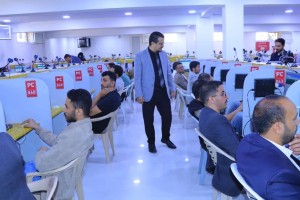
The university’s “Scientific Week” is not limited to lectures. The programming includes a comprehensive suite of specialized workshops, scientific sessions, and clinical simulation modules. This integrated approach ensures that the knowledge produced during these conferences translates directly into improved patient care and increased efficiency across the national healthcare sector.
Experts and observers view this academic surge as a qualitative shift in medical knowledge management. By hosting events of this scale, Sana’a University is reinforcing its position on the global scientific map, signaling a serious move toward evidence-based practice and human capital investment.
As the Faculty of Medicine continues to expand its reach across various medical disciplines, it remains a primary engine for healthcare development—transforming the university into a pivotal center for knowledge production and expert exchange on both local and regional levels.