*Sana’a University Medical Students Host Two-Day Ophthalmology Seminar*

*SANA’A, Yemen* —
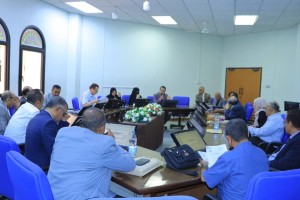
The 41st graduating class of the Bachelor of Medicine and Bachelor of Surgery (MBBS) program at Sana’a University’s Faculty of Medicine and Health Sciences hosted a two-day specialized ophthalmology seminar, supervised by the Department of Ophthalmology.
The event aligns with the faculty’s mission to support peer-led academic initiatives that strengthen research, case analysis, and public speaking skills. Coordinated with academic departments, the initiative bridges theoretical knowledge with clinical practice, emphasizing interactive learning, differential diagnosis, evidence-based medicine, and clinical decision-making.
The men’s session, moderated and evaluated by Dr. Ibrahim Ashish, featured clinical presentations covering surgical, medical, and neuro-ophthalmology topics. Key topics included endoscopic dacryocystorhinostomy (DCR) for nasolacrimal duct obstruction, dry eye syndrome and its complications, and diabetic retinopathy treatments involving intravitreal injections and laser therapy. Students also presented on congenital strabismus and the critical window for intervention to prevent amblyopia, rhabdomyosarcoma, and Argyll Robertson pupil.
The women’s session was led by Prof. Yahya Al-Ghasali, Chair of the Department of Ophthalmology. Presentations focused on cornea, glaucoma, and retina subspecialties, highlighting corneal emergencies and diagnostic challenges in Acanthamoeba keratitis—particularly cases linked to improper contact lens use. Further discussions addressed refractive surgery, intraocular lens (IOL) implantation, biometry precision in cataract surgery, neovascular glaucoma management, and hypertensive retinopathy complications.
Both sessions included interactive Q&A segments linking theoretical concepts to real-world patient cases observed during clinical rotations.
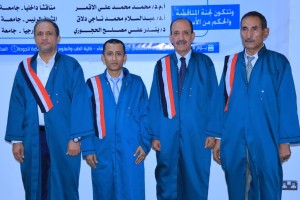
At the conclusion of the seminar, the 41st batch presented a commemorative plaque and certificate of appreciation to Dr. Ashish in recognition of his academic guidance during the men’s session. Participants also expressed their appreciation to Prof. Al-Ghasali for his academic oversight and role in shaping the seminar’s curriculum.