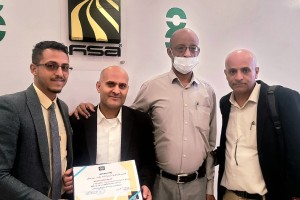
Master’s Degree for Researcher / Badoor Yahya Mohammed Al-Matari
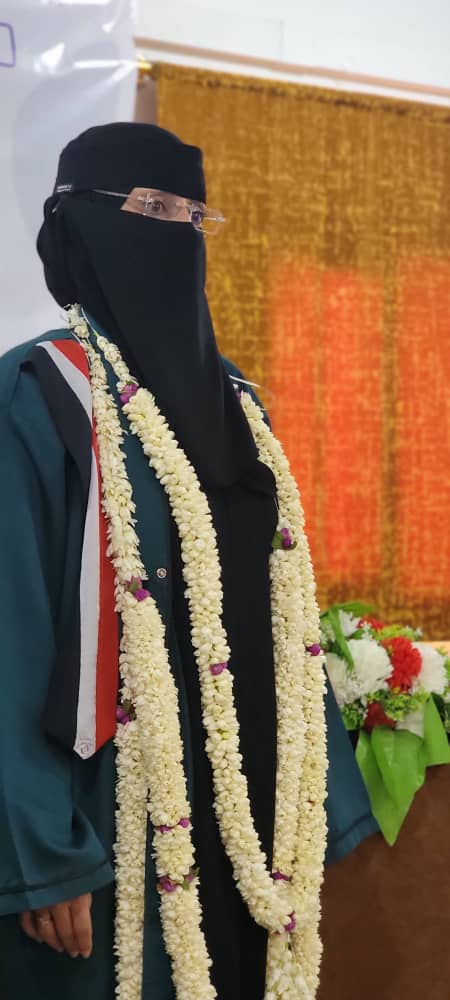
Master’s Degree for Researcher / Badoor Yahya Mohammed Al-Matari
The researcher, Badoor Yahya Mohammed Al-Matari, was awarded a Master’s degree with an excellent grade (95%), with a recommendation for publication and circulation among Yemeni universities – Department of Public Relations – Faculty of Mass Communication – Sana’a University, for her thesis entitled:
“The Effectiveness of Private Universities’ Advertisements on Social Media Networks on Yemeni Students.”
The defense was held on Saturday, 15/2/1447 AH, corresponding to 9/8/2025 AD.
The discussion and examination committee consisted of:
Prof. Dr. Hussein Dajrah – External Examiner and Chairman of the Committee.
Prof. Dr. Haza’a Sharaf – Internal Examiner and Committee Member.
Assoc. Prof. Dr. Omar Abarin – Thesis Supervisor and Committee Member.
The Thesis Aimed to:
Measure the effectiveness of private universities’ advertisements on social media networks on Yemeni students.
Identify the types of social media networks used by Yemeni private universities for advertising.
Explore the educational services presented in these advertisements.
Identify the admission requirements for academic specializations highlighted in the advertisements.
Explore the promotional offers provided by these advertisements.
Determine the advertising strategies used.
Identify the persuasive appeals employed in the advertisements.
Clarify the marketing objectives behind these advertisements.
Examine the design elements (type of advertisement, images/graphics, size) used.
Identify the forms of interaction accompanying the advertisements.
The Thesis Findings:
Facebook is the most widely used platform for advertisements by Yemeni private universities.
The most advertised educational service is admission and enrollment.
The most common admission requirement highlighted is variety of specializations offered.
There were no promotional offers included in the advertisements.
Information strategy was the most used advertising strategy.
The most frequent persuasive appeals were rational/logical appeals, especially information-based appeals.
Emotional appeals were limited to status, use of celebrities, and comfort.
The main marketing objective was informational advertising.
The most common format used was text + image.
The combination of text + image was also the most effective in attracting students’ attention.
All advertisements were accompanied by interactive features such as likes, shares, and comments.
WhatsApp ranked first in terms of exposure to advertisements.
The level of interest in following these advertisements was moderate.
Advertisements were effective in attracting students, engaging them (interest–sharing–interaction), retaining them, motivating learning, and encouraging communication and connection.
A statistically significant correlation was found between students’ exposure, interest, and reasons for following advertisements and the effectiveness elements (attraction, engagement, retention, learning, and communication).
There were significant statistical differences between students’ exposure rates and reasons for following advertisements according to the academic level variable.
No significant differences were found regarding the effectiveness of advertisements on students’ engagement, retention, and communication based on demographic variables (gender, age group, academic level, economic status, and scientific specialization).
The defense session was attended by several academics, researchers, students, interested individuals, and members of the researcher’s family.