
Master’s Degree Awarded to Mr.Abduallh Abdulwahab Lutf in Engineering Geology
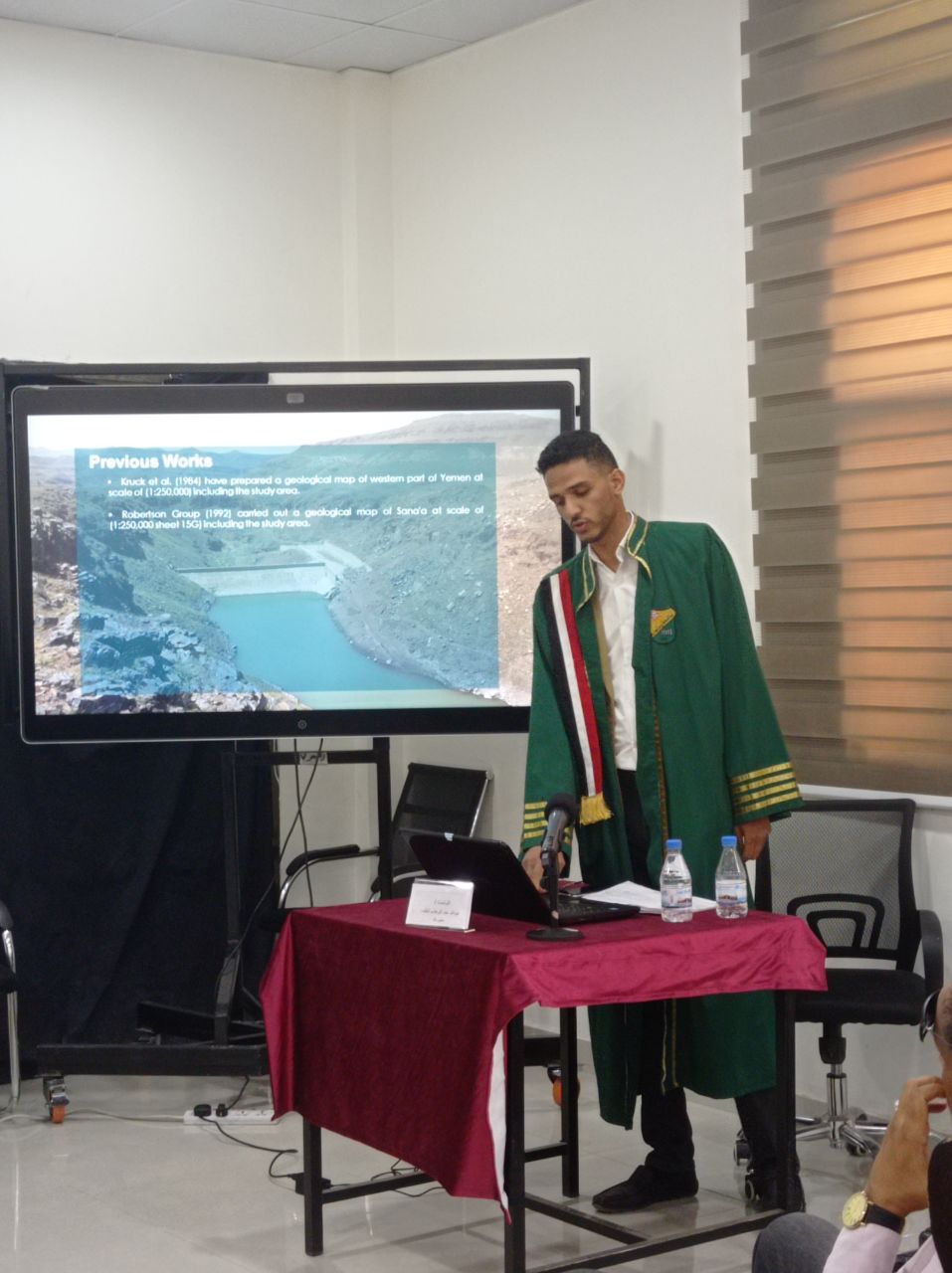
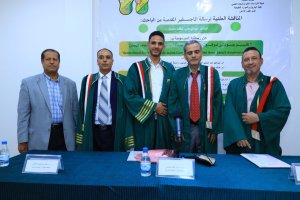
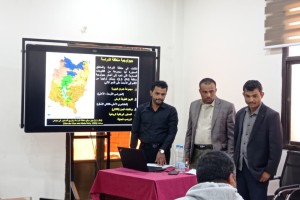
Mr. Abdullah Abdulwahab Lutf Maeyad was awarded a Master’s degree in Engineering Geology with an average of (Excellent) for his thesis titled: Geotechnical Assessment of the Al-Lujma Dam Site, Bani Bahlul Area, Sana’a Governorate, Yemen, which was submitted to the Faculty of Petroleum and Natural Resources, Sana’a University. The MA defense was held on Wednesday, June 25, 2025.
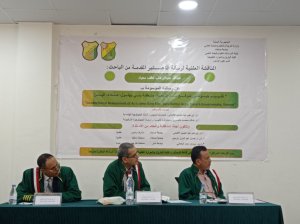
The MA Viva-voce Committee, which was formed based on a resolution issued by Graduate Studies and Scientific Research Council, consisted of the following:
# Committee Members Designation
1 Prof. Ibrahim Abdulhamid Hizam Al-Akhaly Main supervisor
2 Assoc. Prof. Adnan Abdulaziz Barahim Internal Examiner
3 Assoc. Prof. Marwan Ahmed Ahmed Al-Baadani External Examiner
The thesis aimed to evaluate the geological conditions of the proposed dam site, classify the quality of the rock masses using RMR and GSI systems, produce geological and geotechnical maps, and evaluate the subsurface geological conditions at the dam site using electrical resistivity methods.
Field investigations involved the examination of lithological units and geological structures, including faults and fractures. Representative rock samples were collected, and measurements of fault orientations, fracture directions and dips, as well as physical characteristics of fracture surfaces, were conducted.
Laboratory work included the preparation of thin sections from the collected rock samples for petrographic analysis to determine the mineral composition and texture of the rocks. Furthermore, physical properties of the samples were measured, and compressive strength tests were performed to evaluate the quality of the rock masses at the site.
In the analytical phase, data was analyzed and processed. A geological map of the area was produced at a scale of 1:2000. Three geotechnical maps of the site were produced:
1) A Zoning Map, dividing the site into seven distinct zones,
2) An RMR Map, categorizing the site into two rock mass classes, and
3) A GSI Map, segmenting the site into three groups based on rock mass quality.
Two subsurface geological cross-sections were also developed by processing, analyzing, and interpreting the results of electrical resistivity surveys conducted along two survey lines using electrical methods.
The research yielded several significant findings. It concluded that seepage is due to a significant tectonic activity in the site, particularly on the western abutment, which is marked by fault zones extending beneath the spillway. As such, the site was deemed geologically and geotechnically unsuitable for dam construction.
The research provided several recommendations, including: conducting appropriately geological, geotechnical, and geophysical investigations before constructing any dam; considering feasibility studies as an essential requirement in site selection for dam projects; implementing engineering grouting to address seepage zones; and adopting multi-criteria analysis when selecting dam sites to save time, effort, and financial resources.
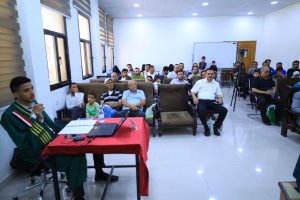
The defense was attended by fellow students, researchers, interested professionals, colleagues, friends, and family members of the researcher.
A video from the Viva-Voce


You may also like
Completion of Second and Fourth Level Exams at the College of Petroleum
17 February, 2026
The Faculty of Petroleum and Natural Resources at Sanaa University
17 February, 2026
Completion of Level One and Three Exams at the College of Petroleum
16 February, 2026