PhD Degree Awarded to Ms. Amat Al-Latif Al-Adhi in International Development Studies
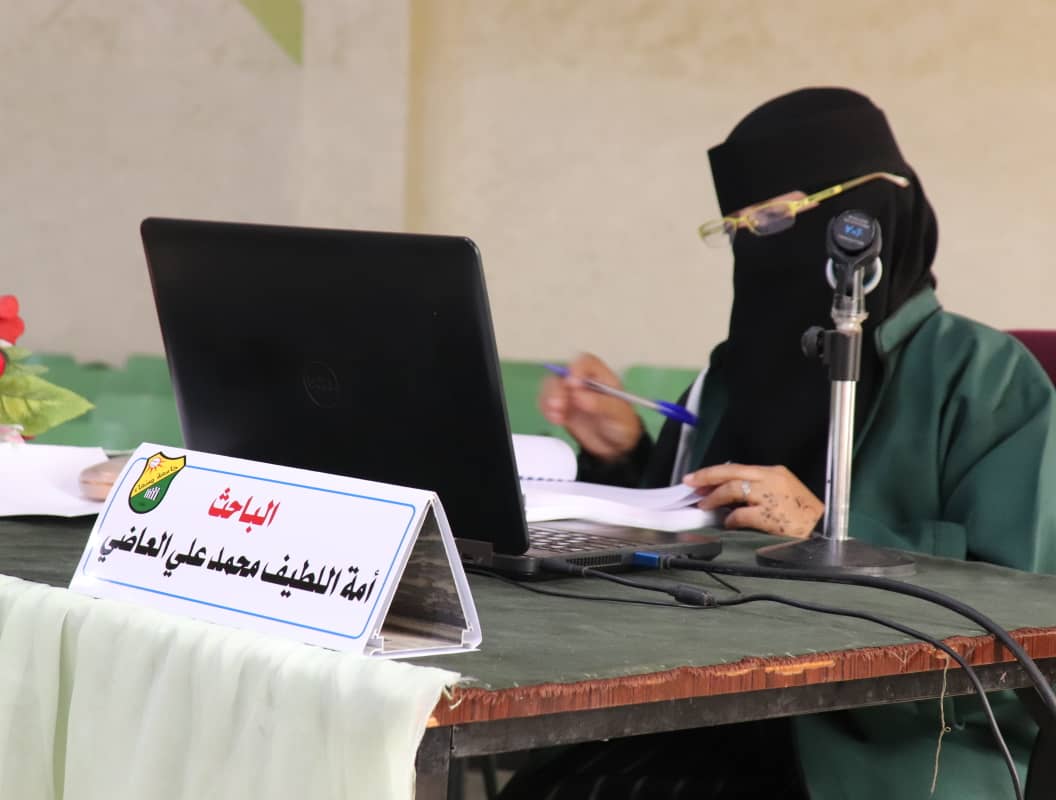
Ms. Amat Al-Latif Mohammed Ali Al-Adhi was awarded a PhD degree in International Development Studies for her dissertation titled: The Role of the General Authority of Zakat in Combating Poverty and Achieving Sustainable Development in Yemen, which was submitted to The Inclusive Development Research Center (IDRC) – Sana’a University. The dissertation defense was held on Sunday, August 3, 2025.
The PhD Viva-Voce Committee, which was formed based on a resolution issued by the Graduate Studies and Scientific Research Council, consisted of the following:
Committee Members Designation Position
1 Assoc. Prof. Elham Mohammed Al-Ridha Internal Examiner Chair
2 Assoc. Prof. Nasser Al-Badai Main Supervisor Member
3 Assoc. Prof. Abdulmajeed Al-Selwi External Examiner Member
The study primarily aimed to examine the role of the General Authority for Zakat in combating poverty and achieving sustainable development in Yemen. The research focused on evaluating the implementation of Zakat programs aimed at reducing poverty and unemployment rates, the potential for redistributing income and wealth, and identifying the challenges facing the Authority in supporting economic development. The study also explored mechanisms for the growth, investment, and development of Zakat funds from the perspective of officials within the Authority.
Findings of the Study:
The Study yielded several key findings as follows:
The General Authority for Zakat plays a significant role in promoting Zakat programs through media outreach and collaboration with mosque imams to encourage Zakat payments.
Although Zakat constitutes an effective economic system, its current implementation faces challenges related to distribution and sustainability, which limit its impact on poverty reduction.
Recommendations of the Study:
The Study concluded with the following recommendations:
Establishing appropriate legal frameworks: This includes introducing clear legislation to regulate the collection and allocation of Zakat funds, ensuring effective distribution to eligible beneficiaries.
Enhancing the Authority’s role in poverty alleviation: This includes allocating a portion of Zakat funds to support persons with disabilities and to achieve financial independence of low-income families.
Launching training programs for the unemployed: This includes providing vocational training and financing for small-scale projects to transform unemployed individuals into productive workforce.
The dissertation defense was attended by faculty members, researchers, students, colleagues, and the researcher’s family.