Master’s Degree Awarded to Ms. Soha Al-Beshari in Orthodontics

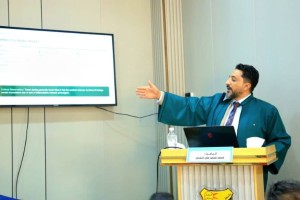
Ms. Soha Zaid Ahmed Al-Beshari was awarded a Master’s Degree in Orthodontics for her thesis titled: Assessment of the Effect of Maxillary Expansion on Nasal Airway Resistance in Mixed Dentition among a Group of Yemeni Patients: A Clinical Study, which was submitted to the Department Orthodontics, Faculty of Dentistry – Sana’a University. The MA defense was held on Wednesday, May 6, 2026.
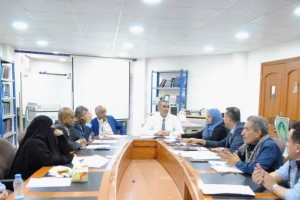
The MA Viva-voce Committee, which was formed based on a resolution issued by the Graduate Studies and Scientific Research Council, consisted of the following:
| # | Committee Members | Designation | Position |
| 1 | Prof. Naela Mohammed Ali Al-Mujahid | Internal Examiner | Chair |
| 2 | Prof. Hussein Mohammed Shujaa Al-Deen | Main Supervisor | Member |
| 3 | Assoc. Prof. Khaled Ahmed Ali Al-Dharaei | External Examiner | Member |
| 4 | Prof. Ghamdan Abdullah Al-Harazi | Co-supervisor | Member |
The thesis aimed to:
- Evaluate the effect of Rapid Maxillary Expansion (RME) on nasal airway resistance among mixed-dentition patients undergoing comprehensive orthodontic treatment at the Orthodontic Clinic of Sana’a University.
- Measure transverse skeletal expansion at the level of the maxillary molars and first premolars, assess the degree of midpalatal suture opening, and evaluate expansion of the lower part of the nasal cavity.
The study yielded several key findings summarized as follows:
- Cone Beam Computed Tomography (CBCT) demonstrated high accuracy and reliability in evaluating airway changes and maxillary structure following rapid expansion.
- The Bonded RME appliance proved effective in producing dentoalveolar expansion among growing individuals.
- Rapid maxillary expansion significantly increased nasal width, nasal diameter, cross-sectional area, and midpalatal suture opening in growing patients.
- The expansion procedure produced horizontal skeletal and dentoalveolar changes, widened the nasal cavity, reduced nasal resistance, and improved nasal breathing.
- RME was confirmed as an effective orthodontic and therapeutic approach that enhances respiratory function in addition to achieving skeletal and dental expansion, thereby improving diagnostic accuracy and treatment planning.
In light of these findings, the researcher recommended the following:
- Using a wider CBCT field of view to evaluate the entire upper airway.
- Increasing sample size through multicenter research studies.
- Conducting randomized controlled clinical trials and long-term follow-up studies.
- Performing functional assessments using rhinomanometry.
- Comparing rapid and slow maxillary expansion approaches.
- Investigating different age groups and Hyrax appliance designs.
- Utilizing polysomnography and acoustic rhinometry to study the relationship with obstructive sleep apnea.
The defense session was attended by a number of academics, researchers, students, colleagues, and the researcher’s family.