Sana’a University Approves Medical Curriculum Reforms Ahead of Upcoming Academic Year

June 6, 2026
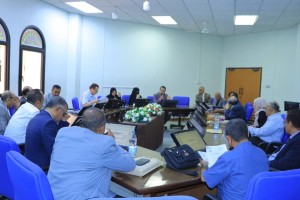
SANA’A—The Faculty of Medicine and Health Sciences at Sana’a University held an expanded academic meeting today to review and approve the curricula for the Bachelor of Medicine and Bachelor of Surgery (MBBS) program, while mapping out key developmental strategies for the upcoming academic year.
The meeting was chaired by the Faculty Dean, Prof. Mohammed Mohammed Al-Shehari. Key attendees included Prof. Anwar Al-Mughalles, Vice Dean for Clinical and Hospital Affairs; Prof. Arwa Othman, Vice Dean for Student Affairs; and curriculum coordinators across all program levels. Together, the board evaluated the academic frameworks of various medical cohorts to ensure high-quality education and seamless integration between theoretical study, practical laboratory work, and clinical training.
Participants discussed pressing challenges facing current academic tracks, outlining strategic mechanisms to align the university’s medical programs with the rigorous benchmarks of modern medical education.
“This meeting is part of our proactive preparation for the next academic year,” stated Dean Al-Shehari. “The administration is deeply committed to the periodic review of our educational tracks to keep pace with rapid scientific and global academic advancements.”
Dr. Al-Shehari emphasized that the institution adopts a model of continuous evaluation and sustainable improvement. By actively engaging department heads and level coordinators, the faculty aims to identify administrative and academic bottlenecks and implement effective, data-driven solutions.
“Constructing an integrated curriculum that meets modern international benchmarks is the cornerstone of advanced medical education,” Dr. Al-Shehari added. “Our focus at the Dean’s Office is to bridge the gap between classroom instruction and hands-on clinical residency. This dedication directly enhances our students’ clinical competencies, preparing highly qualified medical professionals capable of meeting the critical needs of our healthcare sector and the broader community.”
The meeting concluded with a definitive set of institutional recommendations focused on executing immediate quality improvement programs and strengthening inter-departmental coordination to guarantee the success of the upcoming academic cycle.