Faculty of Medicine Welcomes Junior Academic Staff and Teaching Assistants in a Dedicated Quality Assurance and Curriculum Review Workshop

Sunday, July 19, 2026
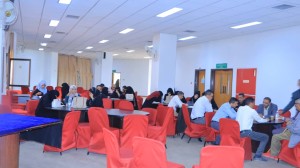
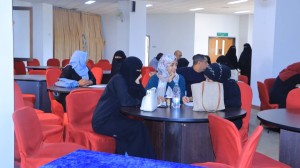
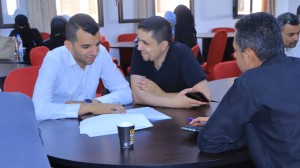
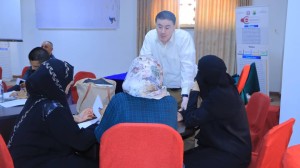
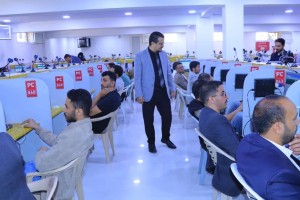
As part of its long-term strategy to empower junior academic staff and qualify them to lead institutional quality assurance tracks, the Faculty of Medicine and Health Sciences at Sana’a University organized an extensive scientific and training workshop tailored specifically for teaching assistants and demonstrators. The workshop highlighted their pivotal role in the systematic review of medical curricula and the optimization of educational outcomes.
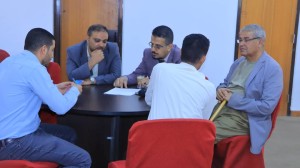
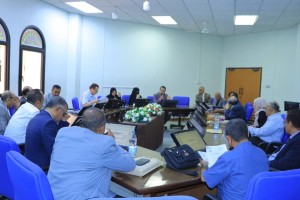
The specialized workshop was held in the presence of the Faculty Dean, Prof. Mohammed Al-Shehari; Vice Dean for Quality Assurance, Prof. Ahmed Mujahed; Vice Dean for Student Affairs, Prof. Arwa Othman; and Steering Committee Member, Prof. Abdulkarim Al-Obaidi.
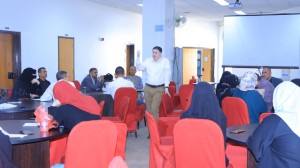
The keynote technical presentation was delivered by national medical education expert, Prof. Saleh Bahaj, who detailed modern methodologies for evaluating and advancing medical curricula. Dr. Bahaj underscored the necessity of actively involving clinical demonstrators in tracking institutional key performance indicators (KPIs) and measuring the achievement of learning outcomes. He noted that teaching assistants serve as the vital link between theoretical knowledge and clinical practice, making their field observations foundational to continuous quality improvement plans.
Dean Prof. Mohammed Al-Shehari stated that targeting the junior academic cadre aligns with Sana’a University’s overarching strategy to build a second tier of academic leaders well-versed in quality assurance cultures. Investing in young professionals and training them on evaluation mechanisms guarantees the long-term sustainability of medical education in accordance with international benchmarks.
The Dean described the teaching assistants and demonstrators as the “vital lifeline” and dynamic core of the scientific departments. Integrating them into the current academic program review empowers them to innovate and apply corrective measures that alleviate student challenges and raise instructional efficiency. The workshop concluded with a set of actionable recommendations, primarily mandating the periodic inclusion of demonstrators in departmental quality committees and assigning them supportive roles in executing academic advancement plans.