Faculty of Medicine at Sana’a University Hosts Quality Assurance Workshop for Administrative and Technical Staff to Boost Institutional Performance

Sunday, July 19, 2026
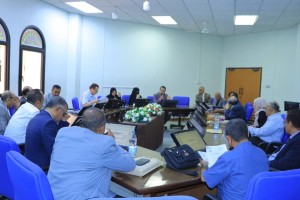
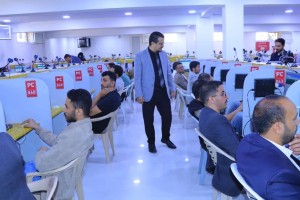
SANAA — As part of its ongoing commitment to enhancing the institutional work environment and upgrading support services for academic programs, the Faculty of Medicine and Health Sciences at Sana’a University organized an extensive training and development workshop. The initiative drew broad participation from department directors, administrative heads, and the faculty’s administrative, technical, and laboratory staff.
The workshop aimed to foster synergy between the academic system and the administrative and technical apparatus. It focused on embedding a culture of Total Quality Management (TQM) into daily operations and discussing execution mechanisms for continuous improvement. These measures are designed to sustain academic program success while cultivating a stable, stimulating educational ecosystem for both students and faculty members.
Professor Dr. Saleh Bahaj, a prominent national expert, spearheaded the workshop sessions. He delivered a detailed presentation on the strategic role that administrative and technical personnel play in achieving institutional and academic accreditation.
“An exceptional administration and the meticulous technical operation of laboratories form the backbone of any successful medical program,” Dr. Bahaj emphasized during his address. He noted that quality assurance is not confined to lecture halls, but rather stems from rigorous administrative procedures, expedited student services, and highly efficient technical facilities.
Throughout the sessions, Dr. Bahaj introduced modern frameworks for documenting administrative and technical workflows, alongside methods for drafting measurable Key Performance Indicators (KPIs) across various departments. Participants also underwent practical training on identifying field challenges and translating them into actionable improvement plans to streamline operations and elevate overall stakeholder satisfaction.
The event sparked highly interactive and comprehensive discussions among the administrative, technical, and laboratory teams. Attendees proposed several innovative concepts focused on modernizing workflows, accelerating digital transformation for administrative transactions, optimizing medical and technical inventory management within labs, and ensuring consistent logistical support for scientific departments.
The workshop concluded with a consensus on a package of actionable recommendations. Most notably, the attendees agreed to update institutional guidelines and job descriptions for technical departments to align with international quality benchmarks. Additionally, they recommended activating a periodic self-assessment system for administrative and technical performance to guarantee the long-term institutional excellence envisioned by the faculty across all its sectors.