Day Two of Sana’a University Medicine’s Emergency Care and Ultrasound Courses Features Intensive Clinical Training

Sunday, August 30, 2026
The Faculty of Medicine and Health Sciences at Sana’a University is taking significant steps toward establishing a leading model for continuing medical education and strengthening locally available clinical expertise. The second day of two specialized training programs organized by the Faculty’s Continuing Medical Education and Simulation and Clinical Skills Units continued successfully, drawing strong engagement from participants. The programs are the Emergency and Critical Care Skills Course and the Basic Medical Ultrasound Skills Course.
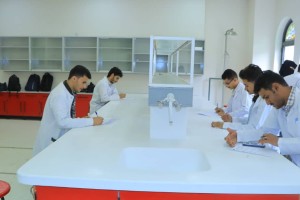
Training rooms and simulation laboratories witnessed growing enthusiasm among participants as they moved smoothly from the foundational concepts introduced on the first day to specialized, hands-on clinical application. The integrated learning environment is designed to refine the clinical skills of future physicians in accordance with established medical standards.
On the second day of the Emergency and Critical Care Skills Course, training focused on the strategic module “Basic Emergency Skills,” a core component designed to equip physicians with the ability to assess emergency cases rapidly and systematically.
Participants received intensive training in the rapid initial assessment of critically ill patients, including the evaluation of vital signs and the prioritization of emergency care in accordance with triage principles. The training went beyond theoretical knowledge, with participants engaging in intensive practical exercises on immediate interventions to stabilize vital signs and perform basic lifesaving maneuvers during the crucial first minutes after a patient’s arrival in the emergency department.
These practical exercises are intended to strengthen participants’ clinical confidence and their ability to make appropriate emergency-care decisions under acute pressure.
Meanwhile, participants in the Medical Ultrasound Skills Course advanced to hands-on diagnostic assessment of abdominal organs, with the second day focusing on the “Liver and Gallbladder Ultrasound” module.
The theoretical component provided participants with a comprehensive review covering:
– Anatomy and normal function: Reviewing the detailed anatomical relationships of the liver, its blood supply, and the structure of the biliary tree and gallbladder.
– Developing the ability to distinguish healthy tissues and recognize the normal sonographic dimensions and appearance of the liver and biliary system.
– Reviewing the sonographic identification and assessment of common pathological changes, including fatty liver disease, liver cirrhosis, gallstones, and cholangitis.
Following the theoretical session, participants moved directly into practical training using modern ultrasound equipment. They performed examinations on simulated cases and practiced proper ultrasound probe positioning and manipulation to obtain accurate anatomical views of the liver and biliary tract. The practical sessions were followed by training in preparing diagnostic ultrasound reports in accordance with established clinical practices.
The Continuing Medical Education Unit at the Faculty of Medicine and Health Sciences at Sana’a University stated that the continued momentum of the training programs and the delivery of increasingly practical clinical modules reflect Sana’a University’s strategic vision of strengthening the connection between theoretical medical education and real-world clinical practice.
These efforts aim to help bridge the gap between classroom learning and clinical practice while equipping Yemen’s healthcare system with physicians who possess essential diagnostic and emergency-care skills, enabling them to provide safe and reliable medical care to patients across different healthcare settings and under a range of circumstances.


You may also like

PhD Degree Awarded to Researcher Nawar Al-Wather in Cardiology
30 August, 2026