PhD Degree Awarded to Researcher Saddam Abdulmajeed Al-Soufi in Petroleum Geology

Researcher Saddam Abdulmajeed Muqbil Al-Soufi was awarded a PhD degree in Petroleum Geology for his dissertation titled: Enhanced Oil Recovery Methods for Heavy Oil from Reservoir Rocks in Selected Oil Fields in Yemen, which was submitted to the Faculty of Petroleum and Natural Resources – Sana’a University. The MA defense was held on Thursday, August 20, 2026.
The PhD Viva-Voce Committee, which was formed based on a resolution issued by the Graduate Studies and Scientific Research Council, consisted of the following:
• Prof. Basim Shaif Al-Kherbash – Internal Examiner and Committee Chair.
• Prof. Adel Mohammed Al-Matari – Principal Supervisor and Committee Member.
• Prof. Abbas Mohammed Al-Khadafi – External Examiner and Committee Member.
The study aimed to evaluate and compare enhanced oil recovery (EOR) methods in Hamyar and Al-Ruwaidat fields in Say’un–Masila Basin. It employed an integrated methodology combining three-dimensional geological modeling, laboratory evaluation of chemical agents, dynamic reservoir simulation, and economic analysis to identify the most appropriate strategies for improving heavy oil recovery from these reservoirs.
The dissertation produced several findings, including:
– Polymer and surfactant (SP) injection at a concentration of 0.20% was identified as the optimal strategy for the Al-Ruwaidat Field, achieving a recovery factor of 15.01% of the original oil in place (OOIP), a net present value of USD 42.95 million, and reducing the water cut from 93.5% to 76.2%.
– SeMAR S16A at a concentration of 1% showed promising laboratory results for Hamyar Field, achieving an 84.5% reduction in viscosity and an average laboratory recovery of 20.1%, with an optimal Winsor III phase behavior.
– Unit S1 in the Al-Ruwaidat Field contains 58% of the total original oil in place, approximately 33 million barrels, despite Unit S3 having better rock properties. This confirms that structural position may have a greater influence than rock quality on hydrocarbon distribution.
– Unit S2 acts as a vertical flow barrier due to its high clay content and low permeability. This finding indicates that well completion in this unit should be avoided, with development focused on Units S1 and S3.
In light of the aforementioned findings, the researcher recommended conducting dynamic core-flooding experiments before field implementation in both fields.
He also recommended improving the compatibility of the SeMAR S16A formulation with reservoir rocks using stabilizers such as STA-4 and conducting long-term compatibility tests.
The study further recommended launching a pilot application in the Al-Ruwaidat Field targeting Unit S1, followed by full-scale implementation after validating the results.
Finally, it recommended applying the integrated methodology used in the study to other heavy-oil fields in Say’un–Masila Basin and the Sib’atain Basin.
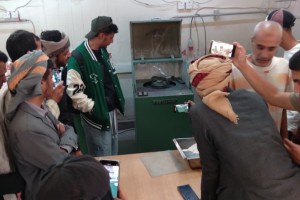
The defense session was attended by a number of academics, researchers, and postgraduate students, as well as the researcher’s colleagues and family members.
A clip of part of the discussion


You may also like