Master’s Degree Awarded to Researcher Hadi Ali Ali Quraia in Environmental Sciences

Researcher Hadi Ali Ali Quraia was awarded a Master’s Degree in Environmental Sciences for his thesis titled: The Impact of Climate Change on Water Resources in Sana’a Basin, Yemen, Using Remote Sensing and Geographic Information Systems Technologies, which was submitted to the Faculty of Petroleum and Natural Resources– Sana’a University. The MA defense was held on Thursday, September 10, 2026.
The MA Viva-voce Committee, which was formed based on a resolution issued by the Graduate Studies and Scientific Research Council, consisted of the following:
· Prof. Khaled Mohammed Khanbari – Internal Examiner and Committee Chair
· Prof. Nabil Mohammed Al-Areeq – External Examiner
· Prof. Hisham Mohammed Naji – Principal Supervisor.
The study aimed to assess the impact of climate change on water resources in Sana’a Basin through integrated analyses of climatic, hydrological, hydrogeological, and geospatial data, while utilizing remote sensing and Geographic Information Systems (GIS) technologies to analyze current changes and project their future impacts.
The study relied on groundwater monitoring data provided by the General Authority for Water Resources, along with historical climate records, satellite imagery, and remote sensing data. It also employed hydrological process modeling using GIS to assess changes in rainfall patterns, surface runoff, groundwater recharge, and groundwater aquifer dynamics, in addition to analyzing the potential future impacts of climate change under global climate model scenarios.
The study results revealed significant spatial variation in rainfall distribution across the Sana’a Basin, largely governed by topographic characteristics and orographic effects. The southern and western highlands recorded the highest rainfall rates, while the northeastern areas recorded lower rates. Analysis of data for the 2010–2024 period also indicated a general trend toward drying at several monitoring stations, accompanied by annual variability characterized by alternating years of exceptionally wet and dry conditions.
The study further indicated that urban expansion, agricultural activity, and excessive groundwater pumping have contributed to the emergence of areas experiencing sharp declines in groundwater levels. This has resulted in increased pumping depths and water extraction costs and intensified the pressures and risks threatening water security, environmental stability, and land resources in the Sana’a Basin.
Regarding future climate change, the study concluded that global climate scenarios indicate a potential decrease in rainfall rates of approximately 15% by the end of the century, accompanied by increased severity and frequency of drought periods as a result of higher evapotranspiration rates and greater climatic variability. The findings also showed that groundwater abstraction rates significantly exceed natural recharge rates, signaling further pressure on groundwater reserves in the future.
The study emphasized the importance of strengthening the sustainable management of water resources in the Sana’a Basin, reducing excessive groundwater pumping, developing climate, hydrological, and hydrogeological monitoring and surveillance systems, and utilizing remote sensing and GIS technologies to support water-resource planning and decision-making. It also stressed the need to adopt measures to adapt to the anticipated impacts of climate change and enhance water security in the basin.
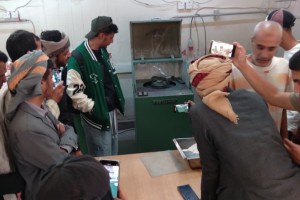
The thesis defense was attended by faculty members, researchers, students, and interested participants as well as the researcher’s colleagues and family members.
A portion of the defense session


You may also like
Schedule of non-automated exams for the academic year 2026-2027
10 September, 2026