Master’s Degree Awarded to Ms. Rana Tawfiq Qasim in Orthodontics

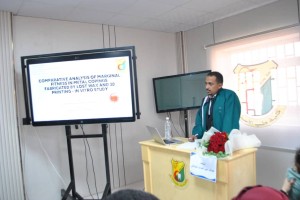
Ms. Rana Tawfiq Mohammed Qasim was awarded a Master’s Degree in Orthodontics for her thesis titled: Three Dimensional Morphological and Spatial Evaluation of Unilateral Impacted Central Incisors, which was submitted to the Department of Orthodontics, Faculty of Dentistry– Sana’a University. The MA defense was held on Thursday, April 30, 2026.
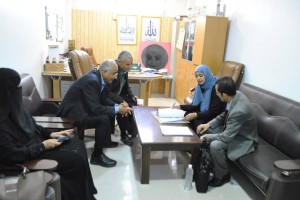
The MA Viva-voce Committee, which was formed based on a resolution issued by the Graduate Studies and Scientific Research Council, consisted of the following:
| # | Committee Members | Designation | Position |
| 1 | Prof. Ghamdan Abdullah Al-Harazi | Internal Examiner | Chair |
| 2 | Assoc. Prof. Amin Abdullah Al-Akwa’ | Main Supervisor | Member |
| 3 | Assoc. Prof. Khaled Ahmed Al-Dhara’i | External Examiner | Member |
The thesis aimed to:
- Evaluate the characteristics of root dilaceration in unilaterally impacted permanent maxillary central incisors using Cone Beam Computed Tomography (CBCT).
- Examine the relationship between the degree of root dilaceration, the direction of impaction, and the location of the impacted tooth.
- Assess the anatomical and morphological characteristics of impacted maxillary central incisors.
- Compare the impacted tooth with the contralateral non-impacted tooth in the same patient to minimize individual variation and improve the accuracy of anatomical and radiographic assessment.
- Analyze the distribution of impaction and root dilaceration according to age, gender, and side involvement, while identifying the most common clinically and orthodontically significant patterns.
The study yielded several key findings summarized as follows:
- Vertical impaction was the most common pattern among unilaterally impacted maxillary central incisors, followed by labial impaction and then palatal impaction, while inverted impaction was the least common type.
- Inverted impaction cases showed the highest mean root dilaceration angle, indicating greater severity of root deviation compared to other impaction patterns.
- No statistically significant differences were found between the right and left sides regarding the occurrence of root dilaceration, suggesting that the side of impaction does not significantly affect the incidence of dilaceration.
- CBCT proved highly effective in diagnosing impacted maxillary central incisors, accurately determining their location, and precisely measuring the degree of root dilaceration compared with conventional imaging methods.
In light of these findings, the researcher recommended the following:
- Using CBCT in the evaluation of impacted maxillary central incisors, particularly complex cases associated with root dilaceration, due to its high diagnostic and treatment-planning accuracy.
- Assessing the degree and angle of root dilaceration before developing orthodontic or surgical treatment plans because of its direct impact on treatment difficulty and prognosis.
- Conducting future studies on larger samples and across multiple treatment centers to improve the generalizability and statistical strength of findings.
- Encouraging longitudinal studies to evaluate the effect of root dilaceration on the success and duration of orthodontic and surgical treatment.
- Investigating the relationship between root dilaceration and variables such as age, gender, and type of impaction using advanced statistical analyses to achieve a deeper understanding of the factors associated with impacted maxillary central incisors.
The defense session was attended by a number of academics, researchers, students, colleagues, and the researcher’s family.