Master’s Degree Awarded to Ms. Maysa Abdulwahab in Orthodontics

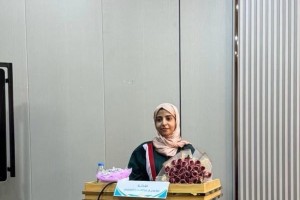
Ms. Maysa Abdulwahab Hassan Saleh was awarded a Master’s Degree in Orthodontics for her thesis titled: Assessment of Malocclusion, Orthodontic Treatment Need and Complexity among 13–15 Years Old Yemeni School Children, which was submitted to the Department of Orthodontics, Faculty of Dentistry– Sana’a University. The MA defense was held on Thursday, April 30, 2026.
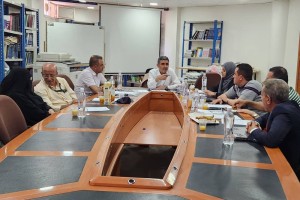
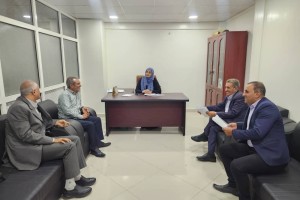
The MA Viva-voce Committee, which was formed based on a resolution issued by the Graduate Studies and Scientific Research Council, consisted of the following:
| # | Committee Members | Designation | Position |
| 1 | Assoc. Prof. Fouad Lotf Al-Mutreb | Internal Examiner | Chair |
| 2 | Prof. Khaled Abdul Salam Al-Haddad | Main Supervisor | Member |
| 3 | Assoc. Prof. Khaled Ahmed Al-Dhara’i | External Examiner | Member |
The thesis aimed to:
- Evaluate malocclusion, orthodontic treatment need, and treatment complexity among Yemeni schoolchildren aged 13–15 years using the ICON index, in addition to examining differences related to gender, age, and school type.
- Assess various malocclusion characteristics, including the aesthetic component, upper arch crowding or spacing, crossbite, increased overbite or anterior open bite, as well as the anteroposterior buccal segment relationship.
- Determine the extent of orthodontic treatment need and classify treatment complexity levels among the study sample.
The study yielded several key findings summarized as follows:
- Most Yemeni adolescents demonstrated low aesthetic concern, with 77.1% falling within the lowest category of the Aesthetic Component (AC 1–3).
- Upper arch crowding was observed in 17.3% of participants, spacing in 7.7%, while crossbite prevalence reached 31.1%.
- Increased deep bite was more prevalent at 45.1%, compared to anterior open bite at only 2.7%. Buccal segment discrepancies were found in 88.5% of participants, most of which were mild discrepancies.
- The ICON index revealed that only 26% of adolescents actually required orthodontic treatment, while the majority of the sample showed no definitive treatment need.
- Nearly half of the cases (49.7%) were classified as easy cases, followed by mild cases at 31.3%, whereas moderate, difficult, and very difficult cases represented the smallest proportions.
- No statistically significant differences were found between males and females across all studied variables, including malocclusion characteristics, treatment need, and treatment complexity.
- No significant differences were identified between public and private schools regarding the aesthetic component, total ICON scores, or overall treatment need; however, higher rates of crowding and deep bite were observed among students in private schools.
- The study confirmed the efficiency of the ICON index as a practical and effective tool for assessing malocclusion severity and orthodontic treatment needs within the Yemeni population.
In light of these findings, the researcher recommended the following:
- Health authorities should utilize the study findings as a key reference for planning orthodontic services and estimating the workforce and resources required to provide adequate care in Yemen.
- Implementing preventive school-based screening and orthodontic assessment programs for early detection and referral of malocclusion cases, with particular emphasis on early intervention for harmful oral habits and occlusal disorders.
- Raising public awareness regarding oral health and the importance of early orthodontic evaluation through awareness campaigns and regular dental screening programs.
- Establishing educational programs within schools to improve awareness among students and parents about oral health, dental aesthetics, and the risks associated with harmful oral habits such as thumb sucking and mouth breathing.
- Expanding the availability of orthodontic services within public healthcare facilities, including hospitals and health centers, to ensure access to treatment for individuals unable to afford care in private clinics.
The defense session was attended by a number of academics, researchers, students, colleagues, and the researcher’s family.