A Step Toward Agricultural Excellence: Second-Year Students Cultivate Modern Apple Orchard

Tuesday, July 14, 2026
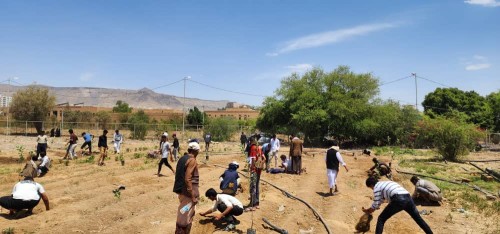
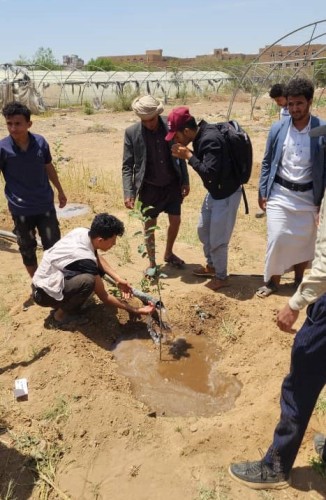
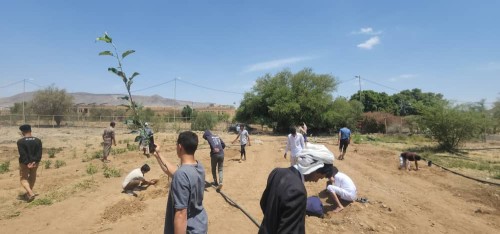
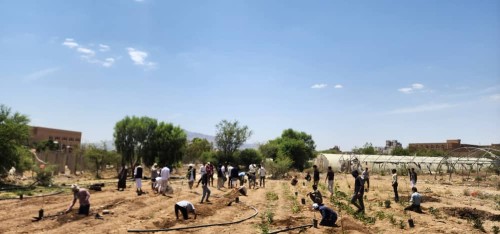
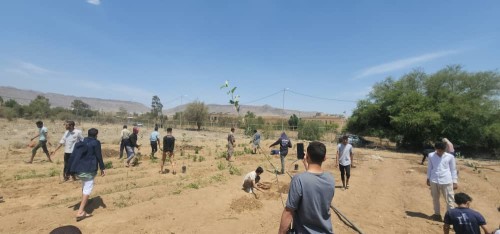
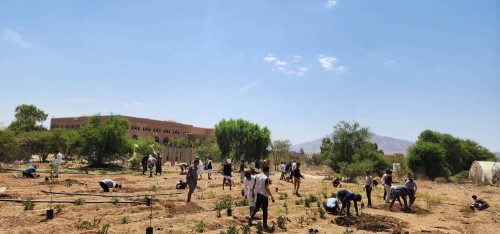
As part of ongoing efforts to bridge theoretical knowledge with hands-on practice, second-year students at the Faculty of Agriculture, Food, and Environment successfully executed a comprehensive field project to cultivate a dedicated apple orchard. The fieldwork, completed under the supervision of Eng. Ibrahim Al-Muazal, is a core component of the faculty’s experiential field training curriculum.
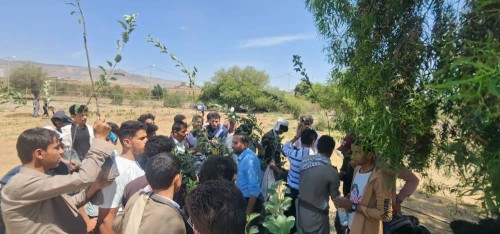
This initiative underscores the faculty’s commitment to “learning-by-doing.” Students managed all stages of the agricultural operations, starting with soil preparation and land grading, followed by field layout planning and calculating optimal scientific spacing between trees, and concluding with planting the saplings using modern agricultural techniques designed to ensure healthy growth and high future yields.
This hands-on exercise provided students with a valuable opportunity to apply classroom concepts within a real-world agricultural environment. The experience enhanced their technical proficiencies, fostered teamwork, and provided vital practical experience in executing farm management operations.
Training coordinators emphasized that applied activities are a cornerstone of preparing qualified agricultural professionals. Balancing academic knowledge with field expertise ensures that graduates are highly competitive in the labor market and fully prepared to advance the agricultural sector.
The field training course remains a fundamental component of the faculty’s academic curricula, designed to sharpen students’ technical skills, develop practical experience, and build the capacity to address field-based challenges using advanced agricultural technologies.
The Faculty of Agriculture, Food, and Environment continues to expand its training programs and applied activities across various disciplines, driven by its mission to cultivate qualified professionals who can drive agricultural development, enhance food security, and support sustainable agricultural practices toward self-sufficiency.